

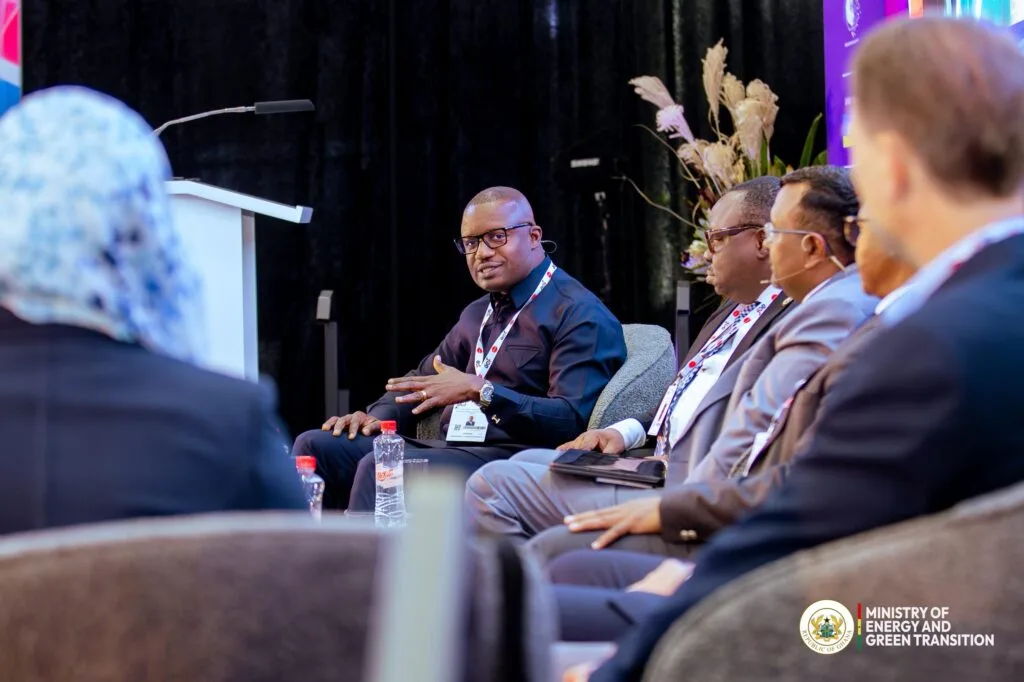
Africa can't afford to copy the West's energy transition playbook. That's the message from Ghana's Minister for Energy and Green Transition, Dr John Abdulai Jinapor, who says the continent must chart its own course — one that puts development first.
In a Facebook post on Friday, Jinapor laid out three pillars that should anchor Africa's shift to sustainable energy: energy access, industrialisation, and sustainability. He made the comments after joining a panel discussion titled "What Does a Just Energy Transition Mean for Africa?"
"Africa's transition must also respond to the urgent need to reduce poverty, expand economic opportunities, and provide reliable energy to millions of people."
Jinapor's point is blunt: climate action matters, but it can't come at the expense of lifting millions out of poverty. Africa contributes only a tiny fraction of global greenhouse gas emissions, yet it suffers some of the worst climate impacts — from droughts to floods. So asking the continent to leapfrog fossil fuels entirely, without reliable alternatives, is both unfair and unrealistic.
He stressed that investor confidence is critical. Credible energy policies and a stable regulatory environment, he said, are what will attract the billions of dollars needed to transform Africa's power sector. Without that, the transition remains a dream.
Ghana is already walking the talk. Jinapor highlighted several ongoing projects: a 200MW competitive solar tender, plans to scale solar capacity to 1,000MW, solar-plus-storage solutions, home solar systems, and even solar-powered electric vehicle charging infrastructure. These initiatives aim to boost renewable energy while keeping the lights on for households and industries.
For the ordinary Ghanaian, this is about more than climate pledges. It's about whether your neighbourhood gets stable electricity, whether your small business can run without a generator, and whether your children can study at night. Jinapor's message is that the energy transition must deliver cleaner power and economic growth together — not sacrifice one for the other.
Jinapor's stance reflects a growing consensus among African leaders. They argue that developed countries, which built their wealth on fossil fuels, can't now tell Africa to skip that step. Instead, Africa should use its natural gas and other resources strategically to industrialise, while building renewable capacity in parallel.
The challenge is funding. Rich nations promised $100 billion a year in climate finance to developing countries — a pledge they haven't fully kept. Without that money, Africa's transition will remain slow and uneven.
For now, Jinapor is pushing for a practical, homegrown approach. As he put it, Africa's energy transition must deliver a cleaner future while ensuring economic growth and improved living standards. That's not just a slogan — it's the only path that makes sense for a continent where hundreds of millions still lack reliable electricity.