

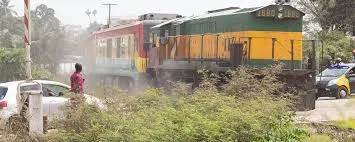
NPP Questions Government's Refurbished Locomotives, Demands Transparency
The single sharpest fact is that the Minority Transport Policy Committee of the New Patriotic Party (NPP) has questioned the government's acquisition of two refurbished diesel locomotives and 20 freight wagons. The Committee has called for full disclosure on the age, cost, operational history, and long-term value of the locomotives to Ghana's railway sector.
The Minority Transport Policy Committee of the NPP has questioned the government's acquisition of two refurbished diesel locomotives and 20 freight wagons, calling for full disclosure on their age, cost, and operational history. The Committee describes the locomotives as "toys fit for the museum". The locomotives, known as British Rail Class 56 diesel-electric engines, were manufactured in the United Kingdom between 1976 and 1983 and previously operated by Colas Rail. Only a small number of the original fleet remains in operation worldwide. The Minority has argued that the government has failed to provide sufficient information for Ghanaians to properly assess the procurement. In a statement issued on June 25, the Committee said that although it supports investments aimed at revitalising rail transport, improving freight movement, and reducing pressure on the country's road network, the government has failed to provide sufficient information for Ghanaians to properly assess the procurement. The Committee noted that the locomotives are refurbished British Rail Class 56 diesel-electric engines originally manufactured in the United Kingdom between 1976 and 1983 and previously operated by Colas Rail. Available information indicates that the locomotives are refurbished British Rail Class 56 diesel-electric engines originally manufactured in the United Kingdom between 1976 and 1983 and previously operated by Colas Rail. It noted that only a small number of the original fleet remains in operation worldwide. The Minority has argued that the government has failed to provide sufficient information for Ghanaians to properly assess the procurement. While refurbished locomotives can still provide useful service life when properly maintained, Ghanaians deserve full transparency regarding the age, operational history, refurbishment scope, expected remaining service life, and total lifecycle costs associated with these assets, the Committee added. The Minority also questioned the sustainability of maintaining the locomotives, noting that the withdrawal of most Class 56 units from mainstream service internationally could make spare parts increasingly difficult and expensive to source. The Minority Transport Policy Committee of the NPP has questioned the government's commitment to broader railway expansion, pointing to what it described as a relatively modest allocation of about GH¢70 million to the railway sector in the 2026 Budget. According to the Committee, the allocation appears inconsistent with the government's stated ambitions to expand the country's rail network, including the development of the Western Railway Line. The Minority Transport Policy Committee of the NPP has questioned the government's commitment to broader railway expansion, pointing to what it described as a relatively modest allocation of about GH¢70 million to the railway sector in the 2026 Budget.
### Key Facts
- The locomotives are refurbished British Rail Class 56 diesel-electric engines originally manufactured in the United Kingdom between 1976 and 1983 and previously operated by Colas Rail.
- Only a small number of the original fleet remains in operation worldwide.
- The Minority has questioned the sustainability of maintaining the locomotives.
- The Minority Transport Policy Committee has questioned the government's commitment to broader railway expansion.
- The government has allocated about GH¢70 million to the railway sector in the 2026 Budget.