

Districts to Deploy 5,000 Electric Motorcycles Nationwide
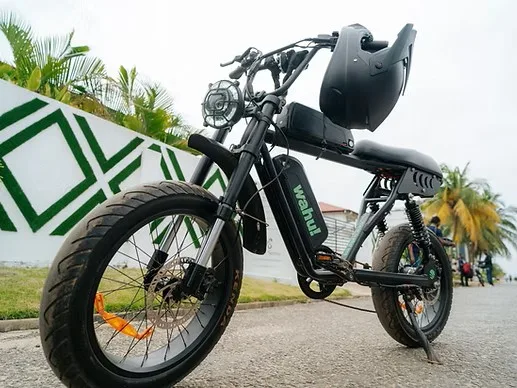
The District Assemblies Common Fund (DACF) has partnered with Wahu Mobility to roll out 5,000 electric motorcycles across the country in the first phase of the programme. The programme was announced at the Ghana-UK Investment Summit 2026 in London, which President John Dramani Mahama attended along with over 800 business leaders, investors, and policymakers.
The DACF Grant Mobilisation Programme is funded through the DACF and will start with the distribution of 280 eMotos nationwide. These eMotos will be used for property rate and business permit assessments, collecting market tolls, supervising sanitation activities, and conducting environmental health inspections. District officers will also use the eMotos to support agricultural extension services, carry out social welfare visits, and respond to emergencies. The eMotos come equipped with telematics technology that will transmit real-time data to a central dashboard, enabling district leaders to track field activities and assess their direct impact on revenue mobilisation and service delivery.
According to project projections, each electric motorcycle could save districts between GHS 9,000 and GHS 12,000 annually in fuel and maintenance costs compared to conventional petrol-powered motorcycles. The programme is expected to contribute to environmental sustainability by reducing carbon emissions, with each electric motorcycle replacing a petrol-powered unit projected to prevent approximately 1.8 tonnes of carbon dioxide emissions annually.
The project includes monitoring systems designed to meet the requirements of Article 6.2 of the Paris Agreement, potentially enabling Ghana to generate revenue from verified carbon emission reductions. This is a significant step towards the country's goal of reducing carbon emissions and transitioning to cleaner energy sources.
Wahu Mobility says the pilot is just the beginning of a broader strategy to decarbonise local government operations across Ghana. Future phases are expected to include the rollout of charging infrastructure nationwide and the introduction of a commercial paper instrument that would allow private investors to participate in the expansion of electric vehicle operations beyond the pilot stage.
The programme also aims to use data generated from the pilot to support carbon credit opportunities and create additional long-term revenue streams for districts. Districts could potentially sell carbon credits to international buyers, generating revenue from their efforts to reduce emissions.
Wahu Mobility's Chief Executive Officer, Harry Yamson, described the initiative as more than a vehicle deployment programme. According to him, the project represents critical infrastructure for local government operations while supporting Ghana's transition towards cleaner energy and domestic industrial development.
Administrator of the DACF, Harry Yamson, said, 'We believe this will revolutionize our service delivery at the local level. With the eMotos, our officers will be able to reach far-flung areas more easily and efficiently, which will ultimately benefit the local economy.'
Ghanaian-based Wahu Mobility is currently operating Ghana's first completely knocked-down assembly plant for electric two-wheelers, a move that supports local job creation, skills development, and domestic manufacturing.
The DACF Grant Mobilisation Programme is designed to introduce innovative technologies capable of delivering large-scale development impact. By giving every district direct experience with the technology, the programme aims to generate the evidence and support needed for future expansion. Stakeholders believe that local governments will be better equipped to respond to the needs of their communities, leading to improved service delivery and economic growth.
Key Facts
- 5,000 electric motorcycles will be deployed nationwide.
- 280 eMotos will be distributed nationwide initially.
- Each electric motorcycle could save districts between GHS 9,000 and GHS 12,000 annually in fuel and maintenance costs.
- The programme is expected to contribute to environmental sustainability by reducing carbon emissions.
- Each electric motorcycle replacing a petrol-powered unit is projected to prevent approximately 1.8 tonnes of carbon dioxide emissions annually.