

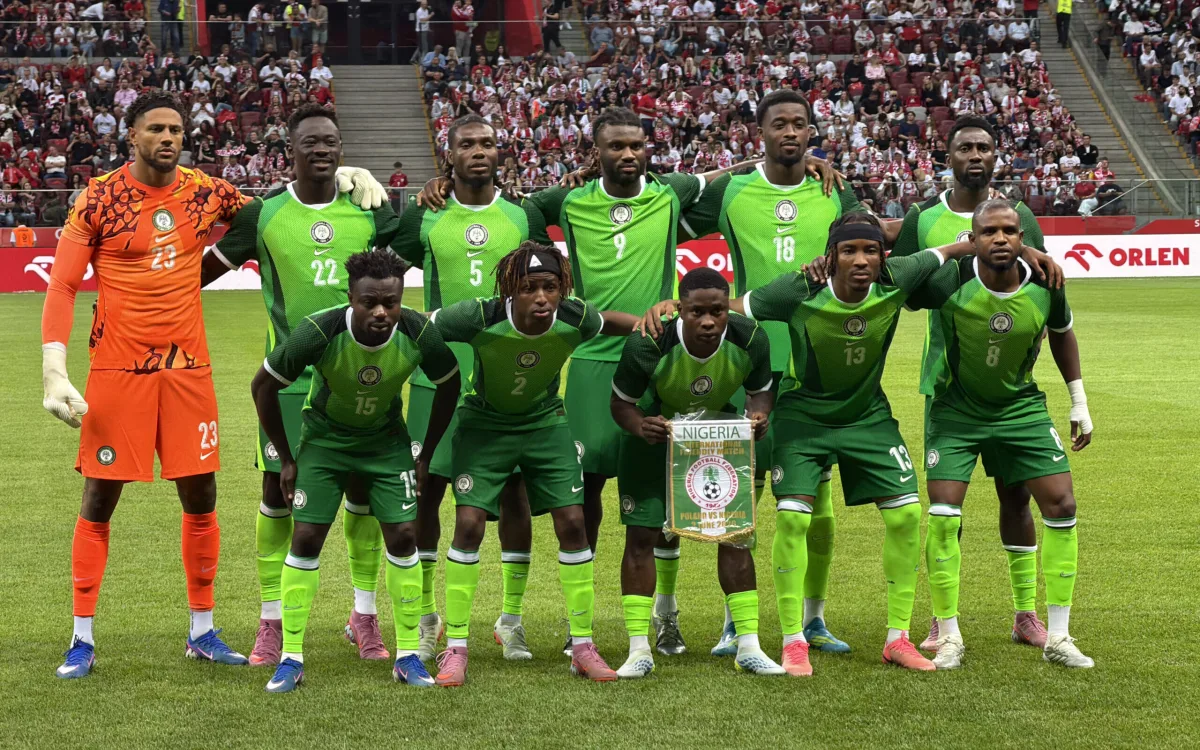
The 2026 FIFA World Cup kicked off last Thursday in Mexico, co-hosted with the United States and Canada, and Nigeria isn't there. For the second consecutive edition, the Super Eagles failed to qualify.
The tournament, expanded from 32 to 48 teams for the first time, will feature 104 matches across Mexico, the US, and Canada until the final on July 19 in the US. Spain are the defending champions and among the favourites. In the opening game, Mexico beat South Africa 2-0.
Nigeria's absence from the 10 African slots stings. The Super Eagles finished second in Africa Group C with 17 points, one point behind group winners South Africa. The other nine African teams at the Mundial are Egypt, Ghana, Senegal, Cape Verde, Morocco, Ivory Coast, Algeria, Tunisia, and DR Congo, who qualified through intercontinental play-offs.
The rot began after the 2023 Africa Cup of Nations in Abidjan. Coach Jose Peseiro resigned after Nigeria lost the final, and the Nigeria Football Federation dithered on a replacement. Finidi George, Peseiro's assistant, was appointed in an acting capacity, then given the job permanently. But his tenure was short-lived: under him, Nigeria drew 1-1 with South Africa and lost 2-1 to Benin in qualifiers. He resigned in June 2024.
Daniel Amokachi, named as his assistant, turned down the role without explanation.
Austin Eguavoen took over temporarily until Eric Chelle was appointed in January 2025. By then, qualification was no longer in Nigeria's hands — they needed South Africa to slip, which never happened.
This failure is a lost opportunity for national unity, which football has historically provided. The Super Eagles' debut in 1994 saw them reach the round of 16 and finish ranked fifth in the world. In 1998, they also advanced past the group stage. But since then, they've been eliminated at the group stage in four subsequent tournaments — and now missed two in a row.
"Those that fail to learn from history are doomed to repeat it," Winston Churchill warned.
Nigeria's football administrators appear to have ignored that lesson. The team has played friendlies against Poland, Portugal, Jordan, and Iran — all World Cup participants — to prepare. Their last friendly on Wednesday saw Portugal beat them 2-1, with Cristiano Ronaldo playing.
The financial cost is huge. The World Cup generates billions in media rights, player income, and merchandising. Nigeria's absence means lost revenue for players, the federation, and the broader football ecosystem.
Meanwhile, the tournament itself has faced controversy. US President Donald Trump's administration denied entry to Somalian referee Omar Artan, officials from several teams, and many supporters, dampening the festive spirit. Soaring ticket prices have also kept many fans away from stadiums.
For Nigeria, the question remains: how did a nation that once dazzled the world fall so far? The answer lies in poor administration, delayed decisions, and a failure to learn from past mistakes.