

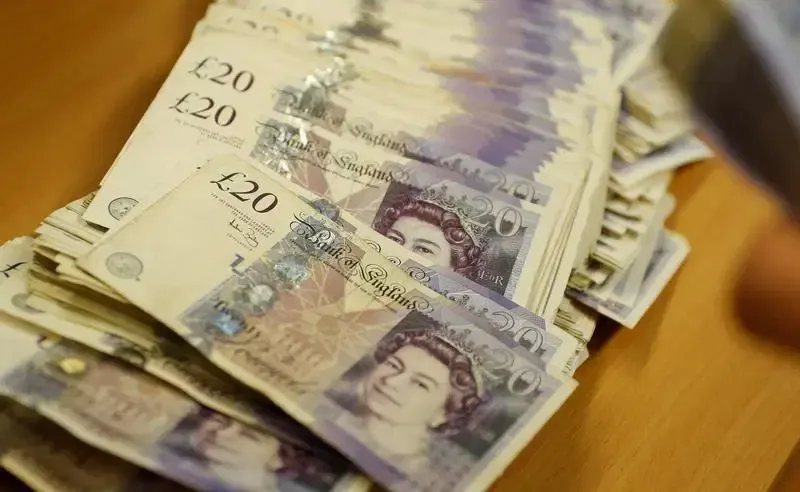
You probably woke up expecting the usual drama with the exchange rate, but the market decided to behave itself this Wednesday morning. The Nigerian Naira is standing tall against the British Pound, sticking to a script of steady, low-volatility trading that we haven't seen in a long time.
At the official Nigerian Foreign Exchange Market, the currency is trading at 1,846.90 Naira to a single British Pound. If you compare this to the closing figure of 1,846.94 Naira from Tuesday, you’ll see that the movement is barely enough to register on a chart. The central bank’s recent strategies to manage liquidity are doing what they were designed to do.
Walk into any major commercial hub in Lagos, Kano, or Abuja, and you’ll find a similar story. The parallel market—that street-level pulse of our economy—is echoing the official stability. Dealers are currently buying the Pound from customers at an average of 1,895 Naira, while the retail selling price is sitting comfortably between 1,910 and 1,915 Naira.
The gap between what you see on the official boards and what you hear from the bureau de change operators has tightened significantly. This lack of a massive spread shows that the panic-buying which usually fuels speculation has died down for the moment. People aren't rushing to dump Naira for Pound Sterling like the world is ending. That psychological shift provides a more predictable environment for the broader economy.
So, why the sudden calm? Market analysts point to a few practical factors keeping the boat steady. First, there’s a consistent flow of foreign remittances coming into the country, which helps supply the market with much-needed liquidity. When Nigerians in the diaspora send money home to their families, it feeds directly into the local availability of foreign exchange.
Corporate demand for the British currency has also been measured rather than frantic. Companies are currently preparing for their mid-year settlements, but they’re approaching their requirements in a structured way that avoids putting unnecessary pressure on the market. This disciplined approach from the private sector complements the government’s efforts to keep the currency within its current valuation band.
To really get why this matters, you have to look at how the European soft currencies behave in our market. Unlike the US Dollar, which dominates the bulk of global trade settlement, the Pound Sterling often fluctuates based on niche import needs, such as school fees for students studying in the UK or specialized equipment imports. Because the current supply is meeting that specific demand without hitting a wall, the volatility is muted.
If you’re a student or a business owner watching the rates, the current environment means you aren't paying a massive 'panic premium' just to access the funds you need. This kind of predictability is a rare luxury in our local economic climate. The market is currently finding a balance that makes trading much less of a gamble than it was just a few months ago.