

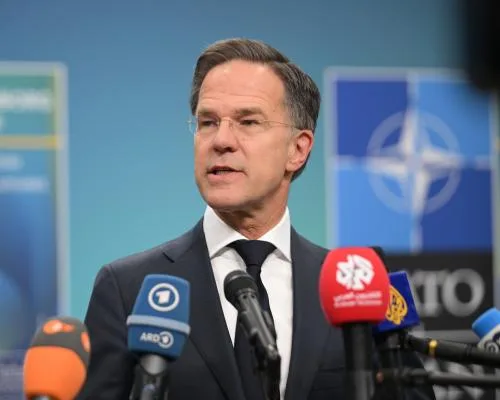
The single sharpest fact about the Nato foreign ministers' meeting in Sweden is that it's happening today, May 22, 2026, with a key focus on the alliance's shifting partnership with the US. You're likely wondering what this means - it means the US secretary of state, Marco Rubio, is expected to offer more clarity on the US deployment to Poland, which has been a point of confusion for Nato allies. The US deployment to Poland is a point of confusion because it's unclear what the US's long-term commitment to the region will be.
But what's really at stake here is the future of Nato itself. The alliance is trying to navigate a changing world, where the US is increasingly focused on other priorities, and European allies need to step up their contributions. Italy's Antonio Tajani stressed the need for a balanced Nato, with the US and European allies working together. He also expressed full support for Ukraine, including potential membership in the European Union. This support is significant because it shows that European allies are committed to Ukraine's future.
One of the key issues on the table is the US deployment to Poland. Poland's Radosław Sikorski showed up beaming after the US announcement, saying it means the presence of US troops in Poland will be maintained at previous levels. However, Nato's secretary general, Mark Rutte, struck a more cautious note, saying the details are still being worked out. They're still being worked out because there are many factors to consider, and Nato allies can't rush into a decision.
And then there's the issue of Russian provocations. Estonia's foreign minister, Margus Tsakhna, accused Russia of spreading fake news about Nato allowing Ukraine to use Baltic states' territories for attacks against Russia. Latvia's Baiba Braže also denied Russia's accusations, saying that's just not true. They're denying these accusations because they know they're false, and they won't let Russia spread misinformation.
US secretary of state Marco Rubio told reporters, "You have countries like Spain denying us the use of these bases – well then why are you in Nato? That's a very fair question." This quote gets at the heart of the issue - what does it mean to be a Nato ally, and what are the responsibilities that come with it? It's a fair question because Nato allies should be committed to working together.
The meeting in Sweden is also an opportunity for Nato allies to discuss the reform of the alliance, including a potential shift in burden from the US to European allies. Rutte acknowledged that this is a step-by-step process, but it's one that's necessary for the future of Nato. It's necessary because the current system isn't working, and Nato allies need to adapt to changing circumstances.
As the meeting gets underway, it's clear that there are many issues on the table. From the US deployment to Poland to Russian provocations, there's a lot to discuss. And with the US secretary of state, Marco Rubio, expected to offer more clarity on the US position, it's likely to be a busy day. They won't be able to discuss everything in one day, but they'll make a start.
The explosion at a plant owned by the Hungarian oil company, MOL, in Tiszaújváros, Hungary, is also a concern. According to Hungarian media outlet 444.hu, one person was killed and several were seriously injured. The energy minister is on his way to the scene, and it's unclear what caused the explosion. They can't determine the cause yet because they're still investigating.
In terms of what's next, it's likely that Nato allies will continue to discuss the alliance's future, including the potential for a stronger European presence. With the US increasingly focused on other priorities, it's up to European allies to step up and take on more responsibility. They won't be able to do it alone, but they'll work together. This could include increased military spending, as well as a greater role in regional security. They'll need to be careful, though, because they can't afford to make mistakes.
As the day goes on, it's likely that we'll hear more from Nato allies about their plans for the future. With so many issues on the table, it's clear that this meeting is just the beginning of a longer conversation about the future of Nato. They'll need to keep talking, and they won't reach a decision quickly.
Key Facts
- Nato foreign ministers meet in Sweden to discuss the alliance's future
- US secretary of state Marco Rubio is expected to offer more clarity on the US deployment to Poland
- Italy's Antonio Tajani expressed full support for Ukraine, including potential membership in the European Union
- Estonia's foreign minister Margus Tsakhna accused Russia of spreading fake news about Nato
- Latvia's Baiba Braže denied Russia's accusations, saying that's just not true
- The meeting is an opportunity for Nato allies to discuss the reform of the alliance, including a potential shift in burden from the US to European allies
- The explosion at a plant owned by the Hungarian oil company, MOL, in Tiszaújváros, Hungary, is a concern, with one person killed and several seriously injured