

Hungary's Government Proposes Constitutional Changes to Remove President
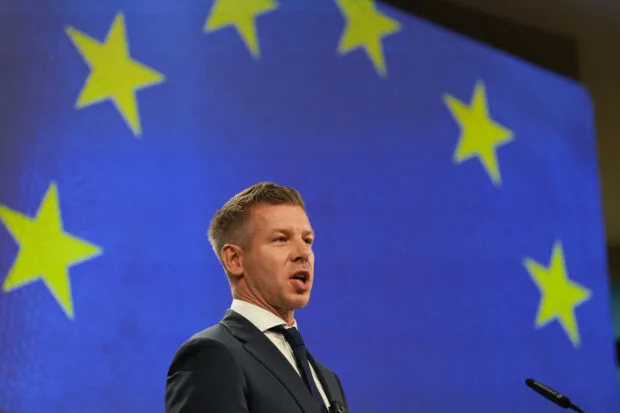
Hungary's government has proposed constitutional changes to remove the country's president, a move seen as part of a broader effort by new Prime Minister Péter Magyar to dismantle the autocratic rule of his predecessor, Viktor Orbán. With a two-thirds majority in parliament, Magyar can push through sweeping changes to the constitution, which Orbán built over his 16 years in power.
Hungary's new Prime Minister, Péter Magyar of the Tizsa party, won an overwhelming victory in the April election, taking 75% of the vote. This mandate is expected to give Magyar the flexibility to dismantle Orbán's power structure and restore accountability to Hungary's government.
Hungary's President, Tamás Sulyok, was appointed by the then-ruling party of Viktor Orbán in 2024. Sulyok's tenure has been marked by controversy, with opposition groups accusing the president of consolidating Orbán's power and undermining democratic institutions.
Magyar's push to remove Sulyok is part of a broader effort to restore Hungary's democratic institutions, which Orbán's rule has eroded. The proposed constitutional changes would effectively strip Sulyok of his powers and render the office of the presidency largely ceremonial.
Hungary's government has proposed an overhaul of the country's constitution, including changes to the rules governing the president's appointment and removal. The proposed changes would give parliament the power to select the president directly, effectively bypassing the electoral college. This move would significantly reduce the president's autonomy and limit the scope of their powers.
Magyar has repeatedly called on Sulyok to resign or be removed by constitutional means. The president has refused to step down, citing his constitutional powers and insisting that he remains committed to his duties.
The move to remove Sulyok is the latest in a series of actions by Magyar aimed at dismantling Orbán's power structure. Magyar's government has also launched investigations into alleged corruption and abuse of power during Orbán's rule.
Orbán's 16-year reign has seen Hungary's democratic institutions eroded, and his rule has been marked by allegations of corruption and abuse of power. Magyar's success in dismantling Orbán's power structure could restore balance to Hungary's government and pave the way for more accountable leadership.
Hungary's parliament is expected to vote on the constitutional changes imminently. A two-thirds majority is required for the changes to be approved, which Magyar is expected to secure with ease. If the changes are approved, the president's powers will be significantly curtailed, and the presidency will become largely a ceremonial role.
The proposed constitutional changes would have far-reaching implications for Hungary's government and its institutions. They would likely lead to the removal of Sulyok and the stripping of the presidency of its powers. This move would mark a significant shift away from the authoritarian rule of Orbán and towards a more democratic and accountable system of government.
Orbán's legacy is complex and contested, with some hailing him as a champion of nationalism and others condemning him as a dictator. Magyar's efforts to dismantle Orbán's power structure are seen as a welcome development by many in Hungary.
The proposed constitutional changes have sparked heated debates in Hungary, with some critics accusing Magyar of overstepping his mandate and undermining the country's democratic institutions. Others have welcomed the move as a necessary step towards restoring accountability to Hungary's government.
Hungary's government has promised to restore democratic institutions and promote transparency and accountability. Magyar's efforts to dismantle Orbán's power structure could be seen as a crucial step towards achieving these goals.
The proposed constitutional changes have significant implications for Hungary's future, potentially paving the way for more accountable leadership and greater transparency in government.
Orbán's influence remains significant, and many wonder what the future holds for Hungary's politics. Magyar's success in dismantling Orbán's power structure could determine the course of Hungary's history.
Magyar's government has launched an investigation into Orbán's alleged corruption and abuse of power. The inquiry has sparked heated debates in Hungary, with some hailing it as a welcome development and others condemning it as a witch hunt.
Orbán's legacy is complex and contested, with some hailing him as a champion of nationalism and others condemning him as a dictator. Magyar's efforts to dismantle Orbán's power structure are seen as a welcome development by many in Hungary.
Key Facts
- A two-thirds majority in parliament is required for constitutional changes, which Péter Magyar is expected to secure.
- Péter Magyar's party won 75% of the vote in the April election.
- Tamás Sulyok was appointed by Viktor Orbán in 2024.
- 16 years of Viktor Orbán's rule have seen Hungary's democratic institutions eroded.
- An investigation into alleged corruption and abuse of power during Orbán's rule has sparked heated debates.