

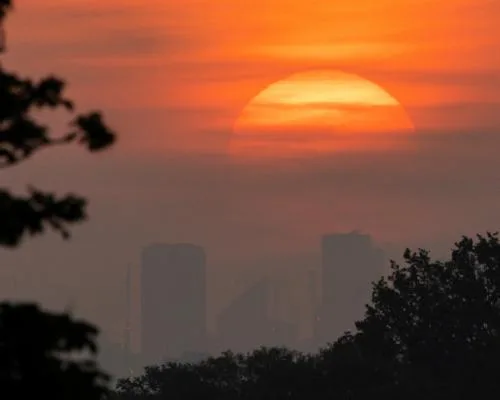
The UK is experiencing its hottest May day in nearly 80 years, with temperatures reaching as high as 32.3C in Kew Gardens, west London. This surge in temperature has broken records and led to the first area of the UK hitting the heatwave threshold
- Santon Downham in Suffolk, which recorded temperatures of more than 27C for three consecutive days. It's broken records, and it's also had a significant impact on the UK's weather patterns.
And it's not just Kew Gardens that felt the heat. Other parts of the UK, including Cardiff and Armagh, recorded their highest temperatures of 2026 on Sunday. Cardiff reached 27.4C, and Armagh hit 23.4C. Scotland also saw high temperatures, with Edinburgh reaching 23.5C, just 0.1C below the record of 23.6C set in Aboyne on 1 May. They're experiencing high temperatures, and it's causing disruptions.
But what's behind this sudden spike in temperatures? The Met Office says the climate crisis is increasing the likelihood of extreme heat. In fact, a Met Office spokesperson said that breaking the 32.8C May record is around three times more likely now in our current climate than it would have been in natural climate conditions before the Industrial Revolution. This means that what was around a one-in-100-year event is now around a one-in-33-year event. It's a significant change, and it's happening because of the climate crisis.
The heatwave has led to disruptions and health warnings across the UK. The UK Health Security Agency issued amber heat alerts on Friday morning for several areas, including the East Midlands, the West Midlands, the east of England, London, and the south-east. These alerts will remain in place until 5pm on Wednesday, warning of an increase in risk to health for individuals aged over 65 years or those with pre-existing health conditions. They're warning people to take precautions, and they're urging people to be aware of the risks.
The climate crisis is increasing the likelihood of extreme heat, said a Met Office spokesperson. Breaking the 32.8C May record is around three times more likely now in our current climate than it would have been in natural climate conditions before the Industrial Revolution. This change is significant, and it's happening because of human activities. It's having a major impact on our weather patterns, and it's not just the UK that's affected.
As the heatwave continues, people are being advised to take precautions to stay safe. This includes staying hydrated, and staying out of the sun. They're also being advised to check on vulnerable neighbors. The UK Health Security Agency is urging people to be aware of the risks of heat-related illnesses, such as heat exhaustion and heat stroke. They don't want people to get sick, so they're warning them to take precautions.
Yet, despite the warnings, many people are making the most of the warm weather. Sunbathers flocked to beaches across the UK, and Lord's cricket ground relaxed its strict dress code for its members' pavilion. The Marylebone Cricket Club usually requires spectators to wear lounge suits or tailored jackets and ties, but the hot weather led to a more relaxed approach. They're enjoying the weather, and they're not letting the heatwave stop them.
So, what happens next? The Met Office is predicting that temperatures could rise again on Monday, with possible highs of between 33C and 34C. This would further exacerbate the heatwave conditions, leading to more disruptions and health warnings. The UK is likely to see more hot weather, and it's going to have a significant impact on the country. As the UK continues to sizzle, it's clear that the climate crisis is having a major impact on our weather patterns.
The UK has experienced its hottest May day in nearly 80 years, with temperatures reaching 32.3C in Kew Gardens. The heatwave has prompted health warnings and disruptions across the UK. The climate crisis is increasing the likelihood of extreme heat, with breaking the 32.8C May record now around three times more likely than it would have been in natural climate conditions before the Industrial Revolution. The UK Health Security Agency has issued amber heat alerts for several areas, including the East Midlands, the West Midlands, the east of England, London, and the south-east. Temperatures are predicted to rise again on Monday, with possible highs of between 33C and 34C.
They're expecting it to get even hotter, and they're warning people to be prepared.
As the situation continues to unfold, it's clear that the UK is not alone in experiencing extreme weather conditions. Large parts of western Europe are also experiencing similar peaks, with the French national weather agency, Météo-France, saying that periods of exceptional heat are to be expected more and more often and more and more prematurely, and to be more and more intense. The UK won't be the only country affected, and it's not just a short-term problem. It's a long-term issue, and it's going to require a significant response. The climate crisis is having a major impact on the world, and it's not going away anytime soon.
They can't ignore it, and they won't be able to fix it overnight.