

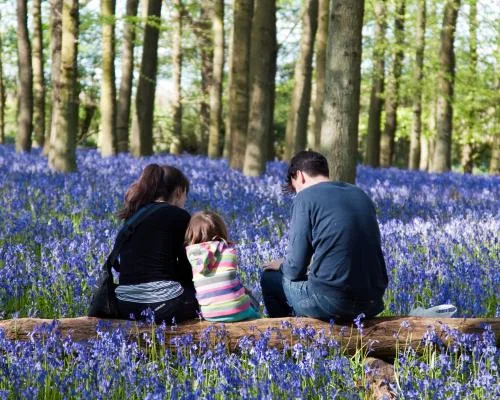
Almost half of UK adults spend less than three hours a week in nature, a new poll has found. This is a sharp contrast to their childhood, when almost two-thirds of people said they spent more than half their free time outside.
The poll, carried out for the Wildlife Trusts, surveyed 2,000 people and found that one in 10 adults spend less than one hour a week in natural settings such as gardens, parks, fields, or woods. This limited exposure to nature is alarming, given that spending time outdoors is known to significantly benefit physical and mental health.
Previous research has shown that regular access to green spaces reduces GP visits by 28% and could save the NHS £2bn a year. The government has committed to ensuring everyone has access to a green space within a 15-minute walk of their home, but one in five households don't. Access is even worse in deprived areas, where they're less likely to have green spaces nearby.
Dom Higgins, head of health and education at the Wildlife Trusts, said:
Being outdoors in nature has so much joy to offer us all – fresh air, sunlight, birdsong, and so many proven health benefits. So it's hard not to be alarmed by the number of people who spend so little time outdoors, but we need to factor in that not everyone has easy access to natural environments.
The Wildlife Trusts' 30 Days Wild challenge has been taken up by 3 million people in the past decade, with the charity providing free guides and children's activity packs this year featuring the TV character Bing. More than three-quarters of children said they wanted to spend more time in nature, according to a 2024 poll for the National Trust.
However, two-thirds of parents can only take their children to nature spaces once a week or less, with accessibility being the main barrier. A 2016 poll suggested that three-quarters of UK children spent less time outside than people in prison.
Julie Jones-Evans, chair of the Local Government Association's culture, tourism, and sport committee, said parks and green spaces were vital to local communities. However, she said councils have faced financial pressure due to rising demand for legally required services, including social care and support for children with special educational needs and disabilities. They can't afford to maintain green spaces as they'd like to.
The government is making efforts to improve access to nature, with plans for three new national forests and nine new national river walks. A spokesperson for the Department for Environment, Food and Rural Affairs said:
This government is making sure that everyone across the country has access to nature. Wherever you live, it's introducing or improving green spaces.
Key Facts
- Almost half of UK adults spend less than three hours a week in nature.
- One in 10 adults spend less than one hour a week in natural settings.
- Regular access to green spaces reduces GP visits by 28% and could save the NHS £2bn a year.
- The government has committed to ensuring everyone has access to a green space within a 15-minute walk of their home.
- One in five households currently don't have access to a green space within a 15-minute walk.
Access to nature is crucial. Dom Higgins said taking a moment to rewild yourself can be as simple as stopping for a few deep breaths at your local park. You can also lie on the ground looking up through the trees to the birds above. It's time for UK adults to reconnect with nature and reap its numerous benefits.
The Wildlife Trusts are urging people to spend a few minutes recalling a childhood memory of being outside. Then they should venture outdoors and experience nature once more. The charity's 30 Days Wild challenge and the government's plans for new national forests and river walks offer plenty of opportunities for UK adults to get back in touch with nature.
In the end, it's up to individuals to take the first step and make a change. By prioritizing access to nature, UK adults can improve their physical and mental health. They'll also create a better future for themselves and their children by taking small steps to reconnect with the outdoors. They won't regret it, as they'll be improving their overall well-being.