

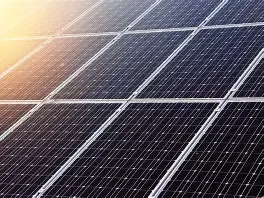
The relentless sun in Accra beats down on rooftops for hours every day, yet for years, the primary seat of Ghanaian democracy has been just as reliant on the national grid as the small corner shops in Osu. That's about to change. Parliament has officially declared its intent to install solar panels within its enclave, a move designed to signal the house's commitment to renewable energy rather than just talking about it during committee meetings.
This announcement came from Yaw Addo Frimpong, the Chair of the Committee on Environment, Science, and Technology, at the Ghana Green Investment Dialogue held earlier today in the capital. He made it clear that after years of workshops and policy white papers, mere awareness of renewable energy is a thing of the past. The time has come for practical action, and the goal is to move straight into installation, turning government buildings into self-sustaining nodes that won't flinch when the lights go out elsewhere.
It's time for awareness creation about renewable energy to turn into action.
Yaw Addo Frimpong’s vision goes beyond just lighting up the Parliament house. He is pushing for a model similar to what Zambia did during their own power crunch, where legislators were empowered to use their constituency development funds to bankroll small-scale renewable projects. Imagine a world where instead of waiting for a national contractor to fix a transformer, your local MP has the autonomy to set up a solar micro-grid that keeps your local clinic running through the night. He believes this decentralised approach is the fastest way to relieve the massive pressure currently throttling our main power infrastructure.
Dr. Robert Sogbadji, the Deputy Director for Renewable Energy and Green Transition at the Ministry of Energy and Green Transition, was also on hand to add some weight to the announcement. The country is finally shifting focus from expensive, small-scale pilot tests to building big, bankable pipelines for energy investment. The Ministry’s work under the Scaling-Up Renewable Energy Programme (SREP) is already active, having installed solar mini-grids on islands and lakeside communities that were previously left in the dark for decades.
These mini-grids are not just about keeping a few bulbs on in a hut; they're powering local agro-processing mills and small businesses, which are the real heartbeat of the local economy. Dr. Sogbadji also dropped a hint about a new national net-metering framework currently in the pipeline. Once this is live, if you have solar panels on your own roof and aren't using all the power you're generating, you'll be able to feed that excess back into the national grid and get paid for it.
The grid's future
Ghana’s energy sector has been through a lot, with erratic supply causing headaches for businesses and families alike. By forcing the government to act as a primary consumer of solar, the administration is creating a captive market that will drive down the cost of green tech for the rest of us. When Parliament buys solar, suppliers have to scale up, which eventually makes it cheaper for the man on the street to install his own system. This isn't just about environmental vanity; it's about building a buffer against the frequent load-shedding exercises that have defined our recent history. The involvement of the United Nations Industrial Development Organisation (UNIDO) in these dialogues suggests that international financing might finally be aligning with local ambition.
If the money flows as planned, we could see a radical shift in how we power our public institutions, moving away from a single point of failure and toward a diverse, decentralized energy map.
For this to work, the Ministry needs to coordinate across every branch of government, from the finance folks who hold the purse strings to the utility providers who currently control the grid. The ambition is to create a legal environment where constituency-level projects are a standard part of the annual budget. For those in the informal sector, this means the prospect of reliable power is finally moving out of the realm of empty promises and into the realm of technical blueprints.