

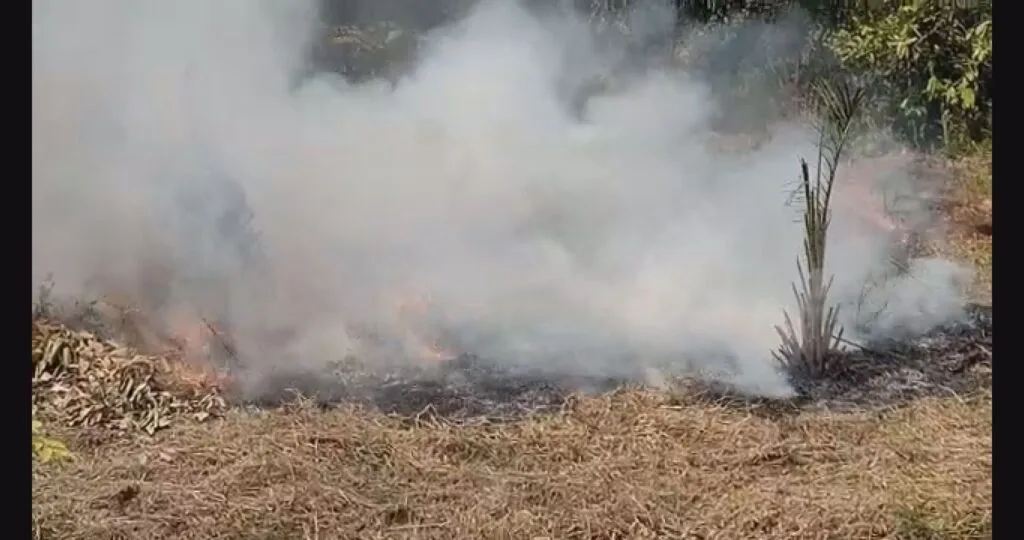
In the quiet fields of Asutsuare, the air isn't just for breathing anymore; it's a silent, smoky danger slowly choking the people who put food on our tables. Farmers here are caught in a vicious cycle where clearing land to feed the nation is literally burning through their own lungs.
The Council for Scientific and Industrial Research is preparing to drop a study confirming what many have felt in their chests for years: traditional burning isn't just bad for the environment, it's a public health disaster waiting to explode. When a farmer sets fire to a single kilogramme of crop residue, the smoke unleashed is 100 times higher than what the World Health Organization says is safe for human lungs.
The Real Cost of Burning
The math is terrifying. Farmers spend every available cent to stay afloat, and in doing so, they sacrifice their most valuable resource: their health. Clearing land to feed the nation costs their lungs.
Dr. Kwaku Onwona-Hwesofour Asante notes that this isn't just about the occasional cough. This practice drives up local heat levels and strips the earth of the nutrients it needs to actually grow the next crop. It's a classic case of chasing short-term gains while destroying the very soil that pays the bills.
"This shows why open burning harms communities," says Dr. Kwaku Onwona-Hwesofour Asante. "Reducing or stopping bush burning could significantly cut air pollution and help lower heat levels in the atmosphere."
For 40-year-old rice farmer Cecilia Teye Ameh, the issue isn't abstract science; it's the burning sensation in her eyes that feels like someone rubbed fresh green pepper into them. After 15 years of farming, she now finds herself a regular at the Juapong Hospital. She knows the smoke from the weeds and leftover crops causes her asthma attacks, but she feels she has no choice.
Weedicides are simply too expensive for her operation, so she opts for the matchbox instead. The high cost of weedicides has become a catch-22 for many smallholder farmers: the cheapest option is burning, but it's also the most hazardous.
Trapped by the Market
The economic reality for smallholder farmers across West Africa is stark and unforgiving. Without access to affordable machinery or chemical sprays, burning remains the fastest and cheapest way to reset a field. Mathias Kwame Nunekpeku, another farmer with two decades of grit under his nails, describes the daily struggle of managing his own health while trying to survive.
At 48, his asthma and diabetes make every day on the farm feel like a marathon run with a heavy load. He knows the risks of burning, but he also knows he has no other choice. The thick haze forces him to stop work, lie down, and struggle for breath, cutting into his productivity and his profit.
For him, the fire is also a shield against marauding cattle that destroy his crops and bring in more weeds. The fire is a temporary solution that comes at the cost of his long-term health and the quality of his land.
Safer Paths
Experts are pointing toward manual weeding, mulching, cover cropping, and rotating crops as the way to break this cycle. These methods are undeniably better for the environment, but they come with a high price tag in terms of time and labor. For a farmer who is already counting every cedi to get to the next planting season, asking for more manual labor feels like a tall order.
Unless there is a shift in how resources like bio-based herbicides are distributed to rural areas, these farmers remain stuck. They are the ones providing the maize and cassava for the markets in Accra and Kumasi, yet they are the ones suffering from lung damage and eye strain.
It's a heavy price for a bowl of fufu, and it shows why we need to pay closer attention to the hands that tend the soil. The land is tired, the air is thick, and the farmers are tired of breathing it in.