

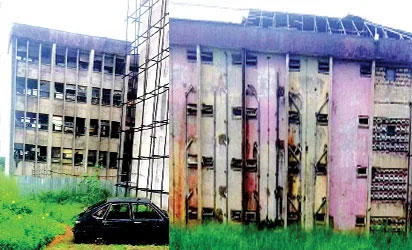
The Federal Government is embarking on a massive project to build new hostels in tertiary institutions across the country. The project, which will cost N250 billion, aims to provide comfortable and affordable accommodation for students. It's a project that's been long overdue, as many students don't have access to decent housing.
Recently, the Minister of Education, Dr. Tunji Alausa, attended the soil-turning ceremony of the projects at the Lagos State University, LASU, and Yaba College of Technology, Yabatech. During the ceremony, Dr. Alausa stated that the projects would be on a Build-Operate-Transfer arrangement. He didn't elaborate on the details, but it's clear that the government is committed to seeing this project through.
The Minister explained that the government is spending N100 billion to build 500 spaces of student hotels in over 50 tertiary institutions. They're also building 24 PPP hostels with a capacity of at least 1,200 to 1,500 bed spaces across 24 tertiary institutions. The Federal Government, through the Tertiary Education Trust Fund, TETFund, will contribute one billion naira, while private investors will contribute three billion naira for each project. It's a significant investment, and it shows that the government is willing to spend money to improve the education sector.
The completion period for the PPP hostels is 24 months, which is a relatively short timeframe. The other hostels will be completed in less than 12 months, which is even faster. The Minister also mentioned that the Presidency, via TETFund, has a five-point agenda for universities, which includes the rehabilitation of students' hostels, classrooms, and lecture theatres. It's a comprehensive plan, and it's clear that the government is committed to improving the education sector.
The Vice-Chancellor of LASU, Prof. Ibiyemi Olatunji-Bello, expressed her delight at the promises made by the Federal Government. She stated that the construction of a 1,500-bed capacity hostel will go a long way in addressing the issue of accommodation in the university. She's right, as it will provide a better living environment for students. The 1,500-bed hostel will also improve the number of students that will be on campus, their safety, and social relations, said Prof. Olatunji-Bello.
The Chairman of the National Association of Nigerian Students, NANS, Joint Campus Council, JCC, Lagos Axis, Quadri Ishola Odewunmi, commended the Minister and the Rector of Yabatech for the groundbreaking ceremony of a 1,500-bed hostel at the institution. Odewunmi described the initiative as a way of solving the accommodation challenge faced by many students. He's pleased that the government is taking action to address the issue.
He particularly praised the Minister for his proactive and responsive approach to issues affecting Nigerian students. The student leader noted that the Minister's leadership has rekindled hope within the student community. It's clear that the Minister is committed to making a positive impact.
However, Odewunmi urged the Minister to extend similar attention to lecturers and other non-academic staff, emphasizing the need for a holistic improvement in the education sector. He's right, as it's essential to consider all aspects of the education system.
The accommodation crisis in Nigerian tertiary institutions is not new. Many students struggle to find a place to live, with some forced to live in overcrowded and unsanitary conditions. The new hostels are expected to provide a better living environment for students, which will hopefully improve their academic performance. It's a significant step forward, and it's clear that the government is committed to addressing the issue.
In addition to building new hostels, the government should also consider renovating existing ones. Many of the old hostels are in a state of disrepair, with broken pipes, torn roofs, and poor lighting. Renovating these hostels won't only provide more accommodation options for students but also improve their overall living conditions. It's a sensible approach, and it's clear that the government is willing to listen to suggestions.
The N250 billion spent on building new hostels is a significant investment in the education sector. It shows that the government is committed to providing a conducive learning environment for students. However, it's essential to ensure that the funds are used judiciously and that the hostels are built to last. The government can't afford to waste money on poorly constructed buildings.
The student accommodation crisis is not limited to Nigeria. Many countries around the world struggle to provide adequate housing for their students. However, the Nigerian government's approach to solving the problem is unique. By partnering with private investors, the government can provide more accommodation options for students without putting a strain on the national budget. It's a clever approach, and it's clear that the government is willing to think outside the box.
Key Facts
- N250 billion will be spent on building new hostels in 50 tertiary institutions
- 24 PPP hostels will be built with a capacity of at least 1,200 to 1,500 bed spaces
- The completion period for the PPP hostels is 24 months
- The Federal Government will contribute one billion naira, while private investors will contribute three billion naira for each project
- The new hostels will provide a better living environment for students, which will hopefully improve their academic performance
The student accommodation crisis in Nigeria is a complex issue that requires a multifaceted approach. While building new hostels is a step in the right direction, it's essential to also consider other factors such as affordability, accessibility, and sustainability. By providing a comprehensive solution to the crisis, the government can ensure that students have a conducive learning environment, which will ultimately improve the quality of education in the country. The government won't solve the problem overnight, but it's clear that they're committed to making progress.