

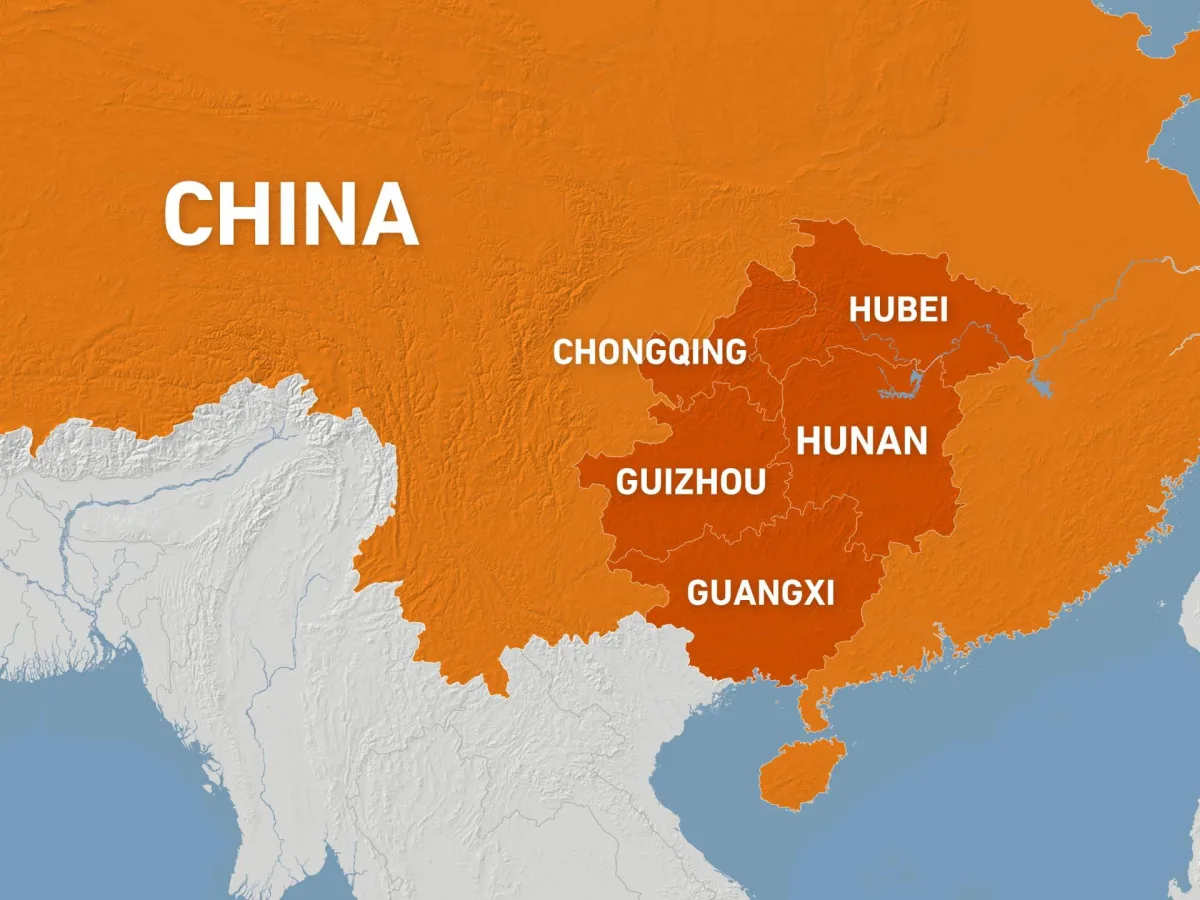
At least 10 people have died after heavy rains caused widespread flooding and landslides across southern and central China. The China Meteorological Administration (CMA) has maintained elevated orange alerts for heavy rain and severe stormy weather, warning that the huge precipitation system has entered its strongest, most destructive stage.
The torrential downpours have shattered multiple local historical records, particularly in the central Hubei province. State broadcaster CCTV reported that 337 townships in Hubei recorded more than 100mm of rain within a 48-hour window. This amount of rainfall is unprecedented, and it's no surprise that the floods have caused so much damage. They're a result of the extreme weather conditions that don't usually occur in this region.
In Guangxi, six people died after a pick-up truck carrying 15 passengers fell into a swollen river amid heavy rainfall, CCTV said. In Hubei, three people were killed by flash floods in a low-lying village, while another death was recorded in southern Hunan province. The images of the floods are shocking, with residents in Jingzhou, Hubei, standing knee-deep in floodwater. Some residents are even catching fish swimming in submerged streets, which shows how severe the flooding is.
The China Meteorological Administration attributes the unusually large area of intense rainfall to the convergence of moisture from the Bay of Bengal, the South China Sea, and the Pacific Ocean. They say the slow-moving nature of the weather system has exacerbated cumulative rainfall totals. This means the floods aren't just a result of heavy rainfall, but also the way the weather system is moving. It's moving slowly, which allows more rain to fall in the same area.
Authorities have suspended schools, businesses, and transport services in affected areas. Emergency responses are under way, and residents in parts of Hubei and Hunan are actively being relocated. The National Meteorological Centre expects severe weather to move east and south over the next two days. The heaviest rainfall is forecast along the middle and lower reaches of the Yangtze River from Wednesday.
The floods have caused significant disruption to daily life, with many people unable to access basic necessities like food and water. The Chinese government has activated a Level-IV emergency response, the initial tier to accelerate state-level disaster relief for floods, in Hunan and Guangxi. They're maintaining the same emergency tier for Hubei, Chongqing, and Guizhou. This response will help provide aid to those affected by the floods.
It's not just the people who are affected, but also the infrastructure. Several cars were almost entirely underwater, and many buildings have been damaged. The full extent of the damage is still unknown, but it's clear that it will take a long time to recover from this disaster. They can't recover immediately, as the damage is too extensive.
The Chinese government has a lot of experience in dealing with natural disasters, but this one is particularly challenging. The scale of the flooding is enormous, and it's affecting many different provinces. The government won't be able to provide aid to everyone immediately, but they're working on it. They'll need to work quickly to provide aid to those affected and to prevent further damage.
As the situation continues to unfold, it's clear that the people of southern and central China will need all the help they can get. The international community will be watching closely to see how the situation develops, and many will be hoping that the affected areas can recover quickly. They'll be monitoring the situation closely, and they won't be surprised if the recovery takes a long time.
Key Facts
- At least 10 people have died
- 337 townships in Hubei province recorded over 100mm of rain in 48 hours
- Six people died in Guangxi after a pick-up truck fell into a swollen river
- Three people were killed by flash floods in a low-lying village in Hubei
- The China Meteorological Administration has maintained elevated orange alerts for heavy rain and severe stormy weather
The road to recovery will be long and difficult, but with the right support, the people of southern and central China can rebuild and move forward. For now, the focus is on providing aid and assistance to those affected, and on preventing further damage from the floods. The government and aid organizations won't stop providing support until the affected areas have fully recovered. They'll keep providing aid as long as it's needed, which could be for a long time.