

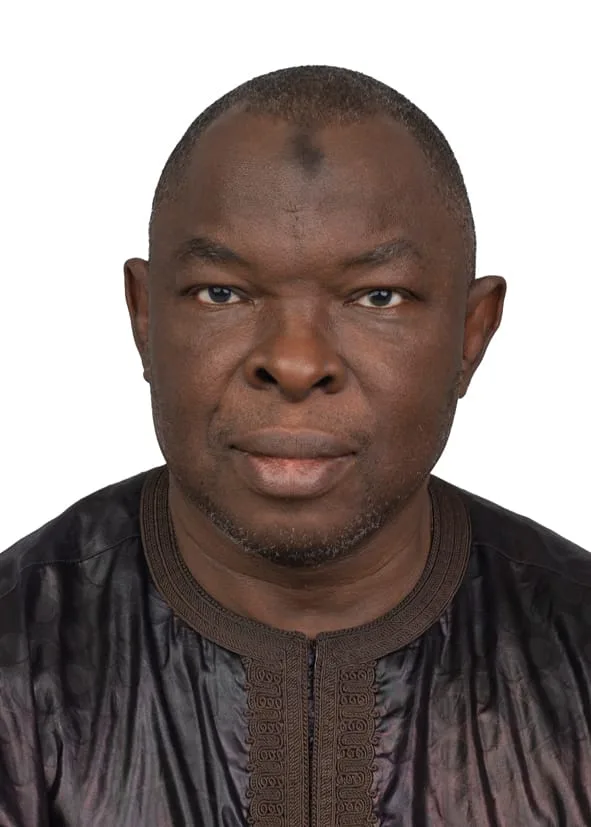
You won't believe the single sharpest fact in one or two punchy sentences: Walter Rodney, a renowned African-Caribbean historian and Pan-Africanist, was brutally killed in 1980, just before his visit to Nigeria.
Walter Rodney, also known as Wally, was a historian and academic who taught in Tanzania, where he met many Southern African liberation fighters and contributed to their struggles against colonialism. In 1968, he joined the University of the West Indies in Jamaica, and by 1974, he moved to Dar es Salaam in Tanzania to teach at the University of Dar es Salaam.
Rodney's teachings were not limited to the university; he also shared his ideas with the broader community through public lectures and discussions. His academic work focused on the history of Africa, and he was particularly interested in how colonialism and imperialism had affected the continent. His book 'How Europe Underdeveloped Africa' was a critical analysis of the impact of European colonialism on Africa and its people.
But it was not until 1980, when I met Walter Rodney just after his death, that I began to understand the significance of his work and the impact it had on his community. I had just been admitted into the School of Basic Studies (SBS), Ahmadu Bello University (ABU), Zaria, and was struck by the presence of his posters all over the campus.
On top of the posters was Rodney's picture, followed by his name, date of birth, and date of death. Then there was a bold quotation: 'This Act In Itself Will Not Delay Their Day of Judgment.' These questions kept reoccurring in me during and after registration for my SBS programme: Who is this man, Walter Rodney? What happened to him to warrant his posters being placed all over the campus? Was he killed?
The answers to these questions would only come after I began my History course, and my lecturers introduced me to Rodney's work. I was particularly drawn to his book 'How Europe Underdeveloped Africa,' which was a must-read for any student interested in knowing the history of Africa. The book was a critical analysis of how Western Europeans and Arabs laid the foundation for Africa's underdevelopment. I read the book with pain and inquisitiveness, and it marked a turning point in my understanding of African history.
But what triggered Rodney's brutal killing? In August 1980, Rodney was visiting Guyana when he was shot and killed by a Guyanese soldier. His book was the reason behind his death, as the Guyanese government, backed by the US Central Intelligence Agency (CIA), opposed his ideas and saw him as a threat. Rodney's killing shocked the academic community and sparked outrage across the world.
Today, Rodney's legacy lives on through his work, which continues to inspire scholars and activists around the world. His book 'How Europe Underdeveloped Africa' remains a classic in the field, and his ideas continue to shape our understanding of African history and its complexities.
'This Act In Itself Will Not Delay Their Day of Judgment'
- Walter Rodney
Walter Rodney's story serves as a reminder of the power of knowledge and the impact it can have on individuals and communities. His legacy is a testament to the enduring power of ideas and the importance of standing up for what one believes in.
In addition, Rodney's work has had a significant impact on Nigerian students like myself. His book has been a mandatory read in our History courses, and his ideas have shaped our understanding of African history and its complexities. Rodney's work has inspired many of us to take a closer look at Africa's past and its present, and to engage with the continent's history and culture in a more meaningful way.
Moreover, Rodney's legacy extends beyond Nigeria, as his ideas have influenced scholars and activists across Africa and beyond. His work continues to be relevant today, as we grapple with issues of colonialism, imperialism, and the ongoing struggle for African liberation.
Key Facts
- Walter Rodney was a historian and Pan-Africanist who was brutally killed in 1980.
- He was a professor at the University of Dar es Salaam and contributed to the national liberation struggles in several African countries.
- His book 'How Europe Underdeveloped Africa' was a critical analysis of the impact of European colonialism on Africa and its people.
- The Guyanese government, backed by the US CIA, opposed his ideas and saw him as a threat, which led to his killing.
- Rodney's legacy continues to inspire scholars and activists around the world, and his book remains a classic in the field.
This article has shed light on the story of Walter Rodney, a man whose life was cut short but whose ideas and legacy continue to inspire us today. His story serves as a reminder of the power of knowledge and the impact it can have on individuals and communities. Rodney's work has had a significant impact on Nigerian students like myself, and his legacy extends beyond Nigeria to inspire scholars and activists across Africa and beyond.