

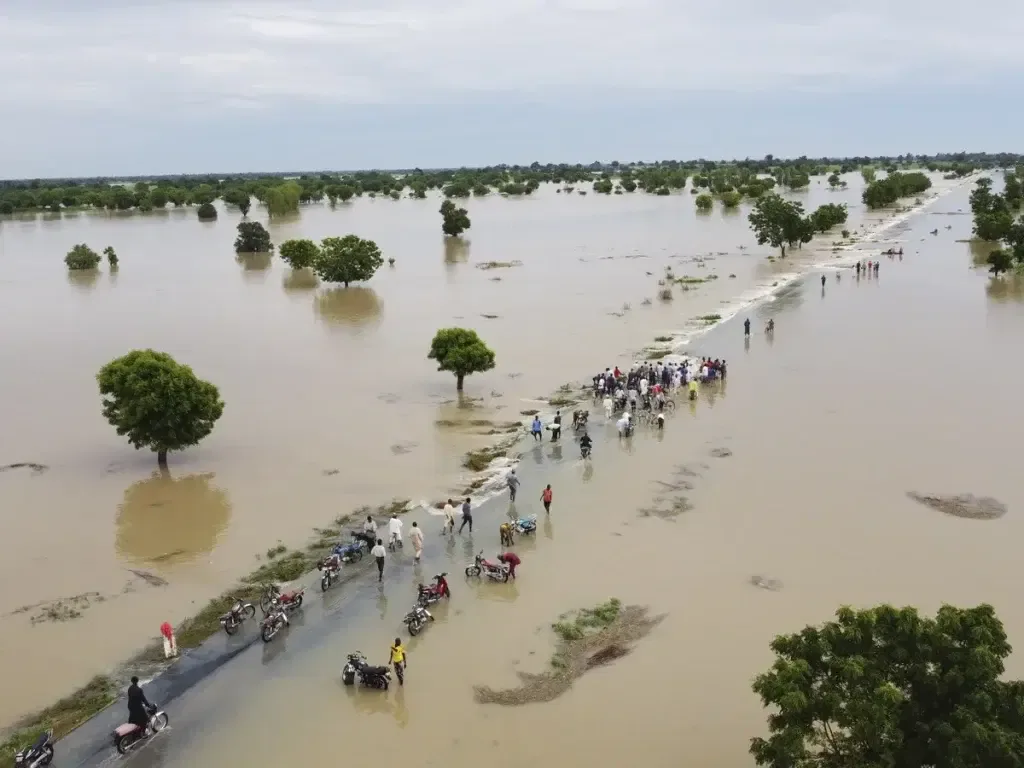
Floods in Lagos have left many residents stranded, with residents of Ajah, Mafoluku and other flood-prone communities recounting their terrifying experiences.
You might have seen the news of yesterday's torrential rainfall in Lagos, but what you might not know is that it left hundreds of people stranded, some even forced to wade through waist-deep water to get home. According to eyewitnesses, the floodwaters came so suddenly that many people were caught off guard, with some even abandoning their vehicles and continuing their journeys on foot.
Along Muri Okunola Road in Ajah, the waters were so high that they submerged about 200 metres of the road, forcing commuters to either wade through the water or use tricycles to navigate through it. But even those who used tricycles were not spared, with many of them breaking down and having to be pushed through the flooded sections. Some youths in the area were quick to take advantage of the situation, offering to push tricycles through the water for a fee.
One resident of Ajah, Mrs Rukayat, shared her experience with the News Agency of Nigeria (NAN). 'The water level was almost up to my lap. People literally had to wade through it to get home,' she said. Mrs Rukayat explained that the flooding was caused by poor drainage infrastructure in the area, which has been a recurring problem during the rainy season. She also attributed the flooding to the possible blockage of a major canal serving the area.
But Mrs Rukayat is not the only one affected by the floods. In Mafoluku, many residents said that several streets, homes and access roads were submerged, leaving many unable to return home after going about their daily activities. One resident, Mrs Iriagbonse Okunkpolor, shared her story with NAN. 'I left my house to buy a few items nearby, but the rain started suddenly and flooded the entire street. I was stranded for hours because there was no safe way back home,' she said.
Another resident, Mr Mukaila Idris, described the flooding as 'both dangerous and distressing'. 'The current was very strong. I watched people pay young men to carry them across the water because they were afraid of being swept away or falling,' he said. Mr Idris also pointed out that only physically fit residents could navigate the floodwaters safely, while many others waited several hours for the water level to subside.
The residents of Ajah, Mafoluku and other affected communities are calling on the government to intervene and tackle the recurring flooding. They believe that the solution lies in improving the drainage infrastructure in the area. As one resident put it, 'We have reported this problem repeatedly, but nothing has been done about it.'
Key Facts
- Over 200 metres of Muri Okunola Road in Ajah was submerged by floodwaters.
- Many residents were stranded, forced to wade through waist-deep water or use tricycles to navigate through the flooded sections.
- The flooding was caused by poor drainage infrastructure and possible blockage of a major canal serving the area.
- Several streets, homes and access roads in Mafoluku were also submerged, leaving many residents unable to return home.
- Residents are calling on the government to intervene and improve the drainage infrastructure in the area.