

The single sharpest fact in one or two punchy sentences. Who did what, where, when, and why it matters. Not a summary of everything — the one thing that makes someone stop scrolling. A reader who only reads this paragraph must understand what happened.
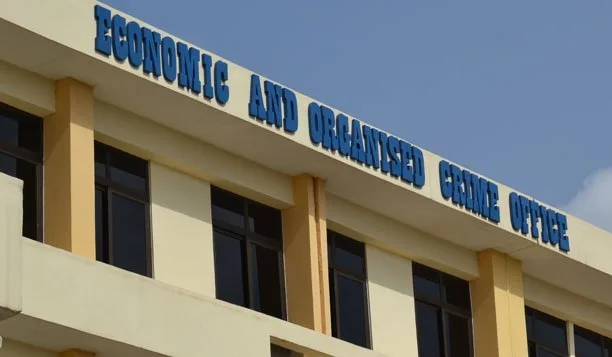
Gerald Appiah, the former accountant of the Inter-Ministerial Coordinating Committee on Decentralisation (IMCCoD), has started refunding funds allegedly linked to an ongoing investigation into the suspected misappropriation of about GH¢55 million. The Economic and Organised Crime Office (EOCO) made this revelation in a statement issued on Monday, July 13.
According to EOCO, the refunding does not conclude the investigations or absolve Appiah of criminal liability. The Office noted that Appiah, together with former IMCCoD Executive Secretary Dennis Edward Aboagye, also known as Miracles, and other unnamed individuals, remains under investigation over suspected offences, including conspiracy to steal, stealing, causing financial loss to the state, using public office for profit, dissipation of public funds, defrauding by false pretences and money laundering.
The investigations stem from a forensic audit into the affairs of the IMCCoD Secretariat covering the period between August 2022 and February 2025, following a petition by the current Executive Secretary seeking further investigations.
Appiah is expected to complete his bail conditions and be released while investigations continue. EOCO reiterated its commitment to conducting the probe professionally, impartially and within the confines of the law.
The IMCCoD Secretariat was established by the Ministry of Local Government and Rural Development to oversee decentralisation in Ghana. Decentralisation is a policy aimed at transferring power and resources from the central government to local authorities.
Appiah was appointed as the accountant of IMCCoD in 2022, following the recommendation of the Ministry of Local Government and Rural Development. His appointment was seen as part of efforts to strengthen the IMCCoD Secretariat.
The alleged GH¢55 million fraud involves suspected misappropriation of funds meant for decentralisation projects across the country. The funds were allegedly diverted for personal gain.
EOCO is still investigating the matter and may bring Appiah and others to justice. Appiah's refunding of the funds is seen as a step in the right direction, but it does not erase the suspicions of financial mismanagement surrounding his appointment.
EOCO said it will continue to investigate the matter and ensure that justice is served.
The country is watching the developments with interest, as many Ghanaians are concerned about corruption and financial mismanagement in government institutions.
This is not the first time that IMCCoD has been embroiled in a financial scandal. In 2020, the Ministry of Local Government and Rural Development suspended the IMCCoD Secretariat over allegations of financial impropriety.
The allegations involved suspected misappropriation of funds meant for decentralisation projects across the country.
In 2019, a forensic audit was conducted into the affairs of IMCCoD, following a petition by the current Executive Secretary. The audit revealed widespread financial mismanagement and suspected fraud.
The findings of the forensic audit led to the suspension of the IMCCoD Secretariat and the appointment of a new executive secretary.
Ghanaian authorities are keen to prevent financial mismanagement and corruption in government institutions.
The Economic and Organised Crime Office (EOCO) is leading the investigation into the alleged GH¢55 million fraud.
EOCO is an independent body responsible for investigating and preventing economic and organised crime in Ghana.
It was established in 1999 to tackle economic and organised crime in Ghana.
EOCO has a reputation for being transparent and impartial in its investigations.
The agency works closely with other stakeholders, including law enforcement agencies and the Ministry of Justice, to ensure that justice is served.
The public expects EOCO to conduct thorough investigations and bring those responsible for financial mismanagement to justice.
In Ghana, corruption is a major concern, and the public is keen to see justice being served.
The country has a history of financial scandals, including the infamous Waterville scandal in 2014.
The Waterville scandal involved suspected misappropriation of funds meant for the construction of a hospital in the Ashanti Region.
The scandal led to the arrest and prosecution of several high-ranking government officials, including a former minister.
The case was widely condemned by the public and the media.
Since then, Ghana has made significant progress in combating financial mismanagement and corruption.
The country has implemented several reforms aimed at preventing financial corruption.
One such reform is the establishment of the Ghana Integrity Initiative (GII).
The GII is a civil society organisation that works to prevent financial corruption and promote transparency and accountability in government institutions.
The organisation has been instrumental in advocating for financial transparency and accountability in Ghana.
The GII has collaborated with EOCO on several initiatives aimed at preventing financial corruption.
In 2018, the GII and EOCO launched a joint initiative aimed at promoting financial transparency and accountability in government institutions.
The initiative involves training government officials on financial management and accountability.
The GII and EOCO have also collaborated on several other initiatives aimed at preventing financial corruption.
One such initiative is the establishment of a whistleblower protection policy.
The policy aimed at protecting whistleblowers who disclose financial corruption in government institutions.
Ghana has a strong law that protects whistleblowers from retaliation and persecution.
The law makes it a criminal offense to harass or intimidate whistleblowers.
The law also provides for compensation for whistleblowers who suffer damages as a result of retaliation.
The policy has been instrumental in promoting financial transparency and accountability in government institutions.
It has encouraged several individuals to come forward and report suspected financial mismanagement.
The GII and EOCO have received several reports of suspected financial mismanagement since the launch of the initiative.
The reports have led to several investigations and prosecutions.
One such prosecution is the case against Appiah and others for allegedly misappropriating GH¢55 million meant for decentralisation projects.
The case is ongoing, and several individuals have been arrested and charged.
Appiah, who has denied any wrongdoing, has been granted bail pending the outcome of the investigation.
He is expected to complete his bail conditions and be released while the investigations continue.
The public expects EOCO to conduct thorough investigations and bring those responsible for financial mismanagement to justice.
The government is keen to prevent financial corruption and ensure that justice is served.
In a statement, EOCO said it will continue to investigate the matter and ensure that justice is served.
Key Facts
- Alleged GH¢55 million fraud
- Gerald Appiah, the former accountant of IMCCoD, has started refunding funds
- Appiah faces investigation and possible prosecution
- IMCCoD Secretariat was established in 2022 to oversee decentralisation in Ghana
- Appiah was appointed as the accountant of IMCCoD in 2022
- Investigations stem from a forensic audit into the affairs of the IMCCoD Secretariat