

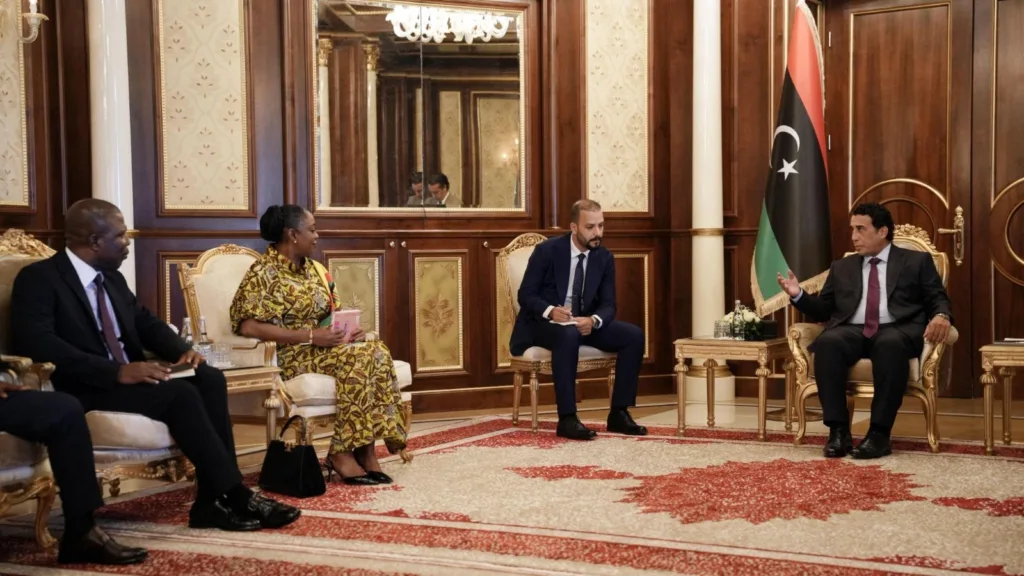
Felicia Adjei, the Member of Parliament for Kintampo South and a member of the Foreign Affairs Committee, has concluded a five-day working visit to Libya to meet with authorities and find solutions to the plight of Ghanaian migrants. The visit, which focused on Ghanaians from the Bono East Region, aimed to gather first-hand information about the challenges they face in the North African country.
The journey through the Sahara Desert with the intention of working in Libya has proven to be a perilous path for many Ghanaian migrants. Reports by international organisations have documented serious human rights violations against migrants in Libya, including arbitrary detention, torture, sexual violence, trafficking, and exploitation.
Since 2017, more than 8,000 Ghanaian migrants have received voluntary return support, with many returning from Libya after becoming stranded or experiencing hardship along irregular migration routes. In 2024, the International Organization for Migration assisted 1,597 Ghanaian migrants to return safely from Libya through nine charter flights.
During her visit, Ms Adjei met with senior Libyan authorities, including the President of Libya, the President of the High State Council, and other key officials. The discussions centred on the welfare, protection, and legal status of Ghanaian citizens living in Libya, particularly those from the Bono East Region.
As part of her efforts to address the challenges faced by Ghanaian migrants, Hon. Adjei announced plans to establish a skills training and migration resource centre in the Kintampo South Constituency. The proposed centre would provide vocational and employable skills training for young people, while educating prospective migrants about regular migration procedures, employment opportunities, documentation requirements, and the dangers associated with irregular migration.
Ms Adjei expressed concern about migrants who wish to return to Ghana but lack the financial resources or documentation required to do so. She promised to engage the Government of Ghana, the Ghanaian Embassy in Libya, the International Organization for Migration, and other relevant stakeholders to support the safe return and reintegration of stranded migrants.
According to her, stronger cooperation between the authorities could help create legitimate employment opportunities, protect Ghanaian workers from exploitation, and reduce the number of young people relying on smugglers and dangerous desert routes to enter Libya.
Ms Adjei further noted that she would advocate for bilateral labour arrangements that would allow qualified Ghanaians to travel to Libya legally, work under clearly defined contracts, and receive appropriate protection from both countries.
With her historic visit, Ms Adjei has taken a significant step towards finding solutions to the plight of Ghanaian migrants in Libya. Her efforts are expected to pave the way for increased cooperation between Ghana and Libya, leading to safer and more regular migration procedures.
'We will urge our friends from Ghana not to take the illegal route to Libya if you dont have the documents,' said one of the irregular migrants.
The scale of Ghanaian migration through Libya has remained a major concern. The International Organization for Migration has been working to support the safe return of Ghanaian migrants from Libya, with significant progress made in recent years.
According to reports, the Ghanaian Embassy in Libya has been working closely with the International Organization for Migration to facilitate the return of stranded migrants. The Embassy has also been providing support to migrants who have returned to Ghana, including assistance with reintegration and finding employment.
With the establishment of a skills training and migration resource centre, the Government of Ghana is expected to provide more support to migrants who wish to return home. The centre would also offer vocational and employable skills training for young people, enabling them to secure employment or establish businesses in Ghana.
In a statement, Hon. Adjei noted that she would continue to engage with stakeholders to find solutions to the plight of Ghanaian migrants. She expressed her appreciation to the Libyan authorities for their cooperation and commitment to addressing the challenges faced by Ghanaian migrants.
Her efforts are expected to have a positive impact on the lives of Ghanaian migrants living in Libya. With increased cooperation and awareness, the risk of human rights abuses and exploitation would be significantly reduced, enabling migrants to work safely and securely in Libya.
Key Facts:
* More than 8,000 Ghanaian migrants have received voluntary return support from Libya since 2017. * In 2024, the International Organization for Migration assisted 1,597 Ghanaian migrants to return safely from Libya through nine charter flights. * The Ghanaian Embassy in Libya has been working closely with the International Organization for Migration to facilitate the return of stranded migrants. * The Ghanaian Government has announced plans to establish a skills training and migration resource centre in the Kintampo South Constituency. * Hon. Felicia Adjei has committed to advocating for bilateral labour arrangements that would allow qualified Ghanaians to travel to Libya legally, work under clearly defined contracts, and receive appropriate protection from both countries.
The story of Ghanaian migrants in Libya is a complex one, involving human rights abuses, exploitation, and the constant threat of arrest and detention. With Felicia Adjei's historic visit, a significant step has been taken towards finding solutions to the plight of Ghanaian migrants.