

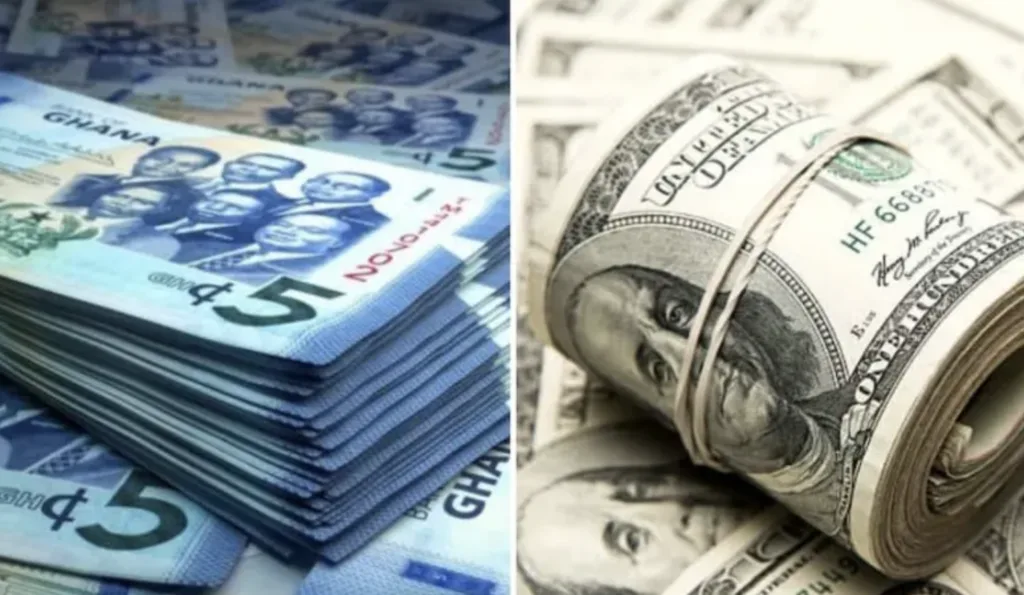
The Ghana cedi weakened modestly in the wholesale (interbank) market over the past two weeks, but remained broadly stable in the retail market. In the interbank market, it depreciated by 1.39% against the US dollar, 2.03% against the pound sterling, and 1.39% against the euro.
At mid-rates, the cedi closed trading at GH¢11.55 against the US dollar, GH¢15.53 against the pound sterling, and GH¢13.21 to the euro. The modest interbank slippage largely stems from sustained pressures on derived demand outpacing a policy-anchored forex supply.
Databank Research believes market participants are pricing in these potential supply constraints alongside rising fuel costs, keeping forward expectations elevated. 'We expect the cedi to remain broadly stable within the GH¢11.40 to GH¢11.70/US dollar range, with modest nominal dips persisting until stronger interventions or a seasonal cooling of trade flows meaningfully eases market expectations of further weakness', they added.
The cedi began the week trading at GH¢12.20 against the US dollar. Its year-to-date appreciation stood at 1.04%. Despite the interbank market instability, the retail market remained unchanged to the dollar at an average of GH¢12.05.
This development has significant implications for businesses and individuals relying on imports, particularly those in the manufacturing and construction sectors. The cedi's stability in the retail market is likely to have a calming effect on prices of goods and services.
Databank Research's analysis suggests that the government's relatively ambitious reserve agenda to build roughly 15 months of import cover by 2028 will require stronger reserve accumulation efforts. This may temper the scale of spot market interventions in the future.
The cedi's stability is also expected to have a positive impact on the country's economic growth, as it will encourage foreign investment and reduce the risk of inflation. However, the government must continue to monitor the situation and implement policies to support the cedi's stability.
The recent depreciation of the cedi against the US dollar in the interbank market is a clear indication that the Ghanaian economy is still facing significant challenges. The government must take swift action to address these challenges and restore the cedi's value.
As the cedi continues to trade within the GH¢11.40 to GH¢11.70/US dollar range, businesses and individuals must remain vigilant and adapt to the changing market conditions. The stability of the cedi in the retail market is a welcome development, but its volatility in the interbank market remains a concern.
The government must continue to implement policies aimed at improving the reserve position of the country and reducing the reliance on imports. This will help to stabilize the cedi and promote economic growth.
Key Facts
- The cedi weakened by 1.39% against the US dollar in the interbank market.
- The cedi remained stable in the retail market, trading at GH¢12.05 against the US dollar.
- The government's reserve agenda aims to build roughly 15 months of import cover by 2028.
- The cedi began the week trading at GH¢12.20 against the US dollar.
- The cedi's year-to-date appreciation stood at 1.04%.