

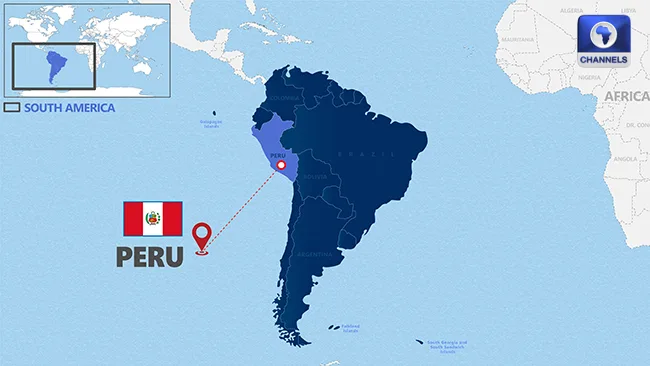
A 5.1 magnitude earthquake in the Andes region of Peru killed five people, officials said Sunday. The Saturday night tremor injured another 21 people as it shook the town of Chongos Bajo about 300 kilometers (180 miles) east of Lima, the Geophysics Institute of Peru said.
The epicenter's depth was 24 km (15 miles). "The earthquake destroyed our home. Here there are many adobe houses that collapsed," an unnamed resident of Chongos Bajo told the N television network.
Because the epicenter was at a shallow depth and many houses in that area are made of adobe or a wood, cane and mud blend called "quincha," some towns suffered significant damage, said General Luis Vasquez, the director of the National Civil Defense Institute.
"Forty-eight houses were destroyed and 300 people were left homeless," he said. Peru is situated on the so-called Pacific ring of fire — an arc of intense seismic activity stretching from Japan through Southeast Asia and across the Pacific basin.
Seismologists say Peru experiences at least 400 earthquakes per year, three quarters of which are so weak people do not feel them. The earthquake was strong enough to be felt in several other towns in the region. But fortunately, there were no reports of any additional casualties or widespread destruction outside of Chongos Bajo.
Chongos Bajo is a small town located in a rural area of Peru. The majority of the population in the region are small-scale farmers and herders. Many of the residents in the town of Chongos Bajo live in houses made of adobe and other traditional building materials.
These types of buildings are more prone to damage during an earthquake. As a result, Peru has implemented various measures to mitigate the effects of earthquakes and strengthen the resilience of its buildings.
Despite the efforts, earthquakes continue to pose a significant threat to Peru. The country's location on the Pacific ring of fire makes it susceptible to powerful tremors. The recent earthquake serves as a reminder of the importance of earthquake preparedness and the need for continued investment in disaster risk reduction and management.
Peru's National Civil Defense Institute has been working to provide assistance to those affected by the earthquake. The agency is coordinating with local authorities to provide relief supplies, emergency shelter, and medical care to those in need.
The Peruvian government has also announced plans to provide financial assistance to families affected by the earthquake. The government has pledged to provide support to those who have lost their homes and livelihoods due to the disaster.
As Peru continues to respond to the aftermath of the earthquake, the international community has offered its support and condolences to the affected families. The United Nations has also provided assistance to Peru in its efforts to mitigate the effects of the earthquake.
Peru is a member of the United Nations and has a long-standing relationship with the organization. The UN has provided support to Peru in various areas, including disaster risk reduction and management, education, and healthcare.
The recent earthquake is a stark reminder of the importance of disaster risk reduction and management in Peru. The country's location on the Pacific ring of fire makes it susceptible to powerful tremors. As a result, Peru has implemented various measures to mitigate the effects of earthquakes and strengthen the resilience of its buildings.
The Peruvian government has also taken steps to ensure that its buildings are designed and constructed to withstand earthquakes. The government has implemented building codes and regulations to ensure that new buildings are earthquake-resistant.
However, despite these efforts, earthquakes continue to pose a significant threat to Peru. The country's location on the Pacific ring of fire makes it susceptible to powerful tremors. The recent earthquake serves as a reminder of the importance of continued investment in disaster risk reduction and management.
Key Facts
- The 5.1 magnitude earthquake struck Chongos Bajo in Peru on Saturday night.
- Five people were killed in the disaster, and at least 21 others were injured.
- A total of 300 people were left homeless due to the destruction of their homes.
- The epicenter's depth was 24 km (15 miles).
- Peru experiences at least 400 earthquakes per year, three quarters of which are so weak people do not feel them.
- The Peruvian government has pledged to provide financial assistance to families affected by the earthquake.