

The single sharpest fact in one or two punchy sentences. Who did what, where, when, and why it matters. Not a summary of everything — the one thing that makes someone stop scrolling. A reader who only reads this paragraph must understand what happened.
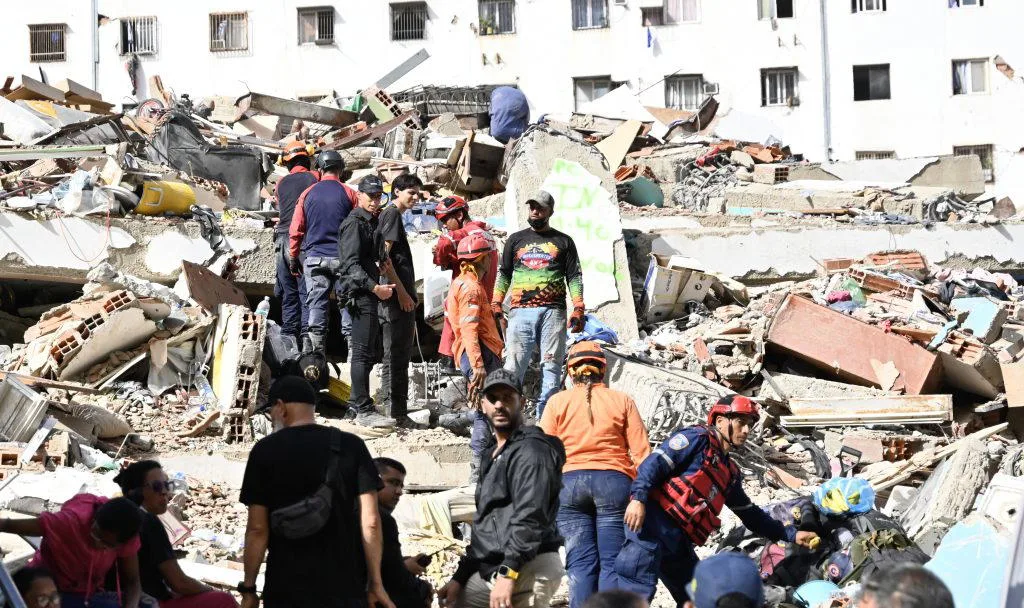
In Venezuela, 3,535 people have died and over 16,700 are injured after twin earthquakes struck the country on June 24. The massive disaster flattened entire neighborhoods in La Guaira state north of the capital Caracas.
Many of the survivors are living in temporary camps on the street, in public parks or car parks. Families continue to search for their dead in the hope of giving them a dignified burial. On Sunday, authorities began burying dozens of unidentified victims in a mass grave.
A line of simple white crosses with small bouquets at their foot marked a long row of individual graves in La Esperanza cemetery in La Guaira. Each one had the same date of death: June 24, 2026.
The government said 16,740 people were injured in the powerful back-to-back shocks and that over 17,000 were left homeless. The government has not given a figure for those still missing under mountains of rubble, but the UN estimates that as many as 50,000 people may still be unaccounted for.
International rescue teams have begun leaving Venezuela as focus shifts from rescuing survivors to burying the dead and clearing the debris. Venezuelan families meanwhile continue to search for their loved ones in the rubble, often relying on their own resources and networks for aid.
The country's infrastructure remains severely damaged, with thousands of homes reduced to rubble and many more left without power, water, or basic services. Rescue efforts were hindered by a lack of equipment and resources, as well as the vast scale of destruction.
The government has come under criticism for its response to the disaster, with some accusing it of prioritizing politics over the needs of affected communities. But in the face of such overwhelming tragedy, many are putting aside their differences to come together in support.
The UN has dispatched emergency teams to help with relief efforts, including medical aid, shelter, and food. The organization has also issued a statement expressing its deep sadness at the loss of life and its commitment to supporting the people of Venezuela in this difficult time.
The scale of the disaster is one of the worst in Venezuelan history. It's a stark reminder of the country's vulnerability to natural disasters and the need for robust emergency preparedness.
Key Facts:
- Death toll: 3,535
- Injured: over 16,700
- Homeless: over 17,000
- Missing: up to 50,000
- Date of disaster: June 24, 2026