

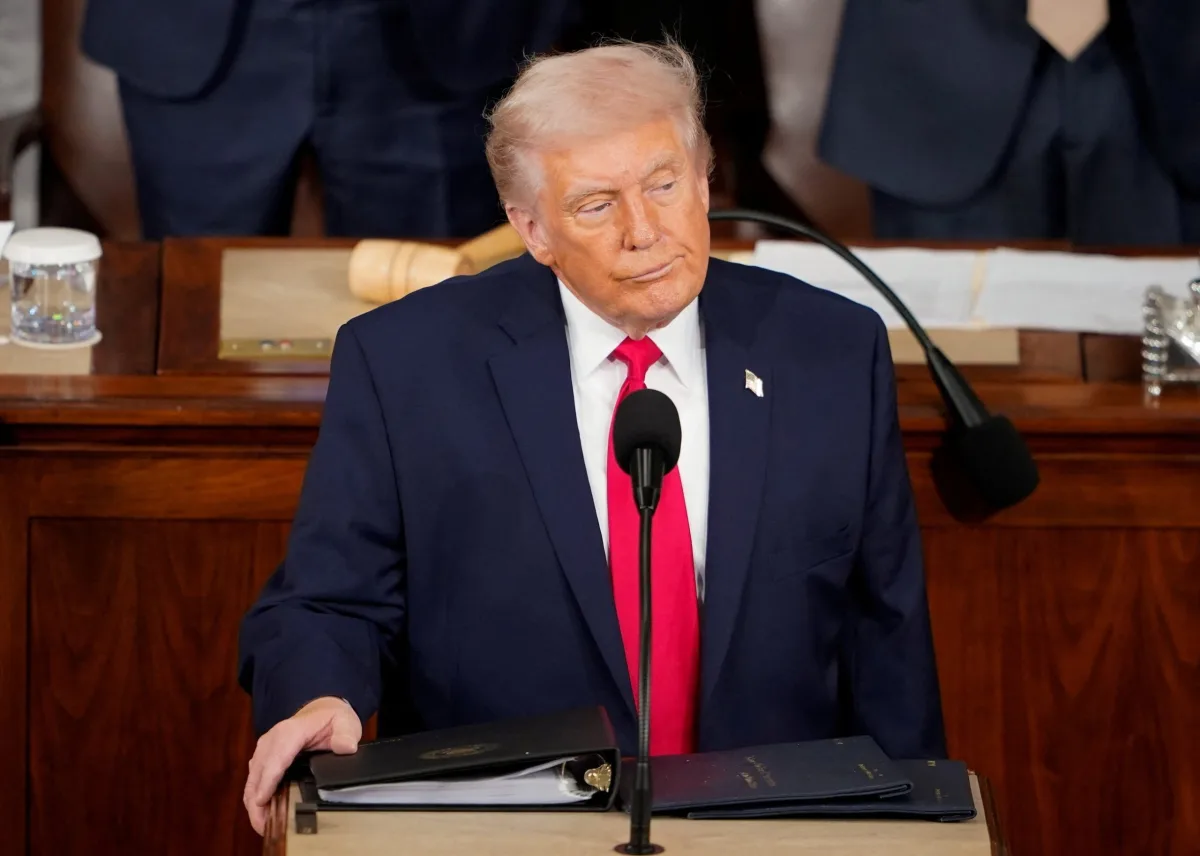
The US and Iran have signed an interim ceasefire deal to end their months-long war, but President Donald Trump is already threatening to restart the bombing if Tehran doesn't keep its word.
Trump and Iranian President Masoud Pezeshkian both digitally signed a 14-point memorandum of understanding on Wednesday, June 17, according to US and Iranian officials. The agreement extends a ceasefire first announced in April for another 60 days, giving both sides time to negotiate a permanent truce.
But at a press conference during the G7 summit in France, Trump made clear the ceasefire is conditional. "We're going to bomb the hell out of them if they violate the agreement," he said. "I don't want them to. I want them to honor the agreement."
He went further: "If I don't like it, if they don't behave, we'll go right back to dropping bombs right smack in the middle of their head, OK?"
The war began on February 28 when the US and Israel launched a surprise attack on Iran, assassinating 86-year-old Supreme Leader Ayatollah Ali Khamenei and top military officials on the first day. The conflict quickly spiraled into a broader regional war, driving up energy prices, renewing inflation, and sparking fears of a major food crisis in developing countries.
Oil prices fell on Wednesday as markets anticipated the reopening of the Strait of Hormuz — the narrow waterway between Iran and Oman that Iran had effectively shut down during the war. Brent crude dropped below $80 a barrel, its lowest since the conflict began. But prices bounced back more than 1% after Trump's threat to resume attacks.
A senior US official read out the text of the signed memorandum but said either side could still walk away until a binding deal is reached.
The 14-point agreement includes an immediate end to the war on all fronts, including Lebanon, the full reopening of the Strait of Hormuz, the lifting of the US blockade on Iranian ports, the waiving of US sanctions on Iran, the unfreezing of its assets, and a $300 billion plan for Iran's economic rehabilitation. Iran also reaffirmed its decades-old pledge not to build nuclear weapons.
Despite Trump's tough talk, the deal looks like a win for Iran. The Islamic Republic's government remains in place. Its stockpile of highly enriched uranium hasn't been surrendered. Its ballistic missiles haven't been destroyed. And it hasn't ended support for anti-Israel militias like Hezbollah in Lebanon.
Trump even backtracked on one of his original war goals. Early in the conflict, he vowed to "raze their missile industry to the ground." But speaking in Paris, he said: "I'm saying that if other countries have them, it's a little bit unfair for them not to have some."
G7 leaders welcomed the agreement at their summit in the French town of Evian-les-Bains. "We underline the need for the negotiation to address the threats posed by Iran in the region and beyond and ensure that they never obtain a nuclear weapon," the leaders of France, Germany, Britain, Japan, Italy, Canada, and the US said in a joint statement.
European leaders never backed Trump's decision to go to war without UN authorization. They worry that Iran has gained leverage by surviving the superpower assault and controlling the Strait of Hormuz.
The memorandum also calls for a halt to hostilities between Israel and Hezbollah in Lebanon, where fighting has displaced more than a million people. The statement from G7 leaders demanded an immediate ceasefire there.
Iranian foreign ministry spokesperson Esmaeil Baghaei said the agreement is already in effect as of Wednesday. He also cast doubt on reports that a formal signing ceremony would be held in Switzerland on Friday, saying that since both presidents had already digitally signed, "No signing ceremony will be held in Switzerland."
A senior US official said the US still expects a ceremony in Switzerland this week, but the confusion underscores the fragile nature of the deal.
For now, the war is paused — but Trump's threats make clear it could restart at any moment.