

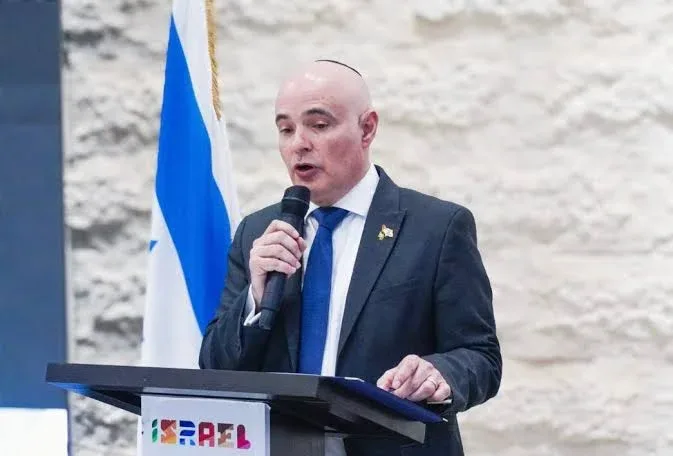
The single sharpest fact in one or two punchy sentences. Who did what, where, when, and why it matters. Not a summary of everything — the one thing that makes someone stop scrolling. A reader who only reads this paragraph must understand what happened. Nigeria and Israel have strengthened their partnership in research and technology, with plans to launch the fifth edition of the Israel-Nigeria Innovation Fellowship for Aspiring Inventors and Researchers (I-FAIR) programme in October 2026.
The programme has enabled Nigerian innovators to develop local solutions to national challenges through Israeli mentorship and expertise. Ambassador of Israel to Nigeria, Michael Freeman, described I-FAIR as a 'practical demonstration of the growing partnership between both countries.' He added that the programme has helped Nigerian innovators develop solutions to national challenges with the support of Israeli experience, mentorship, and innovation. And this has brought together government, academia, investors, engineers, and entrepreneurs to transform innovative ideas into businesses capable of creating jobs and stimulating economic growth.
The relationship between Nigeria and Israel has grown significantly over the past four and a half years through cooperation in innovation, agriculture, healthcare, education, water management, and technology. Freeman expressed confidence that stronger collaboration between both countries would unlock greater opportunities for startups, research institutions, and businesses. According to him, 'Israel brings experience and innovation, technology, agriculture, healthcare, cyber security, security, and water management. Nigeria brings extraordinary talent, creativity, entrepreneurship, and one of the most dynamic young populations anywhere in the world.'
The Executive Secretary of the Tertiary Education Trust Fund (TETFund), Architect Sonny Echono, also reaffirmed TETFund's commitment to strengthening research and innovation through strategic partnerships with Israel and other stakeholders. He said the I-FAIR programme aligned with Nigeria's priorities in food security, agriculture, medicine, technology, clean energy, and the circular economy. And TETFund would continue supporting initiatives that promote research commercialisation. Echono stressed that collaboration between government, academia, and industry remained critical to translating research findings into products and services.
TETFund is working with partners to establish innovation facilities in about 60 tertiary institutions and has created a student innovation fund that would provide up to ₦50 million to students with commercially viable ideas. The TETFund boss also announced plans for a National Research Fair later this year, where innovators would showcase products before policymakers, financial institutions, and investors to attract funding and commercial partnerships.
Paying tribute to the outgoing Israeli ambassador, Echono described Freeman as a 'strong bridge between Nigeria and Israel.' He said, 'Nigeria is grateful for your service. You have been a strong bridge between our two countries.'
Earlier, Head of Programmes at Innov8 Hub, Tolulope Aina, said sustainable economic development depended on building an innovation ecosystem that transforms ideas into successful businesses. She noted that Innov8 Hub had supported more than 3,000 innovators, researchers, and entrepreneurs, helping them convert research into products, startups, and investment-ready ventures. Aina said, 'Nigeria does not suffer from a shortage of brilliant minds, what we need are stronger pathways that help those ideas become products, businesses, and opportunities that improve life.'
She thanked the Embassy of Israel and TETFund for their continued support in strengthening Nigeria's innovation ecosystem.
According to him,