

Mali's military government has arrested two more journalists in a week, using a controversial cybercrime law that critics say is designed to silence dissent.
On June 8, the National Cybercrime Unit ordered the arrest of Chahana Takiou, publishing director of the biweekly newspaper 22 Septembre. His crime? Speaking at a media forum where he criticised the two-year sentence handed to journalist Youssouf Sissoko in March for “undermining the state’s credibility.”
Takiou is now in prison in Bamako, awaiting trial on July 27 under the cybercrime law for “undermining the state’s reputation through the judicial system.”
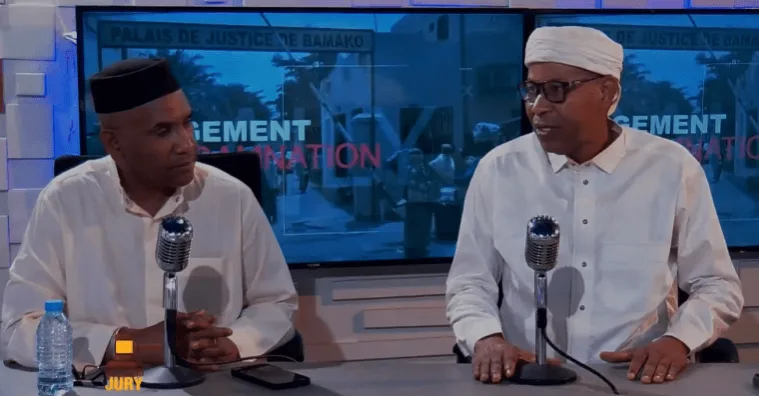
The very next day, the cybercrime unit summoned and detained Abdrahamane Keïta, director of Le Témoin newspaper. Keïta had stated on the popular TV show “Grand Jury” that Al-Qaeda-linked JNIM insurgents control Mali's northern city of Kidal.
Keïta will face trial on August 17 for “a crime of a regionalist nature that tends to undermine national unity and the credibility of the state” and publishing false information, according to the Press House, Mali's largest press association.
But Keïta's statement wasn't false. In a series of coordinated attacks in April, JNIM and Mali's separatist Azawad Liberation Front (FLA) took Kidal from the Malian army and its Russian allies, killing the defense minister. The insurgents' growing strength is well documented.
The arrests are part of a broader crackdown on journalists under Mali's 2019 cybercrimes law. The law's vague wording eliminates the protections journalists once had under the 2000 press law, which carried lighter sentences. Instead, journalists can now face the same heavy penalties as ordinary citizens.
Article 54 of the cybercrime law allows the cybercrime unit to prosecute journalists under ordinary criminal penalties that often stipulate several years in jail. The only exception is for offenses committed by the “press on the Internet” — a term the law doesn't define.
Mohamed Timbiné, the cybercrimes unit's first deputy prosecutor, told local media this month that newspaper journalists whose work is shared on social media can be prosecuted for cybercrimes.
“Someone who defames in a newspaper, for example … if the publication isn't on social networks, effectively it's the law of 2000 that applies. But if afterwards, these same writings end up on social networks and it has consequences on social networks, naturally, it's the 2019 law on cybercrime that applies, even if the person is a journalist, because this law applies to everyone without exception,” he said.
The cybercrime unit was set up in 2022 and given the power to use eight legal texts to prosecute online offenses.
The Committee to Protect Journalists has called on Malian authorities to release all three imprisoned journalists immediately.
“Malian authorities must stop their frenzied arrests of journalists, drop the charges against Abdrahamane Keïta and Chahana Takiou, and release them, as well as fellow journalist Youssouf Sissoko,” said Moussa Ngom, CPJ’s Francophone Africa representative. “It's ironic that Malian authorities used the cybercrime law to arrest Chahana Takiou for speaking out about its misuse against the press. They have only proven that his comments were 100 per cent accurate.”
Mali has been under military rule since a coup in 2020. The junta has increasingly used the cybercrime law to target journalists who criticise the government or report on the country's security situation, which has deteriorated despite the presence of Russian mercenaries from the Wagner Group.
Key Facts
- Chahana Takiou arrested June 8, trial set for July 27
- Abdrahamane Keïta arrested June 9, trial set for August 17
- Youssouf Sissoko sentenced in March to 2 years for “undermining state credibility”
- April 2026: JNIM and FLA took Kidal from Malian army, killed defense minister
- Cybercrime law passed 2019; cybercrime unit created 2022