

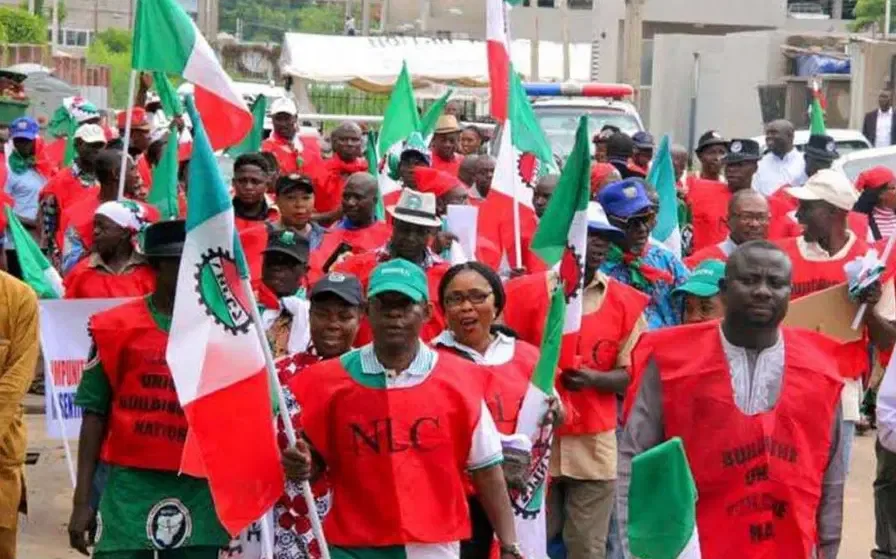
The International Court of Justice has made a groundbreaking ruling that's set to change the way workers' rights are viewed across the globe. In a decision that's being welcomed by trade unions and labour activists, the court has affirmed that the right to strike is indeed protected under the International Labour Organisation's Convention No. 87.
This ruling is the result of decades of disagreement between workers' organisations and employers over whether Convention No. 87 implicitly guarantees workers the right to strike. The court's decision, which was made by a vote of 10 to 4, is a major win for workers who've been fighting for their rights for generations. They've been fighting for a long time, and this decision is a significant victory.
According to Akhator Joel Odigie, the General Secretary of the African Regional Organisation of the International Trade Union Confederation, this ruling is a historic victory for workers' freedom, democracy, and social justice. The organisation has stated that the judgment of the world court has reinforced the legitimacy of strike action as a fundamental democratic right that can't be denied or weakened. It's a right that workers won't give up, and it's essential for their freedom.
The labour movement across Africa has welcomed the court's opinion, saying that it affirms what workers have defended for generations - that the right to strike is inseparable from freedom of association and trade unionism. The organisation has also pointed out that virtually all major gains workers enjoy today were achieved because workers organised collectively and retained the power to withdraw their labour in the face of exploitation and injustice. This is because they worked together and didn't give up.
The right to strike is not secondary, optional, or negotiable. It's inherent in the very existence of trade unionism.
The African Regional Organisation of the International Trade Union Confederation has argued that freedom of association would lose practical meaning if workers were denied the ability to take collective industrial action when dialogue and negotiations fail. The organisation has also warned that worsening economic hardship, rising living costs, shrinking civic space, and precarious employment conditions across Africa have made the defence of strike rights even more critical. They can't afford to lose this right, and they won't give it up.
The International Court of Justice's ruling is a significant development in the ongoing struggle for workers' rights. It's a reminder that the struggle for fair wages, regulated working hours, occupational safety, and social protection is far from over. The court's decision is a major step forward, but it's only the beginning. There's still a lot of work to be done, and workers won't stop fighting.
And what does this mean for workers in Africa? For starters, it means that they have the right to withdraw their labour in protest against unfair working conditions, low wages, and poor treatment. It also means that employers can no longer deny workers the right to strike, and that governments must respect and protect this fundamental right. They can't ignore it, and they won't be able to deny it.
But this ruling isn't just significant for workers in Africa - it's a victory for workers all over the world. It sets a precedent for other countries to follow, and it sends a strong message that workers' rights are human rights that must be respected and protected. Workers everywhere can take heart from this decision, knowing that their rights are protected.
The African trade union movement has vowed to continue defending the right to strike firmly, consistently, and without apology. This is a commitment that's welcomed by labour activists and union leaders worldwide, who are already describing the opinion as one of the most significant international labour rights decisions in recent history. They're happy about the decision, and they won't stop fighting.
As the labour movement continues to fight for workers' rights, this ruling is a major boost. It's a reminder that the struggle for justice and equality is ongoing, and that workers won't be silenced or oppressed. The right to strike is a fundamental right that's essential for workers to defend their interests and improve their working conditions. They need this right to survive, and they won't give it up.
In the coming days and weeks, we can expect to see a significant response to this ruling from governments, employers, and workers' organisations. The African Regional Organisation of the International Trade Union Confederation has already called on governments and employers to respect and protect the right to strike, and to engage in constructive dialogue with workers to address their concerns. They're hoping for a positive response, and they won't back down.
The road ahead won't be easy, but this ruling is a major step forward. It's a victory for workers, and it's a reminder that the fight for justice and equality is far from over. As workers continue to organise and mobilise, they can take heart from this decision, knowing that their rights are protected and that they have the power to bring about change. They're strong, and they won't stop fighting.
The International Court of Justice has ruled that the right to strike is protected under the International Labour Organisation's Convention No. 87. The ruling was made by a vote of 10 to 4. The African Regional Organisation of the International Trade Union Confederation has welcomed the court's opinion, saying that it affirms what workers have defended for generations. The organisation has argued that freedom of association would lose practical meaning if workers were denied the ability to take collective industrial action when dialogue and negotiations fail. The ruling is a significant development in the ongoing struggle for workers' rights.
As workers celebrate this victory, they know that there's still much work to be done. The fight for fair wages, regulated working hours, occupational safety, and social protection is ongoing, and it will require continued organisation and mobilisation. But for now, this ruling is a major step forward, and it's a reminder that workers' rights are human rights that must be respected and protected. They're essential for workers' survival, and they won't be ignored.
The International Court of Justice's decision is a testament to the power of collective action and the importance of protecting workers' rights. As workers continue to fight for justice and equality, they can take heart from this decision, knowing that their rights are protected and that they have the power to bring about change. They're not alone, and they won't stop fighting.
In the end, this ruling is a victory for workers everywhere. It's a reminder that the fight for justice and equality is ongoing, and that workers won't be silenced or oppressed. The right to strike is a fundamental right that's essential for workers to defend their interests and improve their working conditions. And as workers continue to organise and mobilise, they can take heart from this decision, knowing that their rights are protected and that they have the power to bring about change. They'll keep fighting, and they won't give up.