

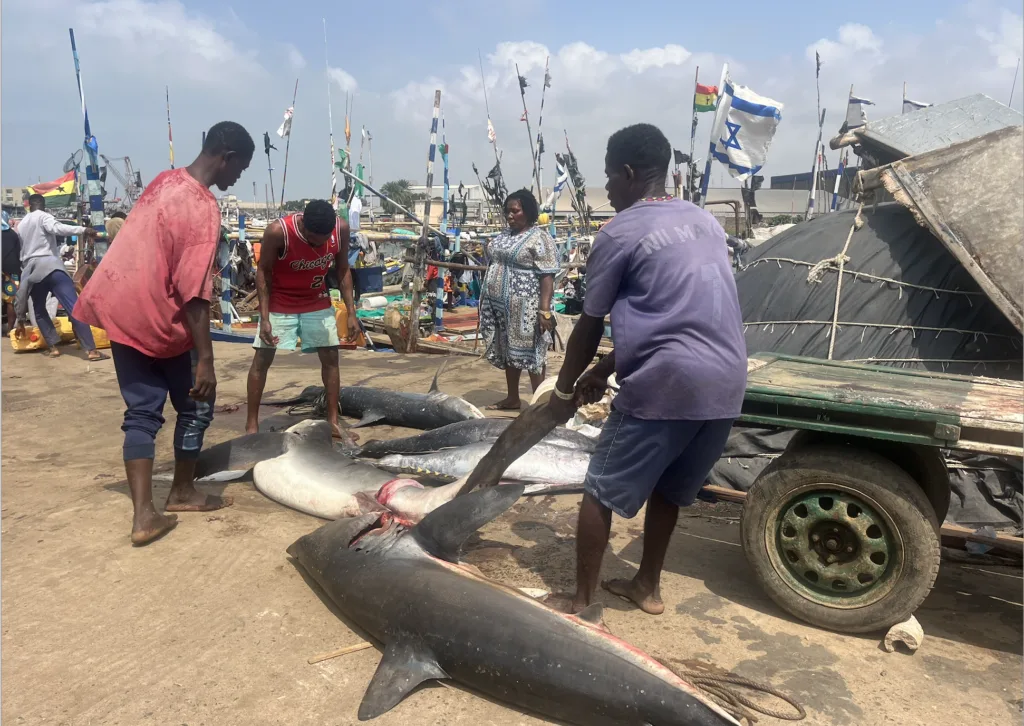
Gifty Gyan, a civil servant, picked up smoked mackerel and a piece of tuna at Makola Market, without asking where the fish was caught or whether the vessel was operating legally. She represents millions of Ghanaian consumers who rarely think about the journey fish takes before reaching their plates. Papa Yaw Atobrah, a fisheries expert with more than 40 years of experience in the sector, says the journey from net to dinner plate passes through a system most consumers know almost nothing about. Ghana formally committed to the Fisheries Transparency Initiative (FiTI), a global multi-stakeholder endeavour to enhance the sustainability of marine fisheries, in 2024. Current Minister for Fisheries and Aquaculture, Emelia Arthur, later oversaw the formal signing and established a National Multi-Stakeholder Group (NMSG) to translate the country's commitment into action. A transparency assessment conducted in Ghana revealed significant volumes of fisheries information that existed within government but remained scattered and inaccessible to the public. The Fisheries Transparency Initiative (FiTI) requires governments to publish who holds fishing licences, vessels that fish in Ghana waters, how much fish is caught and reported, and how enforcement against illegal fishing is performing. Dr Godfred Ameyaw Asiedu, FiTI Regional Coordinator for Anglophone Africa, says, 'The idea is simple: if citizens have access to the data and information, they can hold the system accountable.' However, inadequate funding remains a major challenge to the effective operation of the NMSG.
What It Means for Consumers
The connection between fisheries governance and the price and availability of fish at the market is direct, even if it is invisible to most consumers.
Ghana and other developing countries are losing billions of dollars due to illegal, unreported, and unregulated (IUU) fishing.
Mr Ernest Arthur, a fisherman in Takoradi, says, 'Illicit financial flows, robbing the ocean of its next generation.' He warns that when industrial vessels fish in unlicensed zones, they 'enter waters where you have no permission to fish.'
The Fisheries Information System, launched in June this year, will enable the public to access key information on Ghana's marine fisheries sector.
Consumers like Gifty Gyan may soon know where their fish comes from.
Ghana's High Fish Consumption
Ghana is a fish-eating nation with per capita fish consumption among the highest in sub-Saharan Africa.
Six out of ten homes in the country eat fish as a source of animal protein.
Mackerel and tuna on the grill, fried barracuda in soups and stews – fish is not a luxury in Ghana, but a staple.
Funding Challenges
The NMSG has supported the ministry to develop an online Fisheries Information System, but inadequate funding remains a challenge.
Dr Godfred Ameyaw Asiedu acknowledges that, 'We could have done more if we had adequate funding.'
The FiTI aims to enhance the sustainability of marine fisheries, but it requires governments to publish who holds fishing licences, vessels that fish in Ghana waters, how much fish is caught and reported, and how enforcement against illegal fishing is performing.
The National Multi-Stakeholder Group (NMSG) has been established to translate Ghana's commitment to the FiTI into action.
Dr Godfred Ameyaw Asiedu says, 'If citizens have access to the data and information, they can hold the system accountable.'