

The single sharpest fact in one or two punchy sentences. Who did what, where, when, and why it matters. Not a summary of everything — the one thing that makes someone stop scrolling. A reader who only reads this paragraph must understand what happened.
The US launched a wave of strikes against Iran on Wednesday, after Tehran reimposed a naval blockade in the Middle East. The strikes targeted several locations in Iran, including the port city of Bushehr, home to the country's only civilian nuclear plant. The US military said the strikes were designed to further degrade Iranian military capabilities used to attack commercial shipping in the Strait of Hormuz. Iranian state media reported explosions near the port city of Bandar Abbas, on the island of Qeshm, and on Bandar Imam Khomeini.
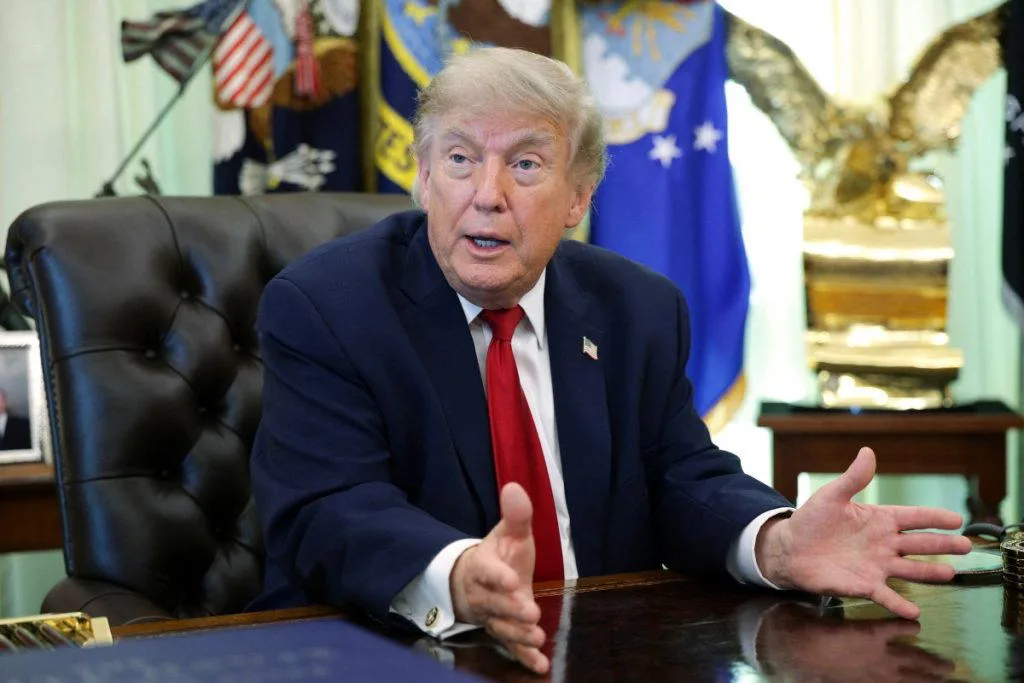
Iran's Revolutionary Guards said they targeted the US Fifth Fleet in Bahrain, where the military said it had intercepted attacks against civilian targets, while Jordan's armed forces said they had downed three missiles from the Islamic republic. Several explosions were also heard late Wednesday near the US consulate in Erbil, the capital of Iraq's northern Kurdistan region, AFP journalists said. US President Donald Trump, meanwhile, threatened to widen strikes next week to hit power plants and bridges unless Tehran returns to the negotiating table.
Iranian Deputy Foreign Minister Kazem Gharibabadi said the renewed US blockade 'has, in a way, dismantled the Islamabad memorandum', referring to the interim deal reached last month. 'A memorandum of understanding only has meaning when its clauses are valid and being implemented,' he said. Iranian top negotiator Mohammad Bagher Ghalibaf told state television that 'if Iran is not to derive any benefit from the memorandum of understanding, we have no reason to adhere'.
The dispute over the Strait of Hormuz, a waterway that is crucial for global oil and gas flows, has been at the heart of the resumption of hostilities. Iran blockaded Hormuz after the war erupted with US-Israeli strikes on February 28, using the waterway for leverage against its foes for months. The strait was briefly reopened after the US-Iran deal last month, before Tehran vowed last week it would be closed again 'until the US ends its aggression'.
US Central Command (CENTCOM) said it launched 'a wave of strikes… designed to further degrade military capabilities Iranian forces have used to attack commercial shipping in the Strait of Hormuz.' Anxieties ran high in Iran, where residents fear the conflict will escalate and affect civilians. 'The little children are so frightened by the sound of explosions that they don't sleep until morning,' said Khadijeh, a 31-year-old artisan from Qasr-e Shirin in the southeast.
Khadijeh's fears are shared by others in Gulf countries repeatedly hit by Iranian strikes. 'Every day, I wake up wondering whether the situation will de-escalate or worsen,' said Mustafa Mohamed, a 39-year-old Sudanese accountant living in Kuwait. 'It has become difficult to feel at ease or plan anything because uncertainty grips everyone.'
The US has reimposed its own blockade of Iran's ports, while Iranian Revolutionary Guards announced that they would continue to target US ships in the region. Israeli Prime Minister Benjamin Netanyahu warned Iranian leaders on Tuesday that Israel would deal a heavy blow if they launched an attack on his country. Speaking from Dimona, a southern town widely believed to house Israel's undeclared nuclear arsenal, he said: 'Do not count on things remaining quiet if you attack us.'