

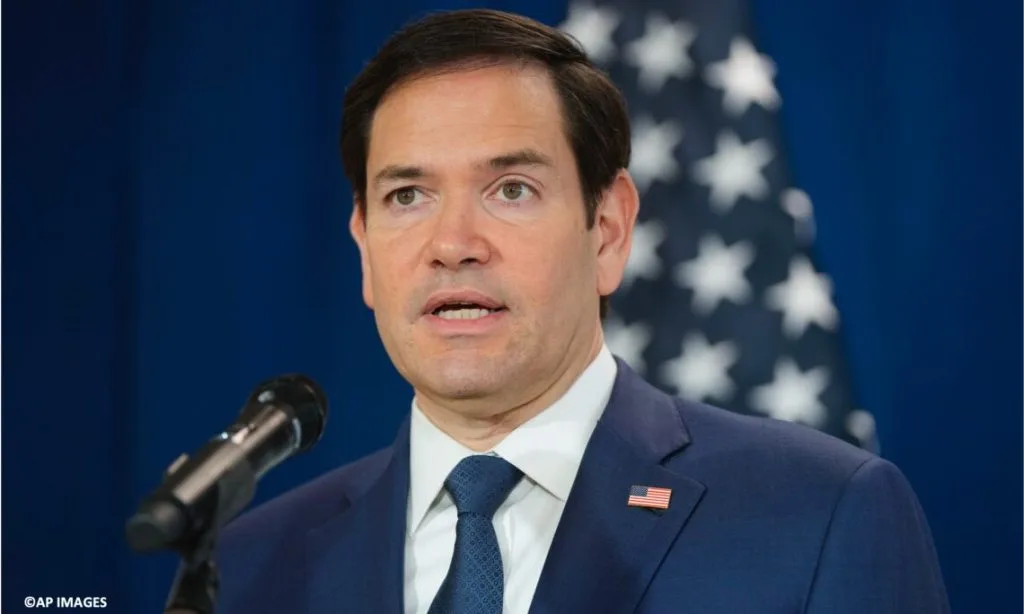
The US Secretary of State, Marco Rubio, has said that crisis-hit Cuba's leadership must change as Washington renewed an offer of $100 million in aid. This comes as Cuba suffers severe economic tumult, led by an energy shortage that plunged 65 percent of the country into darkness on Tuesday. The energy shortage is a major issue for Cuba, and it's causing a lot of problems for the people.
Marco Rubio, a Cuban-American and vociferous critic of the government established by Fidel Castro, said the system was to blame, including corruption by the military. He stated this on Fox News, saying, "It's a broken, nonfunctional economy, and it's impossible to change it." The corruption and nonfunctional economy are major concerns for the US, and they're not going to provide aid without some changes.
Cuba has seen a series of rare protests as economic misery grips the island of 9.6 million people. On Wednesday, several dozen people, some banging pots and pans, protested against power outages in the San Miguel del Padron neighborhood on Havana's outskirts. The protests are a sign that the people of Cuba are getting desperate, and they're looking for some relief.
The US offer of $100 million in aid is not the first time the US has provided aid to Cuba. The Trump administration already provided $6 million in humanitarian aid to Cuba, which was channeled through the charity of the Catholic Church. The US has been providing aid to Cuba for a while now, but it's not always easy to get it to the people who need it.
"This dramatic worsening has a single cause: the genocidal energy blockade to which the United States subjects our country, threatening irrational tariffs against any nation that supplies us with fuel," Cuban President Miguel Diaz-Canel wrote on X. The Cuban government doesn't think the US is being fair, and they're blaming the energy blockade for their problems.
Cuba lost the source for around half its fuel needs when US forces didn't allow Venezuelan leader Nicolas Maduro to supply them with fuel in a stunning turn of events in January. Since then, only one oil tanker, from Russia, has reached Cuba. The lack of fuel is a major issue for Cuba, and it's causing a lot of problems.
The State Department publicly renewed the proposal on Wednesday, a week after new US sanctions targeted key actors in Cuba's state-controlled economy and their foreign partners. The State Department said the support would include direct humanitarian assistance and funding for "fast and free" internet access. The US is trying to help the people of Cuba, but they're not going to lift the sanctions without some changes.
The situation in Cuba has implications for the entire region. As the US continues to impose sanctions on Cuba, other countries in the region are watching closely. They're not sure what's going to happen, and they're waiting to see how the situation unfolds.
But what does this mean for the people of Cuba? The answer isn't simple. On one hand, the US offer of aid could provide much-needed relief to the Cuban people. On the other hand, the condition that the Cuban government must change its leadership is a difficult one to meet. The Cuban government doesn't want to change, and they're not going to give in to US demands easily.
The Cuban government has denied that it has rejected a US offer for $100 million in assistance. Foreign Minister Bruno Rodriguez said it was a "lie" that "no one here knows anything about." The Cuban government is denying everything, and they're not admitting to anything.
As the situation in Cuba continues to unfold, it's clear that the Cuban people are suffering. They don't have access to basic necessities, and they're struggling to survive. It's up to the international community to help them, and they can't do it alone.
- The US has offered $100 million in aid to Cuba.
- The aid is conditional on the Cuban government changing its leadership.
- Cuba is suffering from severe economic tumult, led by an energy shortage.
- The US has imposed sanctions on Cuba, which has affected the country's economy.
- The Cuban government has denied that it has rejected a US offer for $100 million in assistance.
Rubio has been widely reported to be in contact with segments of the Cuban elite in hopes of stirring change. This could be a significant development in the situation in Cuba, as it shows that the US is trying to work with the Cuban people to bring about change. The US is trying to help the Cuban people, and they're not giving up.
The US-Cuba relationship is complex, and it's been that way for decades. The US imposed sanctions on Cuba in the 1960s, and they've been in place ever since. The sanctions have had a major impact on the Cuban economy, and they're one of the reasons why the country is struggling. The US and Cuba haven't had a good relationship for a long time, and it's not clear what the future holds.
As the situation in Cuba continues to unfold, it's clear that the international community will be watching closely. The US offer of aid is just one part of a larger story, and it's not clear what the outcome will be. The US is waiting to see what the Cuban government will do, and they're not going to lift the sanctions without some changes.
The US Secretary of State, Marco Rubio, has made it clear that the US won't lift the sanctions on Cuba until the government changes its leadership. This is a difficult condition for the Cuban government to meet, and it's not clear what the outcome will be. The Cuban government doesn't want to change, and they're not going to give in to US demands easily.
In the end, the situation in Cuba is complex and multifaceted. The US offer of aid is just one part of the story, and it's not clear what the outcome will be. The Cuban people are suffering, and they need help. It's up to the international community to provide that help, and they can't do it alone. The situation in Cuba requires a collective effort, and it's not going to be easy to resolve.