

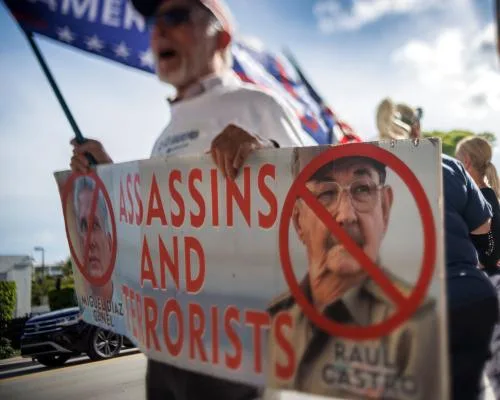
The United States has issued a federal criminal indictment against Raúl Castro, Cuba's former president, and five others. This move is part of the Trump administration's campaign to oust the country's six-decades-old communist regime. Castro, 94, was charged in Miami, Florida, with conspiracy to kill US nationals, four counts of murder, and two counts of destruction of aircraft. He's facing serious charges, and it's likely that the trial will be closely watched.
And this isn't the first time Castro has been involved in controversy. As Cuba's defense minister, he allegedly gave the order to open fire on a humanitarian mission in the Florida Straits in 1996. The incident resulted in the deaths of four men when their aircraft were shot down by the Cuban military. They didn't survive the attack, and it's had a lasting impact on US-Cuba relations.
But what led to this indictment? The Trump administration has been vocal about its desire to control Cuba, with the president hinting at US military control of the island nation during his commencement speech at the US Coast Guard Academy. He stated, “From the Gulf of America to the frozen waters of the Arctic, from the shores of Havana to the banks of the Panama canal, we will drive out the forces of lawlessness and crime and foreign encroachment, just like we've been doing.” The president's words were clear, and they've been seen as a threat by the Cuban government.
“I don’t think there needs to be an escalation with Cuba,” Trump said. “Look, the place is falling apart. They've really lost control of Cuba.” He's expressing his concerns about the situation in Cuba, and it's clear that he's not happy with the current state of affairs.
The indictment comes at a time of heightened tension between the US and Cuba, with the US having imposed a tight oil embargo that has caused rolling blackouts and prompted protests in the capital. The energy crisis has further strained relations between the two nations. They're not on good terms, and it's unlikely that they'll improve anytime soon.
So, who are the other defendants in this case? One of them is a fighter pilot who was initially charged in connection with the 1996 incident. The pilot's role in the shooting down of the aircraft has been well-documented, and it's likely that their testimony will be crucial in the trial. They're a key witness, and their statement could make or break the case.
The US has been cracking down on Cuba, with the Trump administration threatening military action against the Cuban government. This move is seen as an escalation of the US's efforts to exert control over the island nation. They're taking a tough stance, and it's unclear how Cuba will respond.
Yet, the impact of this indictment on US-Cuba relations remains unclear. The Cuban government hasn't yet responded to the charges, but it's likely that they will deny any wrongdoing. They won't admit to anything, and it's possible that they'll try to negotiate a deal. As the situation develops, it's clear that the US is taking a tough stance on Cuba, and the consequences of this move will be closely watched. The world is waiting to see what happens next.
The Trump administration's actions have been met with resistance from various groups, including the Open Society Foundations, which has pledged $300m to boost economic security and defend civil liberties in the US. This move is seen as a response to the Trump administration's efforts to exert control over various aspects of American life. They're pushing back against the administration's policies, and it's unclear who will come out on top.
In related news, the US special envoy to Greenland has stated that it's time for Washington to “put its footprint back” on the Arctic island. This move is seen as an attempt by the US to exert control over the region, which is rich in natural resources. They want to tap into the resources, and it's likely that they'll face opposition from other countries.
As the situation between the US and Cuba continues to unfold, it's clear that the stakes are high. The US's actions have the potential to destabilize the region, and the consequences of this move will be closely watched. They're playing a high-risk game, and it's unclear what the outcome will be.
Key Facts
- Raúl Castro, Cuba's former president, has been indicted by the US for conspiracy to kill US nationals.
- The indictment includes four counts of murder and two counts of destruction of aircraft.
- The incident that led to the indictment occurred in 1996, when Castro was Cuba's defense minister.
- The Trump administration has been vocal about its desire to control Cuba, with the president hinting at US military control of the island nation.
- The US has imposed a tight oil embargo on Cuba, causing rolling blackouts and prompting protests in the capital.
The potential consequences of this move are significant. If the US is successful in its efforts to exert control over Cuba, it could have major implications for the region. On the other hand, if the Cuban government is able to resist the US's efforts, it could lead to further destabilization of the region. They're in a difficult position, and it's unclear what they'll do next.
In any case, the situation between the US and Cuba is complex, and the outcome is far from certain. As the situation continues to unfold, it's clear that the stakes are high, and the consequences of this move will be closely watched. The world is watching, and they're waiting to see what happens next. The US and Cuba are at a crossroads, and it's unclear which path they'll take.