

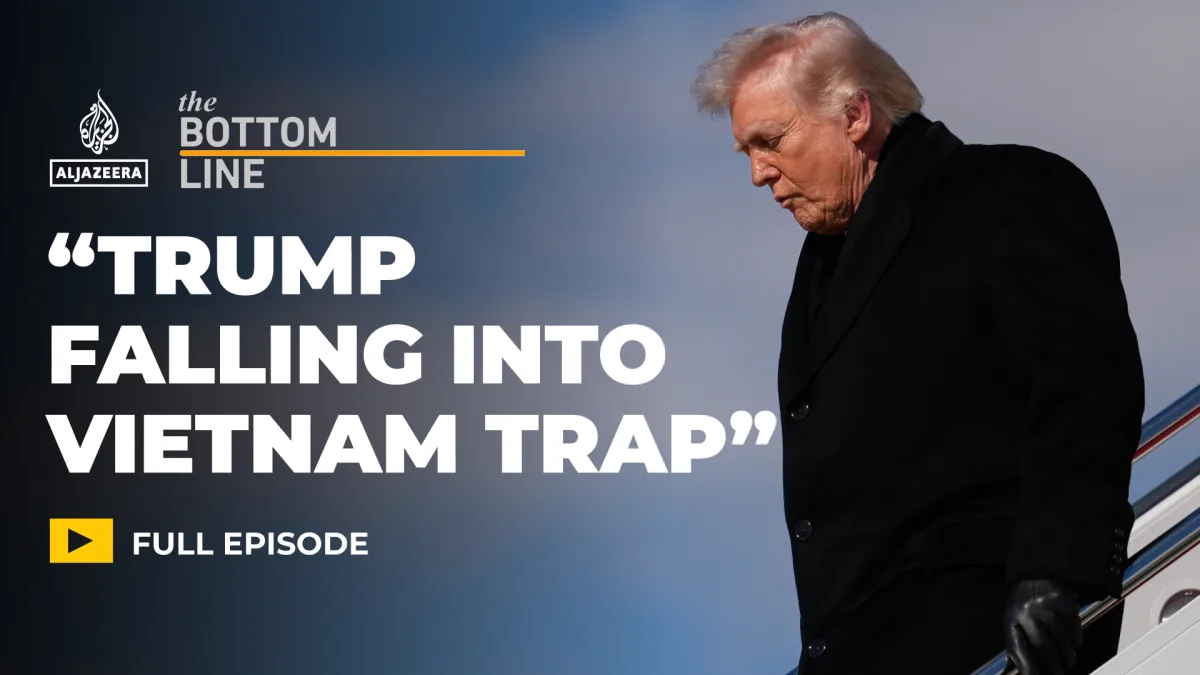
The US is at risk of falling into a Vietnam-like trap in its conflict with Iran, according to Rob Malley, a former US special envoy to Iran. Malley made this statement in response to the current talks between the US and Iran, which he believes have a 'very small chance of success'. He doesn't think they'll succeed, and his opinion carries weight.
Malley has experience negotiating with Iran. He was appointed by President Barack Obama as the US special envoy to Iran in 2014, a role he held until 2017. During his time in this position, Malley played a key role in the negotiations that led to the Iran nuclear deal, also known as the Joint Comprehensive Plan of Action (JCPOA). He's worked on Middle East issues for much of his career.
But Malley's concerns about the current talks go beyond just the negotiations themselves. He argues that the way President Donald Trump measures success - by counting the number of Iranian leaders killed or Iranian boats destroyed - is the wrong metric. Instead, Malley believes that the only way out of this conflict is a settlement that respects both US and Iranian core interests. It's a matter of finding a mutually beneficial solution.
'It really depends on the mindset of President Trump,' Malley said, when asked to calculate the odds of a deal. 'Psychologists may be more useful than experts in this case.' He thinks Trump's mindset is crucial to the success of the talks.
So, who is Rob Malley, and why should his opinion matter? Malley is an American diplomat and lawyer who has spent much of his career working on Middle East issues. Before his appointment as special envoy to Iran, he worked as a senior director for the Middle East and North Africa on the US National Security Council. He's also worked for the International Crisis Group, a non-profit organization that works to prevent and resolve conflicts around the world. His experience and expertise make his opinion worth considering.
Yet, despite his experience and expertise, Malley's comments on the US-Iran conflict aren't just about criticizing Trump's approach. He also emphasizes the need for a more nuanced understanding of Iranian interests and motivations. According to Malley, the US needs to recognize that Iran isn't just a rogue state, but a country with its own legitimate interests and concerns. They're a country with their own needs and desires. The US can't ignore these interests and expect a resolution.
And what about the implications of this conflict for the wider region? The US-Iran conflict has already had a significant impact on the Middle East, with many countries in the region finding themselves caught in the middle. The conflict has raised concerns about the potential for a wider war, which could have devastating consequences for the entire region. It's a complex issue, and many countries are affected.
- The US and Iran have been in conflict since the US withdrew from the JCPOA in 2018.
- The conflict has resulted in the killing of several high-ranking Iranian military officials, including General Qasem Soleimani.
- The US has imposed sanctions on Iran, which have had a significant impact on the country's economy.
- Rob Malley was appointed as the US special envoy to Iran in 2014, and played a key role in the negotiations that led to the JCPOA. These facts are important to understanding the conflict.
But what happens next? Malley's comments suggest that the US needs to rethink its approach to the conflict, and work towards a settlement that respects both US and Iranian interests. This won't be easy, given the deep-seated mistrust and hostility between the two countries. However, as Malley argues, it's the only way to avoid a prolonged and bloody conflict that could have devastating consequences for the entire region. The US and Iran must find a way to work together.
The US-Iran conflict is a complex and multifaceted issue, with many different factors at play. It's not just a matter of US vs Iran, but also involves other countries in the region, including Israel, Saudi Arabia, and Iraq. The conflict has raised concerns about the potential for a wider war, which could have devastating consequences for the entire region. Many countries are involved, and they're all affected in some way.
As the situation continues to unfold, it's clear that the US and Iran need to find a way out of this conflict, and fast. The alternative is a prolonged and bloody war that could have devastating consequences for the entire region. It's not just about the US and Iran - the conflict has already had a significant impact on the wider region, with many countries finding themselves caught in the middle. They're struggling to cope with the effects of the conflict.
In the end, it's up to the US and Iran to decide whether they want to continue down the path of conflict, or work towards a settlement that respects both their interests. As Rob Malley argues, the only way out of this conflict is a settlement that respects both US and Iranian core interests. It's a tough road ahead, but it's the only way to avoid a prolonged and bloody conflict that could have devastating consequences for the entire region. The US and Iran must work together to find a solution.