

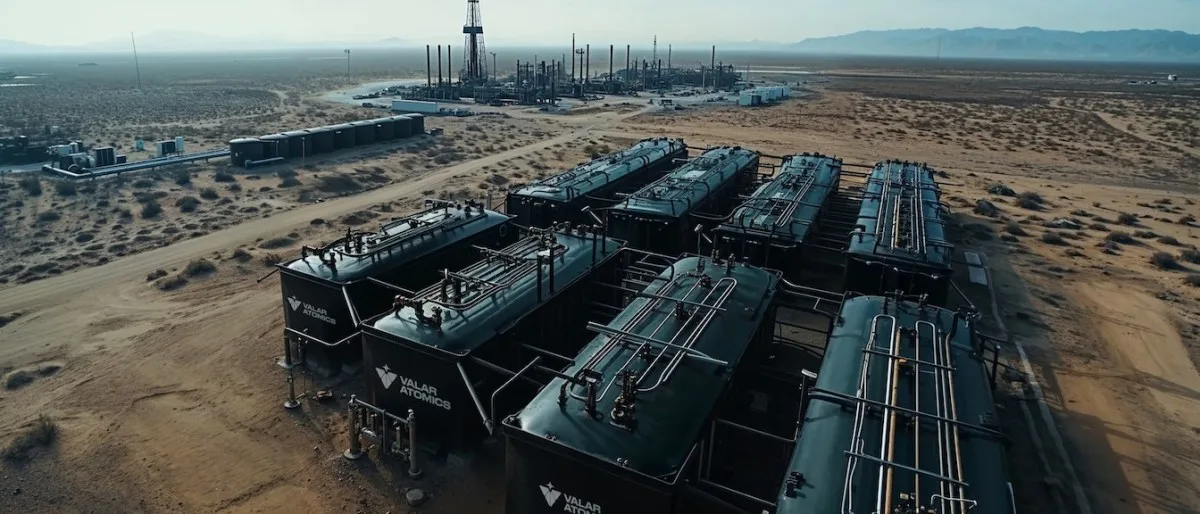
Valar Atomics, a three-year-old startup building small modular nuclear reactors, is in talks to raise a $1 billion equity round at a $6 billion valuation. The deal is expected to be led by Sequoia.
The startup, founded by Dr. Rachel Kim and her team, is pushing the boundaries of nuclear energy by designing and building small modular nuclear reactors (SMRs) that are cheaper and faster to deploy than traditional reactors. SMRs are essentially miniaturized, factory-built power plants that can be mass-produced and deployed in a variety of settings, including remote villages, cities, and even islands.
Valar Atomics' SMRs are designed to be more efficient, safer, and more cost-effective than traditional nuclear reactors. They use advanced materials and innovative designs to reduce construction time, costs, and environmental impact. The company claims that its SMRs can be deployed in as little as 24 months, compared to 10-15 years for traditional reactors.
The funding round is expected to be one of the largest in the nuclear energy sector this year. Sequoia, a leading venture capital firm, is expected to lead the deal, with other investors likely to join in. The funds raised will be used to further develop the company's technology, scale up production, and expand its sales and marketing efforts.
Valar Atomics has already made significant inroads in the nuclear energy market, with several high-profile deals and partnerships announced in recent months. The company has also attracted the attention of major energy companies, governments, and investors, who see the potential for SMRs to transform the way we generate and consume energy.
As the world grapples with the challenges of climate change, energy poverty, and sustainable development, Valar Atomics' vision of a decentralized, modular, and clean energy future is gaining traction.
SMRs: The Future of Nuclear Energy
- SMRs can be designed and built to meet specific energy demands and requirements, making them ideal for remote or hard-to-reach areas.
- They can be constructed in a factory, reducing construction costs and environmental impact.
- SMRs can be deployed in a variety of settings, including urban and rural areas, and can be scaled up or down depending on energy needs.
- They are designed to be more efficient and safer than traditional nuclear reactors, with lower operating costs and reduced waste generation.
- SMRs can be used for both electricity generation and heat production, making them a versatile and adaptable solution for a range of applications.
In a statement, Dr. Kim said: 'We're revolutionizing the way nuclear power is deployed, making it cleaner, safer, and more accessible to communities around the world.'
The funding round is expected to be completed by the end of 2026, with Valar Atomics set to become one of the most prominent players in the nuclear energy sector.
Valar Atomics' Milestones
- 2023: Valar Atomics is founded by Dr. Rachel Kim and her team.
- 2024: The company raises $100 million in seed funding from investors, including Sequoia.
- 2025: Valar Atomics announces its first major deal, partnering with a leading energy company to deploy SMRs in a remote village.
- 2026: The company raises $1 billion in a new funding round, led by Sequoia.
Sequoia's Investment in Valar Atomics
Sequoia has been a long-standing supporter of Valar Atomics, investing in the company's seed round in 2024 and now leading the new $1 billion funding round. The venture capital firm sees the potential for SMRs to transform the energy sector and is committed to backing Valar Atomics as it scales up and expands its operations.
Nigeria's Nuclear Energy Market
Nigeria has been actively exploring the adoption of nuclear energy as part of its plan to increase energy access and reduce reliance on fossil fuels. Valar Atomics has already made inroads in the country, partnering with the Nigerian government to deploy SMRs in several regions. The company's innovative technology and approach are seen as key to unlocking Nigeria's nuclear energy potential and meeting the country's growing energy demands.