

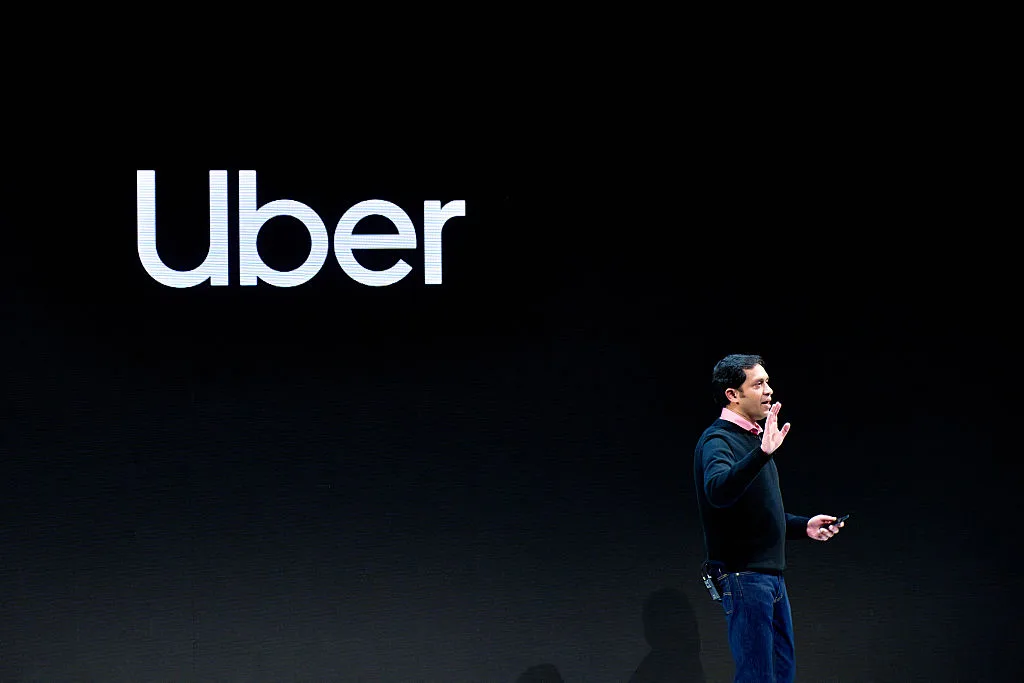
"We're not trying to be everything for everyone," says Uber's Head of Product, Jeff Holden. "We're trying to be the best in the things we're trying to be."
Uber has been quietly pushing beyond its core services of ride-hailing and delivery for over a year now. The platform that once made transportation as easy as a tap on the app has evolved into something more – a one-stop shop for various experiences.
Under the hood, Uber is working on various projects, including a data-labeling side hustle for its drivers and a six-month-old business unit called AV Labs. AV Labs aims to develop a fleet of sensor-equipped vehicles designed to gather large amounts of driving data. This initiative has raised eyebrows, as Uber competes directly with some of its autonomous vehicle partners, including Waymo.
Uber's partnership with Expedia, which enabled hotel bookings within the app, has also been gaining traction.
For instance, in the United Kingdom, Uber has launched a feature called 'shop for me' where users can send their drivers to pick up items on their behalf. This service has been piloted in Europe and has shown promising results.
As for the autonomous vehicle testing, Uber has made significant strides in this area, particularly with the launch of its AV Labs. While some may view this as a hedge against competitors, the fact remains that owning the data layer gives Uber leverage and optionality.
Uber's plans to expand its services into new areas will undoubtedly raise questions about its intentions. With a user base of over 100 million people worldwide, it's clear that Uber has the scale to make a significant impact. The future of transportation will likely be shaped by decisions made by companies like Uber, and it will be fascinating to see how this plays out.
Key Facts
- Uber has introduced hotel bookings in partnership with Expedia.
- The company has launched a 'shop for me' feature in Europe.
- Uber is working on a data-labeling side hustle for its drivers.
- AV Labs is a six-month-old business unit developing sensor-equipped vehicles.
- Uber competes directly with some of its autonomous vehicle partners.
- The company has a user base of over 100 million people worldwide.
The expansion of Uber's services into new areas will undoubtedly raise questions about its intentions and its future. As the company continues to push the boundaries of what's possible, one thing is clear – the days of simple ride-hailing are behind us, and a multi-billion-dollar empire is emerging.
Uber has been growing into a one-stop shop for various experiences, including hotel bookings and a 'shop for me' feature. With a user base of over 100 million people worldwide, the company has the scale to make a significant impact. However, its efforts to develop autonomous vehicles have raised eyebrows, particularly as Uber competes directly with some of its partners.
The data-labeling side hustle for drivers, a six-month-old business unit called AV Labs, and the partnership with Expedia are all part of Uber's expansion plans. While some may view this as a hedge against competitors, the fact remains that owning the data layer gives Uber leverage and optionality.
Uber's plans to expand its services into new areas will undoubtedly be scrutinised. As the company continues to push the boundaries of what's possible, it's clear that the future of transportation will be shaped by decisions made by companies like Uber.
With its user base and scale, Uber has the potential to make a significant impact. As it continues to evolve, one thing is certain – the transportation landscape will never be the same.
The future of transportation is rapidly changing, and companies like Uber are at the forefront of this evolution. As the company continues to expand its services into new areas, one thing is clear – the days of simple ride-hailing are behind us, and a new era is emerging.