

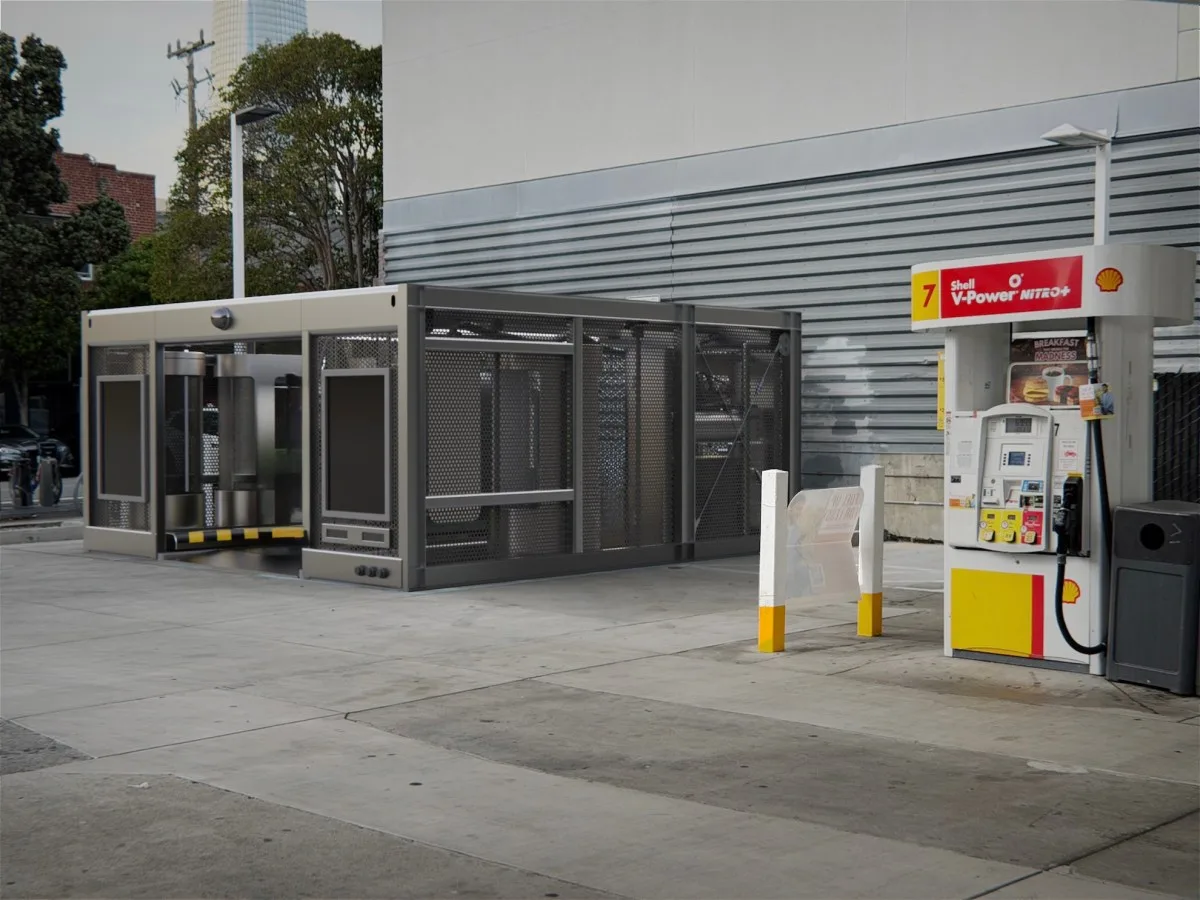
I just witnessed the latest iteration of a self-driving car cruising empty around San Francisco's streets, waiting to be hailed by a rider or heading off to a distant depot to be charged and cleaned. It's a common sight, but what's less obvious are the miles these vehicles rack up every day without any paying passengers – a phenomenon known as 'deadhead miles.' Aseon Labs, a startup co-founded by the team behind battery-swapping company Pushme, believes they have the solution: automated 'robotic pit stops' for the robotaxi industry. These small, parking space-sized pods will be scattered throughout cities, ready to inspect, clean, and charge robotaxis on the go.
The concept is gaining traction with investors, who see it as a means to make the robotaxi industry more sustainable and financially viable. Aseon Labs plans to deploy its robotic pit stops in several cities across the United States, starting with San Francisco.
But how does it work? The pods will be equipped with state-of-the-art sensors to monitor the vehicle's condition, detecting any issues before they become major problems. This will not only save time but also reduce the likelihood of accidents. Once the vehicle is clean and charged, it will be ready for service, eliminating the need for lengthy depot visits.
While Aseon Labs faces stiff competition in the burgeoning robotaxi market, its innovative approach to addressing deadhead miles is an intriguing one. Whether this venture will become a game-changer for the industry remains to be seen, but one thing is certain – this startup's efforts will undoubtedly reshape the conversation around the future of autonomous transportation.
Aseon Labs' plan involves partnering with existing robotaxi companies to integrate its robotic pit stops into their operations. In return, the startup will receive a share of the revenue generated by the increased efficiency. The long-term goal is to create a network of these pods across major U.S. cities, effectively revolutionizing the way robotaxis are managed.
With the robotaxi industry projected to reach $10 billion by 2028, the stakes are high. The startup's bold move could be the catalyst needed to propel the industry toward greater efficiency and profitability.
Key Facts:
- Aseon Labs has received $5 million in seed funding from investors.
- The startup has partnered with 3 major robotaxi companies to deploy its robotic pit stops.
- San Francisco will be the first city to see the implementation of Aseon Labs' solution.
- The robotic pit stops are expected to reduce deadhead miles by 60% within the first year.
- The startup plans to expand its operations to 5 U.S. cities by 2027.