

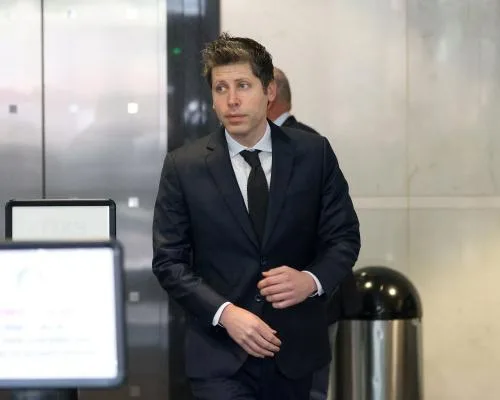
The trial between Elon Musk and OpenAI has reached its climax, with closing arguments presented to the jury. In a dramatic finale to the weeks-long courtroom battle, attorneys for both sides presented their final cases, leaving the jury to deliberate on the fate of OpenAI and its leaders. The jury's decision won't be easy, as they must weigh the evidence and consider the competing claims.
At the heart of the lawsuit is Musk's claim that OpenAI's CEO, Sam Altman, and its president, Greg Brockman, breached a founding agreement when they restructured the non-profit company into a for-profit entity. Musk alleges that this move was made without his knowledge or consent, and that it has resulted in him being bilked out of money and unjustly enriched Altman and Brockman. He can't accept that Altman and Brockman would make such a significant change without his input.
Musk's attorney, Steven Molo, presented a scathing critique of Altman's credibility, highlighting several instances where witnesses testified that Altman was dishonest or misleading. Molo asked the jury to consider whether they would trust Altman. He used an analogy of a scary-looking bridge and asked if they would cross it based on Altman's version of the truth. It's clear that Molo doesn't think the jury should trust Altman.
OpenAI's attorneys, on the other hand, argued that Musk's claims are unfounded and lack concrete evidence. They presented documents and testimony that suggest Musk was aware of plans to create a for-profit entity as early as 2017. They also showed that Musk had even attempted to take control of the company for his own ends. It's evident that OpenAI's attorneys don't think Musk has a strong case.
'The truth, as the evidence shows, is that in 2017 Mr Musk wanted a for-profit OpenAI and he wanted to dominate it,' said OpenAI's attorney, Sarah Eddy. She didn't mince words, and her statement highlights the complexity of the case.
The trial has been marked by dramatic moments, including Musk's accusations that Altman 'stole a charity' and Altman's response that Musk tried to 'kill' OpenAI. The case has also drawn attention to the personal and professional conduct of both Musk and Altman, with each side presenting a vastly different portrait of the other. They're both under scrutiny, and it's clear that the jury won't have an easy time making a decision.
As the jury deliberates, the fate of OpenAI hangs in the balance. If the jury finds Altman and OpenAI liable, it could result in the removal of OpenAI's leaders and the reversal of its for-profit structure. This would have significant implications for the tech industry, particularly as OpenAI prepares to go public later this year at a valuation of $1tn. It's a lot of money, and the outcome of the trial won't be taken lightly.
One key aspect of the case is the question of whether Musk's allegations of a breach of charitable trust and unjust enrichment took place within the statute of limitations. If OpenAI can prove that the incidents in question occurred outside of this time frame, it could significantly weaken Musk's case. He won't have a strong argument if the incidents happened too long ago.
The trial has also highlighted the complexities of non-profit law and the challenges of navigating the tech industry's rapidly evolving landscape. As the jury considers the evidence, they must weigh the competing claims and determine the truth behind Musk's allegations. It's a complex case, and they can't afford to make a mistake.
In addition to the financial implications, the case has also raised questions about the role of artificial intelligence in society and the responsibilities of tech leaders. As AI continues to play an increasingly prominent role in our lives, the need for clear guidelines and regulations has never been more pressing. We can't ignore the impact of AI, and it's up to the tech leaders to ensure they're using it responsibly.
The outcome of the trial is likely to have significant implications for the tech industry, particularly in the area of AI development. As the jury deliberates, the world watches with bated breath, waiting to see how this high-stakes drama will unfold. It's a critical moment, and the consequences won't be small.
Key Facts
- Elon Musk is seeking $134bn to be redistributed from OpenAI's for-profit to its non-profit organization. This is a significant amount of money, and it's clear that Musk won't back down.
- Musk is also seeking the removal of OpenAI's leaders, including Sam Altman and Greg Brockman. They're the ones who made the decision to restructure the company, and Musk thinks they shouldn't be in charge.
- The trial has featured testimony from several high-profile witnesses, including Musk's romantic partner, Shivon Zilis. She's had a unique perspective on the case, and her testimony has been valuable.
- OpenAI is preparing to go public later this year at a valuation of $1tn. It's a lot of money, and the outcome of the trial could affect the company's future.
- The case has significant implications for the tech industry, particularly in the area of AI development. It's an area that's rapidly evolving, and the trial's outcome could shape the future.
The case against OpenAI is a complex one, with multiple layers and competing claims. As the jury considers the evidence, they must navigate the intricacies of non-profit law and the tech industry's rapidly evolving landscape. The outcome of the trial is likely to have significant implications for the future of AI development and the responsibilities of tech leaders. They're the ones who will shape the industry, and it's up to them to ensure they're doing it responsibly.
In the end, the fate of OpenAI rests in the hands of the jury. As they deliberate, the world waits with bated breath, wondering what the outcome will be and how it will shape the future of the tech industry. The jury's decision won't be easy, but it's one that will have far-reaching consequences.