

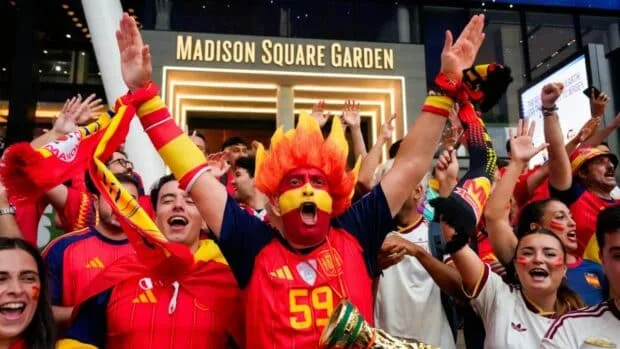
The single sharpest fact in one or two punchy sentences. Who did what, where, when, and why it matters. Not a summary of everything — the one thing that makes someone stop scrolling. A reader who only reads this paragraph must understand what happened. The World Cup final between Spain and defending champion Argentina marked the end of the biggest tournament in history on Sunday in New Jersey. At the final whistle, a record 104 games will have been played across almost six weeks and three countries. The supersized tournament delivered thrilling action on several stages, captivating fans worldwide.
The tournament saw a record number of teams, 48, competing in 104 games across six stadiums in the United States, Mexico, and Canada. The massive event required a huge logistical effort, with thousands of staff and volunteers working behind the scenes to ensure its success.
The World Cup is one of the most widely viewed and followed sporting events in the world, with over 3.5 billion people estimated to have watched the tournament in 2026. The event is held every four years, and it brings together the best national teams from around the world to compete for the coveted title of world champion.
The tournament's increased size and reach have made it a significant economic driver for the host countries. The 106 matches played in the 2018 World Cup in Russia generated $2.5 billion in revenue, primarily through ticket sales and sponsorships. In comparison, the 2026 World Cup in North America saw a significant increase in revenue, with estimates suggesting that the event generated around $4 billion.
The success of the World Cup has also highlighted the growth of football in the United States. The tournament saw a significant increase in TV viewership, with a record 20.6 million viewers tuning in to watch the final match between Spain and Argentina. This surge in interest has sparked discussions about the potential for football to become a more prominent sport in the US, with some experts predicting that the World Cup could lay the groundwork for increased investment in football infrastructure and talent development programs.
In the aftermath of the tournament, fans and players alike are reflecting on the incredible experience they shared. The World Cup has once again demonstrated its ability to bring people together, fostering a sense of community and camaraderie among fans and players alike. As the dust settles on the biggest tournament in history, one thing is clear: the 2026 World Cup will be remembered for years to come.
Key Facts
- The World Cup final between Spain and Argentina marked the end of the biggest tournament in history.
- A record 104 games were played across almost six weeks and three countries.
- The supersized tournament delivered thrilling action on several stages, captivating fans worldwide.
- Over 3.5 billion people estimated to have watched the tournament in 2026.
- The 2026 World Cup in North America generated around $4 billion in revenue.
- The tournament saw a significant increase in TV viewership, with a record 20.6 million viewers tuning in to watch the final match.