

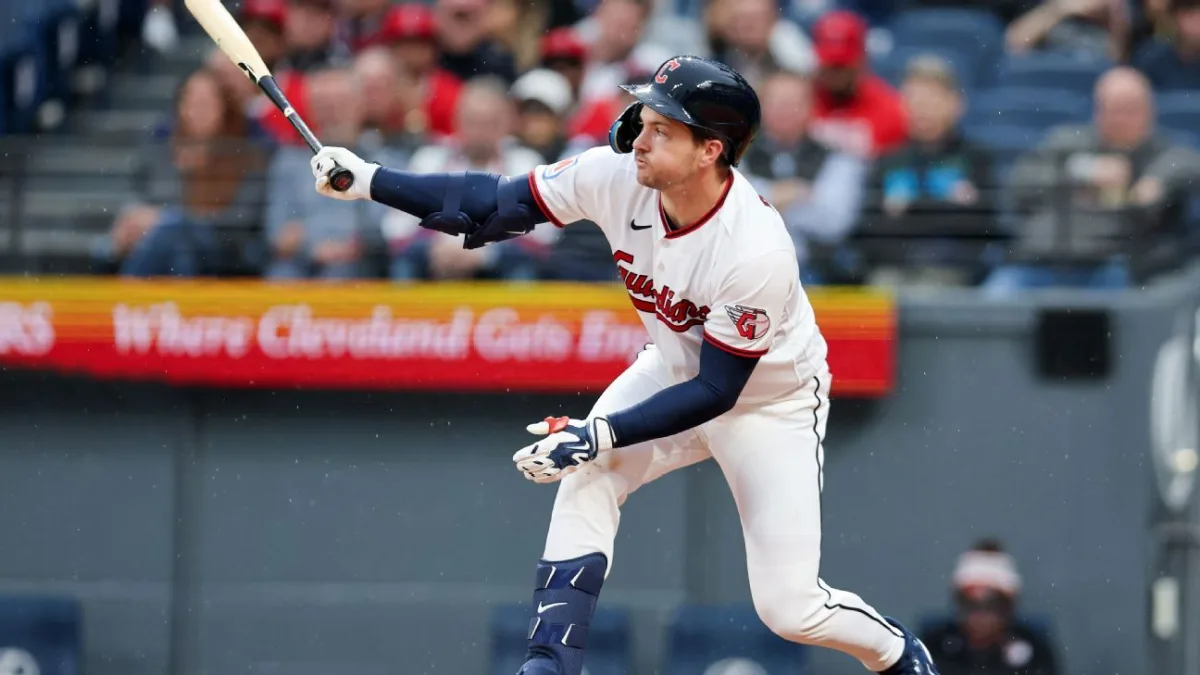
It’s a strange thing to watch a man glide across the grass like he owns the field, only to see him look like a total stranger the moment he picks up a bat. Right now, in Major League Baseball, we’ve got a handful of defensive wizards who are effectively batting as if they’re holding a broomstick. They aren't just missing the ball; they’re anchoring their teams' lineups in the worst way possible, with offensive numbers hovering near the dreaded .140 mark.
Usually, we trade a bit of hitting for elite defense because nobody wants to watch their pitcher get frustrated by routine balls skipping into center field. But there’s a limit. When a player's batting average drops into the .140s or .170s, they stop being a luxury and start being a sinkhole for runs. If a team plays 162 games a year, carrying a black hole in the batting order for months on end isn't just a bad look—it’s a recipe for missing the postseason entirely.
Take the case of these seven specific players identified in recent data. They were brought to their clubs to stop runs, and they’ve succeeded in that department, showing off range and glove work that makes fans stand up. The drop-off in their offensive production is historically steep. We’re talking about guys who used to be serviceable, now barely managing to put the ball in play. The question isn't whether they can play; it’s whether they deserve to start when every single plate appearance feels like a concession.
The Anatomy of the Slump
When we look at the specific numbers, like .143, .170, and .194, we’re seeing a crisis of confidence and mechanics. Most of these players have dealt with this before in their minor league careers, but doing it in the majors brings a level of scrutiny that burns. Managers are caught in a cycle of hope, waiting for these players to 'find their swing,' while benching younger, hungrier talent in the process. It’s a classic tug-of-war between the defensive stability the manager loves and the offensive output the front office demands.
'You can’t hide a guy in the lineup forever, no matter how many highlight reels he makes in the field,' one anonymous scout noted recently regarding the current landscape of defensive-first players.
There’s also the psychological toll. Every time these guys walk to the plate, the crowd pressure builds, and the opposition pitcher knows exactly how to work them. They’re getting the same sequence of pitches—fastballs in, breaking balls away—because they’ve shown they can’t make the adjustment. It’s a repeatable pattern of failure that’s becoming painfully obvious to anyone with a television set.
For teams, the options are shrinking by the day. You can send a guy down to the minors to work on his mechanics, but that leaves a hole in your defense you might not be able to fill. You can trade for a replacement, but that costs prospects and money. Or, you can stick it out and hope the numbers normalize. This is a gamble that has destroyed many a managerial career.
In the grand scheme of sports, this isn't the first time we’ve seen a player's bat fall off a cliff. We’ve seen former MVPs turn into utility men because their reflexes slowed down. Seeing it happen to defensive specialists in their prime forces a team to look in the mirror. They have to decide if the runs they save are worth the runs they lose by having a liability at the plate. It’s a cold, hard calculation that defines the difference between a championship team and a basement dweller.
The team's front office must now evaluate if these roster spots can be better utilized by players with more balanced offensive and defensive capabilities.