

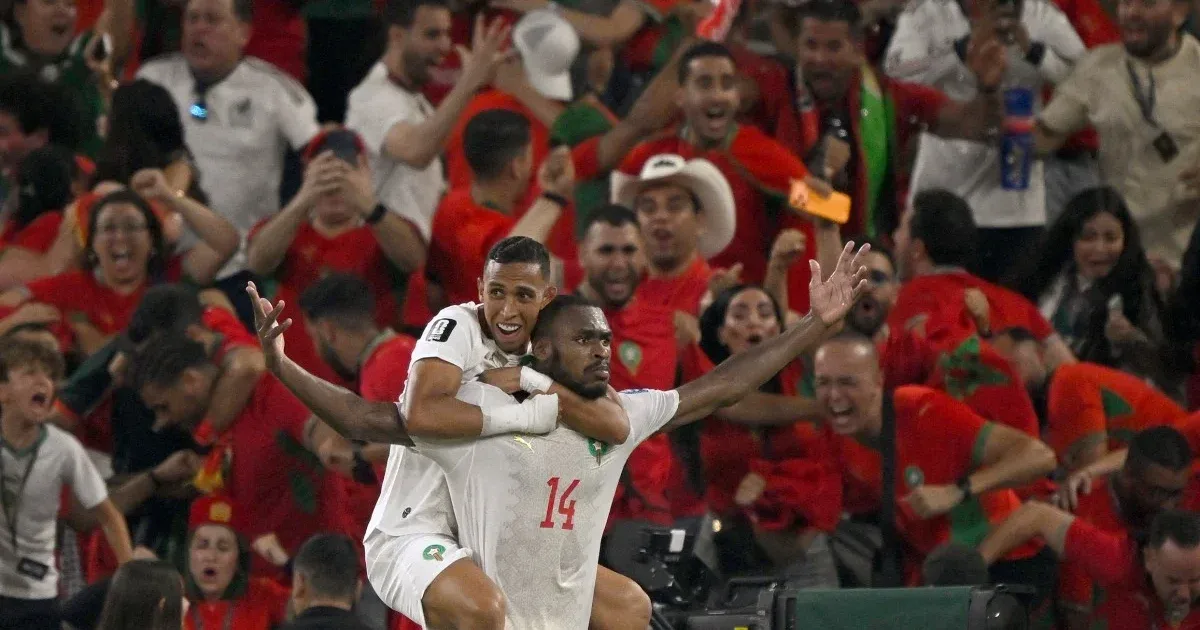
The last-32 match in Monterrey ended in a thrilling 1-1 draw after extra time, leading to a nail-biting penalty shoot-out. After several misses on both sides, Morocco striker Ismael Saibari, who plays in the Netherlands for PSV Eindhoven, slotted home the winning penalty to set up a last-16 clash with co-hosts Canada. The scene in The Hague's Schilderswijk district quickly turned violent as riot police arrived on the scene, deploying water cannon and conducting baton charges to clear the crowd.
AFP reporters saw around a dozen arrests, with police pinning several young men to the ground after striking them in the legs with batons. Handcuffed, they were driven away in police vans. The Dutch police on bicycles played a cat-and-mouse game with youths through the streets but there was no major damage caused. Despite multiple attempts, people declined to speak to the media, preferring to keep their identities secret. Many on the streets wore balaclavas or other face coverings.
The victory marked a major upset in the World Cup, with many experts predicting a comfortable win for the Dutch team. Morocco's Ismael Saibari became an unlikely hero after scoring the winning penalty, and the fans in The Hague celebrated wildly with car horns blaring and firecrackers exploding. The celebration was a testament to the passion and dedication of Morocco's football fans, who have been supporting their team throughout the tournament.
The police presence in The Hague has been heavy throughout the World Cup, with a significant boost in officers being deployed to manage the crowds. The local authorities have been working closely with the World Cup organizers to ensure the safety of both the players and the spectators. With Morocco now set to face co-hosts Canada in the last 16, fans are eagerly anticipating the next match. Whether the celebrations will continue or tensions will rise again remains to be seen.
The scenes in The Hague have raised questions about the policing strategy during the World Cup. Experts have noted that the heavy-handed approach by the authorities may have contributed to the violent clashes. While the police have maintained that they were trying to maintain order and prevent damage, the exact circumstances surrounding the arrests are still unclear.
The World Cup has been a source of national pride for Morocco, and the victory has brought the country together. Fans in Morocco and around the world have been celebrating wildly, with many taking to social media to express their joy. The team's coach, Walid Regragui, has hailed the victory as a 'dream come true' and has paid tribute to the dedication and hard work of his players.
With the World Cup now reaching its final stages, fans are eagerly waiting to see what the future holds for Morocco's team. Whether they will be able to replicate their winning form against Canada remains to be seen, but one thing is certain – the team has already made history by becoming the first African team to reach the last 16 of the tournament.
The victory has also sparked calls for greater investment in Morocco's football infrastructure. Many have argued that the country's football facilities and training programs need to be improved to allow the team to compete at the highest level. The government has announced plans to invest in new stadiums and training facilities, but how effective these plans will be remains to be seen.
For now, the fans in The Hague are still basking in the glory of their team's victory. The celebrations may have been marred by violent clashes, but the sense of pride and joy remains palpable. As Morocco takes on Canada in the next match, one thing is certain – the passion and dedication of the fans will be on full display.
Key Facts
- Morocco's World Cup win over the Netherlands was their first-ever victory against the Dutch team.
- The match was played in front of a packed crowd at the Estadio de Monterrey in Mexico.
- The winning penalty was scored by Morocco striker Ismael Saibari, who plays for PSV Eindhoven in the Netherlands.
- Around a dozen arrests were made during the celebrations in The Hague, with police deploying water cannon and baton charges to clear the crowd.
The scenes in The Hague have raised questions about the policing strategy during the World Cup. Experts have noted that the heavy-handed approach by the authorities may have contributed to the violent clashes. While the police have maintained that they were trying to maintain order and prevent damage, the exact circumstances surrounding the arrests are still unclear.
The victory has also sparked calls for greater investment in Morocco's football infrastructure. Many have argued that the country's football facilities and training programs need to be improved to allow the team to compete at the highest level.
The government has announced plans to invest in new stadiums and training facilities, but how effective these plans will be remains to be seen. For now, the fans in The Hague are still basking in the glory of their team's victory.
The celebrations may have been marred by violent clashes, but the sense of pride and joy remains palpable. As Morocco takes on Canada in the next match, one thing is certain – the passion and dedication of the fans will be on full display.