

The single sharpest fact in one or two punchy sentences. Who did what, where, when, and why it matters. Not a summary of everything — the one thing that makes someone stop scrolling. A reader who only reads this paragraph must understand what happened.
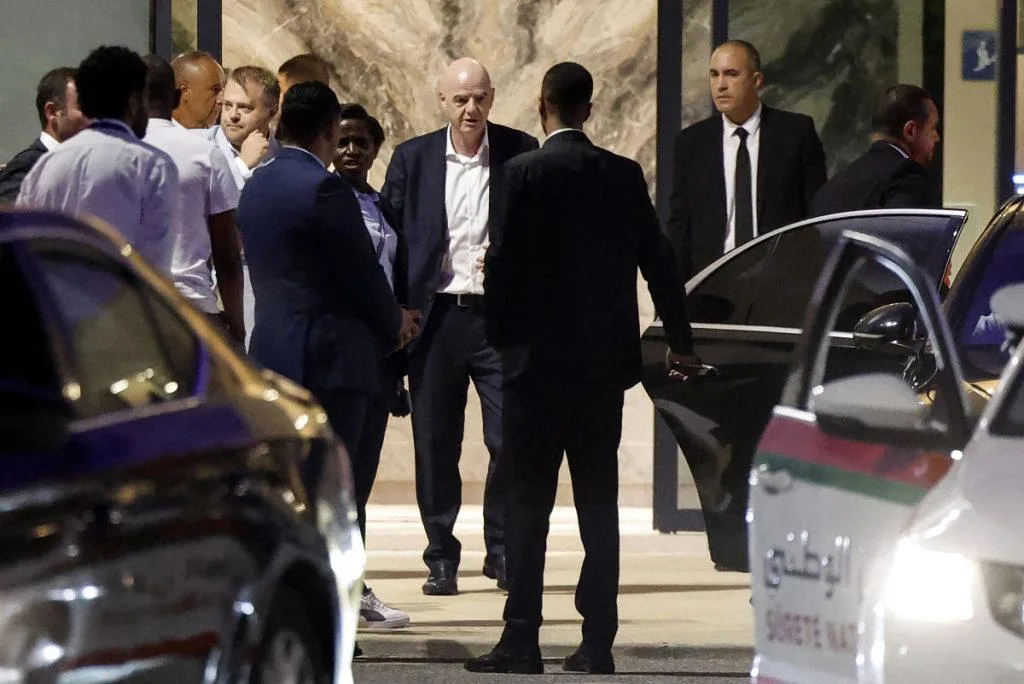
FIFA president Gianni Infantino has received the full support of senior directors after a crisis meeting in Morocco, despite the governing body's admission of errors over its now-shelved plan to open the World Cup to private investment.
FIFA's leadership acknowledged that the proposal, which could have raised up to $4.2 billion based on a valuation of $20 billion for a new commercial subsidiary, was not handled properly, leading to a furious backlash from European football's governing body UEFA, which went so far as to threaten a boycott of the World Cup.
The meeting, attended by FIFA Secretary General Mattias Grafstrom and members of the FIFA Management Board, saw the governing body's leadership agree to conduct a review of the proposal and present a report to the FIFA Council at its next scheduled meeting.
Infantino, a 56-year-old Swiss lawyer who has been in charge of FIFA since 2016, has come under increasing pressure over his handling of the proposal, with some calling for him to step down. However, the governing body has reaffirmed its support for him, citing his achievements in developing football worldwide.
The proposal itself was designed to provide each of FIFA's 211 member associations with a one-off payment of $20 million in early 2027, as well as increase their funding allocation for the 2027-2030 cycle from $8 million to $20 million. However, the plan was widely criticised, with some accusing it of being opaque and self-serving.
Infantino has been in charge of FIFA since 2016, when he was elected as the president of the governing body. Under his leadership, FIFA has overseen several successful tournaments, including the 2018 World Cup in Russia and the 2022 World Cup in Qatar.
Infantino has also been at the forefront of efforts to develop football in Africa and Asia, with the governing body launching several initiatives to promote the growth of the sport in these regions.
However, the controversy surrounding the World Cup privatisation plan is the latest in a series of setbacks for Infantino, who has faced criticism over his handling of several high-profile issues, including the 2022 World Cup's human rights record.
The fallout from the proposal has also seen Canadian Prime Minister Mark Carney express his lack of confidence in Infantino's ability to lead FIFA.
Infantino has since apologised for the controversy, saying that the governing body's purpose is to "unite and improve" football. He added that he was committed to learning from the mistakes made and that the governing body would work to regain the trust of its member associations.
The controversy surrounding the World Cup privatisation plan is the latest in a series of challenges facing Infantino, who has been in charge of FIFA for over a decade.
The impact of the plan on the world of football remains to be seen, but it has already sparked a heated debate about the role of private investment in the sport.
The decision to shelve the plan has been welcomed by some, who see it as a step in the right direction for the sport.
However, others have expressed concerns that the governing body's admission of errors may be too little, too late.
The future of the World Cup and the role of private investment in football remain uncertain, but one thing is clear: the fallout from the privatisation plan has sent shockwaves through the football world.
Key Facts
- FIFA's proposal to open the World Cup to private investment was shelved after a backlash from UEFA and other governing bodies.
- The proposal could have raised up to $4.2 billion based on a valuation of $20 billion for a new commercial subsidiary.
- FIFA's leadership acknowledged that mistakes were made in the handling of the proposal.
- The governing body has agreed to conduct a review of the proposal and present a report to the FIFA Council.
- Infantino has faced criticism over his handling of several high-profile issues, including the 2022 World Cup's human rights record.