

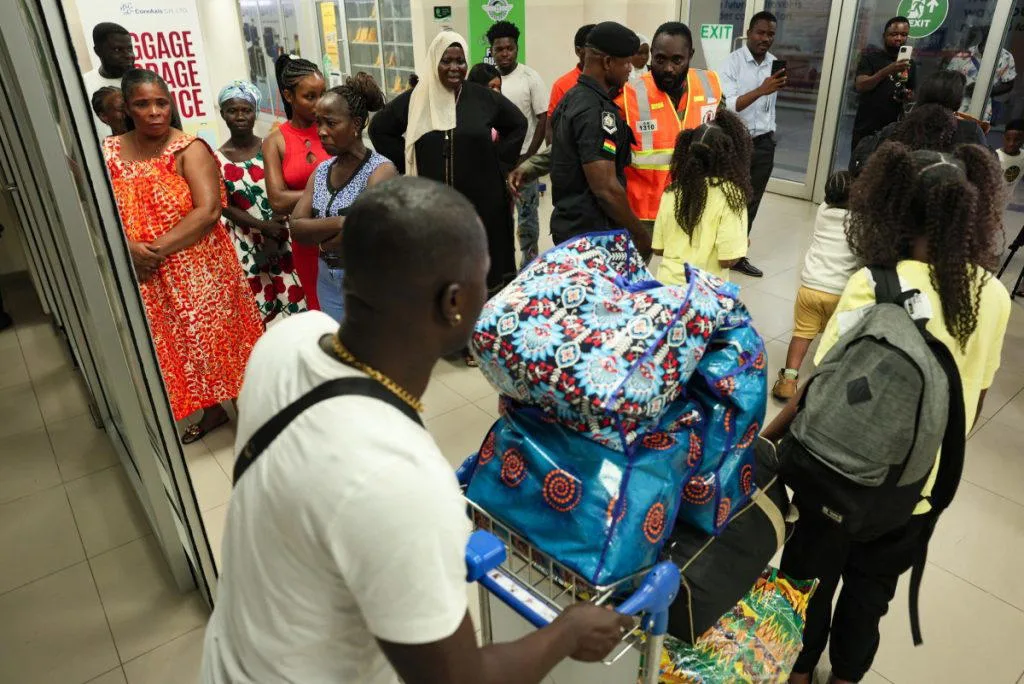
Ghana is airlifting approximately 800 citizens home from South Africa to escape rising xenophobic violence. This evacuation follows a series of anti-immigrant protests that have fueled fear among the Ghanaian community.
Ghana airlifted its first batch of 300 citizens in a repatriation flight that landed in Accra Wednesday afternoon. Foreign Minister Samuel Okudzeto Ablakwa was on hand to greet the returnees, along with patriotic songs blasting over the airport speakers. ‘Wherever Ghanaians are, we’ll make sure you’re protected,’ he assured the crowd.
A viral video showing the alleged assault of a Ghanaian man sparked this mass evacuation after it circulated on social media, outraging many in Ghana. The violence is linked to repeated xenophobic protests in South Africa, where unemployment rates have ballooned to over 30 percent.
About 90 percent of the travelers on the repatriation flight were undocumented, according to the South African Border Management Authority. They’d overstayed their visas by more than 30 days, while others had been in the country for over a year. Ghana’s High Commissioner in South Africa has criticized South African authorities for backlogs in immigration processing, which many of the returnees had experienced firsthand.
The people directly affected by the xenophobic tensions are facing financial hardship and fear for their safety, with some living in constant dread of door-to-door threats. The South African government has urged its citizens not to take matters into their own hands, saying it’ll step up enforcement against undocumented immigrants.
Victor Atsu Togbe, one of the returnees, said it hasn’t been easy being a Ghanaian in South Africa over the past few weeks. 'We want to thank the Ghanaian government for taking us out of the lion's den,' he said.
South Africa is home to over three million foreigners, many of whom come from countries within the Southern African Development Community (SADC) bloc. Tensions simmering between locals and immigrants have led to bouts of anti-immigrant unrest in the past, and dozens of lives have been lost.
South African President Cyril Ramaphosa has been accused of failing to address the xenophobic tensions. Many say these issues are fueled by economic inequality and social injustice. Others point to the government's poor handling of the influx of migrants, many of whom come seeking economic opportunities.
A government ultimatum issued earlier this month gave illegal migrants until June 30 to leave the country. This has sparked even more fear and panic among those worried about deportation.
Ghana's Foreign Minister has pledged to provide psycho-social support and financial reintegration packages to the returnees, who will be resettled in designated areas within the country. ‘If you mess around with Ghanaians anywhere in the world, thinking they’re orphaned or nobody cares about them, you’re mistaken,’ he warned.
This mass evacuation serves as a reminder of the xenophobic tensions simmering across the continent. African leaders must urgently address the root causes driving these conflicts.
Ghana has been proactive in protecting its citizens abroad. The government has vowed to take a firmer stance against countries that fail to guarantee their safety.
Key Facts
- 800 Ghanaian citizens are being airlifted home from South Africa
- 90 percent of the travelers were undocumented
- Many of the returnees had overstayed their visas by more than 30 days
- Ghana's High Commissioner in South Africa has criticized South African authorities for backlogs in immigration processing
- The South African government has urged its citizens not to take matters into their own hands
- The government has given illegal migrants until June 30 to leave the country
- Ghana's Foreign Minister has pledged to provide psycho-social support and financial reintegration packages to the returnees
South Africa has struggled with xenophobia in the past. The 2008 protests against immigrants resulted in dozens of deaths. While efforts have been made to improve relations between locals and immigrants, tensions remain high.
The government has taken steps to address xenophobia, including the establishment of the National Action Plan to Combat Xenophobia and Other Forms of Intolerance. Critics say that more needs to be done to address the root causes driving these conflicts.
Ghana's response to the xenophobic tensions highlights the necessity of protecting its citizens abroad. The government's proactive stance is a welcome relief to many who’ve been living in fear of xenophobic attacks.
In the midst of this crisis, Ghana has long been a destination for African migrants seeking economic opportunities. The country's growing economy and relative stability have made it an attractive destination for those fleeing conflict and poverty.
The xenophobic tensions in South Africa serve as a reminder that the continent still has a long way to go in addressing the complex issues driving these conflicts.
A pull quote from Ghana's Foreign Minister, Samuel Okudzeto Ablakwa:
‘If you mess around with Ghanaians anywhere in the world, thinking they’re orphaned or nobody cares about them, you’re mistaken. And you’re making a mess of yourself.’