

The Roots of Discord
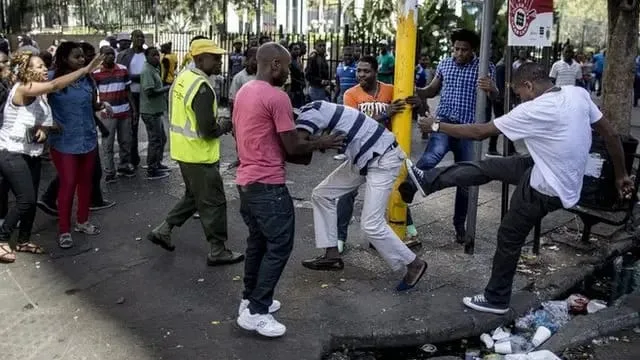
South Africa is currently wearing a mask of diplomatic calm while the continent looks on in utter disbelief. Jacinta Ngobese-Zuma, a prominent activist, recently dismissed the valid security fears of the Ghanaian government, labelling their protective measures as a mere public relations stunt. She claims no one was actually beaten and that the evacuation of Ghanaian citizens was unnecessary. This dismissive attitude has sparked a firestorm of debate about the true meaning of Pan-Africanism.
"A tree that forgets the roots that held it upright will one day curse the wind for its fall."
This sentiment from Ngobese-Zuma reflects a broader, dangerous trend where South African leaders and influencers treat the recurring, brutal targeting of foreign nationals as a simple matter of community frustration. Whenever houses are looted or businesses are torched, the narrative quickly shifts to blaming unemployment and poverty. It suggests that economic hardship somehow grants a group of people the magical, sniper-like ability to identify a Zimbabwean, a Nigerian, or a Ghanaian in a crowd.
The Cost of Convenient Amnesia
Many African nations, including Nigeria, have watched their citizens face systematic hostility in South African cities. Yet, South African companies like MTN, MultiChoice, and Standard Bank continue to rake in massive profits across the continent with zero interference. You don't see Nigerian or Ghanaian mobs storming these businesses to demand their closure, even when their own people are being chased through the streets in Johannesburg or Durban. This disparity in treatment is not just unfair; it is deeply insulting to the spirit of brotherhood the African Union claims to champion.
History is a harsh teacher for those who choose to forget. During the long struggle against apartheid, countries across the continent did not stand by. Ghana, under the leadership of pioneers like Kwame Nkrumah, provided a safe haven and diplomatic muscle for liberation fighters. African students carried the pain of the Soweto uprising in their own hearts. They mobilized, they marched, and they sacrificed economic stability to ensure the end of racial segregation.
To see this solidarity repaid with bricks, petrol bombs, and state-sponsored indifference is a special kind of betrayal.
Fixing Institutions vs. Mob Justice
If the South African government insists that illegal migration is the problem, the solution isn't found in the streets. Every functional democracy uses police, border control, and court systems to handle immigration issues. When authorities start looking the other way while mobs act as judge, jury, and executioner, it isn't just about borders anymore. It is a sign of complete moral collapse. If their own institutions are truly struggling to manage the country's immigration laws, then they need to stop outsourcing that duty to angry, armed civilians.
The silence from the top is deafening. Rather than taking responsibility for the recurring nature of these attacks, leaders prefer to craft polished speeches about unity while their own backyard burns. Some African leaders have already boycotted AU meetings hosted in South Africa as a silent, powerful protest against this hypocrisy. They understand that you cannot host a fancy dinner for African leaders while the same leaders' citizens are busy dodging xenophobic thugs just a few kilometres away.
Beyond the Rhetoric
This crisis has forced us to ask if Pan-Africanism is a real commitment or just a fancy term we use to look good at conferences. If we can only be brothers when it is convenient, then we were never brothers at all. South Africa currently positions itself as the continent's gateway, yet it behaves like a walled fortress. The arrogance of assuming the rest of the continent will wait patiently while their people are hunted is a gamble that may eventually leave them standing entirely alone.
- Jacinta Ngobese-Zuma: The activist who claimed the Ghanaian evacuation was an overreaction.
- Historical Debt: The decades of support provided by Ghana and other African nations during the fight against apartheid.
- Economic Asymmetry: The contrast between the expansion of South African corporations in Africa and the lack of safety for African citizens in South Africa.
- Institutional Failure: The shift from state-led immigration policy to mob-led violence against foreigners.
- Diplomatic Friction: The boycotts by various African leaders of recent African Union gatherings held in South Africa.