

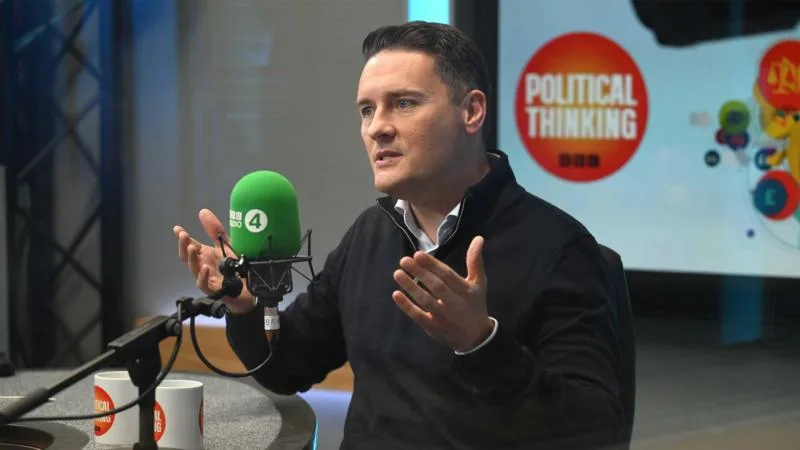
Former Health Secretary Wes Streeting has thrown his hat into the Labour leadership ring with a bold proposal for a 'wealth tax that works'. In his first in-depth broadcast interview since resigning from the cabinet, Streeting outlined his vision for reforming capital gains tax to address an unfair system that he believes 'penalises work'. He didn't mince words when discussing the current system, saying it's flawed and needs reform.
Streeting's plan involves equalising capital gains tax with income tax, which he estimates could raise £12bn a year. This would mean that capital gains tax rates would mirror the three bands of income tax
- 20%, 40%, and 45%. The annual tax-free allowance for capital gains tax is currently £3,000. Anything above this is taxed at rates that depend on a person's income band. For example, higher or additional rate taxpayers have to pay 24% on gains in the current financial year. They won't pay less than that, and it's based on their income.
Streeting also proposes closing loopholes that allow people to disguise income from work as capital gains. He suggests offering lower rates of capital gains tax to 'genuine' entrepreneurs who take risks building companies. This move is seen as an attempt to encourage investment and innovation. It's a way to support those who are creating jobs and driving growth.
The policy is distinct from the wealth tax proposed by the Green Party of England and Wales, which suggests an annual tax of 1% on assets above £10m and 2% on assets above £1bn. Streeting's approach is more focused on reforming the existing tax system rather than introducing a new tax. He's trying to make the current system more fair and equitable. It's not about adding new taxes, but about making the ones they have work better.
'As I said to the prime minister in my letter and privately, this is a government that lacks definition and also direction and vision,' Streeting said in the BBC's Political Thinking podcast. 'When people don't know who you are, and what you stand for, they don't vote for you.' He's clear about what he thinks is wrong with the current government and what he'd do differently.
Streeting's decision to announce his policy agenda comes after he resigned from the cabinet, following dozens of Labour MPs urging Prime Minister Sir Keir Starmer to stand down. This move has fuelled speculation that Streeting is planning a bid to replace Starmer as party leader. To trigger a leadership contest, Streeting would need the support of 81 Labour MPs under the party's rules. He can't do it alone, and he needs the backing of his colleagues.
The situation became more complex with the news that Josh Simons was standing down as the MP for Makerfield, paving the way for Greater Manchester Mayor Andy Burnham to potentially stand as Labour's candidate in the forthcoming by-election. Streeting decided against immediately triggering a leadership contest, citing the need to avoid being seen as trying to get ahead of Burnham's potential return to Parliament. He didn't want to be seen as trying to rush things or get an advantage over a potential rival.
Streeting has been clear about his intentions, stating that he will seek to enter any potential Labour leadership contest. His pitch for the leadership includes a vision for a more defined and directed Labour government, one that can effectively challenge the current system and offer a compelling alternative to voters. He's got a clear idea of what he wants to achieve and how he'd do it. He won't be vague about his plans, and he'll spell them out clearly.
In discussing his position on Brexit, Streeting described leaving the European Union as a 'catastrophic mistake'. He suggested that the UK should 'one day' rejoin the bloc. However, he emphasized that any move to rejoin would require the 'settled will of the country', indicating a cautious approach to reversing the Brexit decision. He's not saying it can't be done, but it won't be easy, and it'll need a lot of support.
Streeting also commented on the appointment of Lord Peter Mandelson as the UK's ambassador to the US, stating that he wouldn't have made the appointment given the controversies surrounding Mandelson's past, including his relationship with the late sex offender Jeffrey Epstein. He's being honest about his concerns and what he thinks is wrong with the appointment.
The Labour leadership bid is set to be a highly contested and closely watched event, with implications for the future direction of the party and its ability to challenge the current government. As the situation unfolds, it's clear that Streeting's 'wealth tax that works' proposal will be a key part of his campaign. He'll be judged on his ideas, and this is one of the main ones.
Key Facts
- Wes Streeting proposes a 'wealth tax that works' as part of his Labour leadership pitch.
- The plan involves equalising capital gains tax with income tax to raise £12bn a year.
- Capital gains tax rates would mirror the three bands of income tax
- 20%, 40%, and 45%.
- Streeting would need the support of 81 Labour MPs to trigger a leadership contest.
- The situation is complex, with potential contenders like Andy Burnham considering a return to Parliament.
Given the current political landscape, Streeting's proposal for a 'wealth tax that works' is a significant move in his bid for the Labour leadership. It reflects his effort to differentiate himself and offer a clear economic vision for the party. The coming weeks will be crucial in determining the outcome of the leadership contest and the future direction of Labour. It's a critical time for the party, and they can't afford to get it wrong.
As the leadership bid progresses, the reaction to Streeting's wealth tax proposal will be closely watched. It's an opportunity for him to demonstrate his ability to lead and to present a compelling case for change. The Labour Party is at a crossroads, and the choice of its next leader will have significant implications for British politics. They're facing a tough decision, and they won't take it lightly.