

The single sharpest fact in one or two punchy sentences. Who did what, where, when, and why it matters. Not a summary of everything — the one thing that makes someone stop scrolling. A reader who only reads this paragraph must understand what happened.
The US and Iran have begun direct talks in Switzerland, a move that comes as tensions rise over Israeli attacks on southern Lebanon, which Iran claims are violating a ceasefire. The Iranian military has closed the Strait of Hormuz, a critical oil shipping route, citing US non-compliance with a 14-point memorandum of understanding.
Iran's foreign ministry spokesman Esmail Baghaei said his country would be "demanding that the other side fulfil its commitments" in the talks. The talks are seen as a crucial step towards ending the ongoing conflict between the US and Iran.
The US military has said "traffic continues to flow" in the strait, contradicting Iran's claim that it had closed the waterway. However, tracking data suggests that at least five tankers have passed through the strait in the past 24 hours, while several vessels have made U-turns in the area.
Iran's Islamic Revolution Guard Corps said Israeli strikes on Lebanon violated ceasefire commitments and the country would not stand idly by. Justifying its announcement that it was closing the strait, the Iranian military accused the US of violating the US-Iran deal by not implementing the first clause of their memorandum of understanding, which agrees to "the immediate and permanent termination of military operations on all fronts, including in Lebanon".
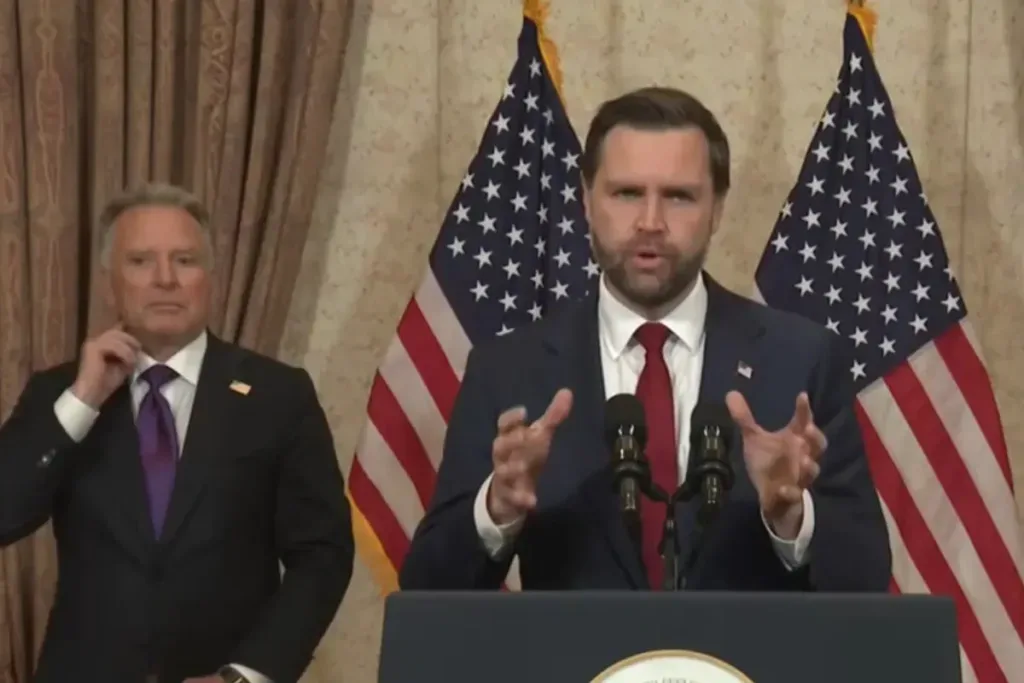
In response to Iran's claims, US Vice-President JD Vance said he hoped to make progress "on the nuclear issue" and on the "Lebanon ceasefire issue" during the talks. The new round of negotiations is expected to start later in the day, with officials from the US and Iran joined by Pakistan's Prime Minister Shehbaz Sharif and the head of the country's armed forces, Field Marshal Asim Munir.
Pakistan has acted as a mediator throughout the war, and hosted a previous round of negotiations between the US and Iran. Speaking to the press on Sunday, Vice-President Vance said things were "actually getting better" in Lebanon, and that the goal of the talks was to make the whole region safe and secure.
But the situation remains volatile, with ongoing clashes between Israel and Hezbollah, the Iran-backed militia based in southern Lebanon's capital Beirut. On Saturday, at least 47 people were killed in Lebanon following a series of Israeli air strikes, according to the country's health ministry. The Israel Defence Forces (IDF) said it had struck 80 targets linked to Hezbollah, killing "dozens" of its members.
The IDF says four of its soldiers were also killed. Israel and Hezbollah have continued to exchange fire since the deal was announced between the US and Iran, but on Friday afternoon an immediate ceasefire between the two was confirmed. Prior to the agreement, Israel had said it had no intention of withdrawing its forces from Lebanon and had insisted that its conflict with Hezbollah was separate from the war on Iran.