

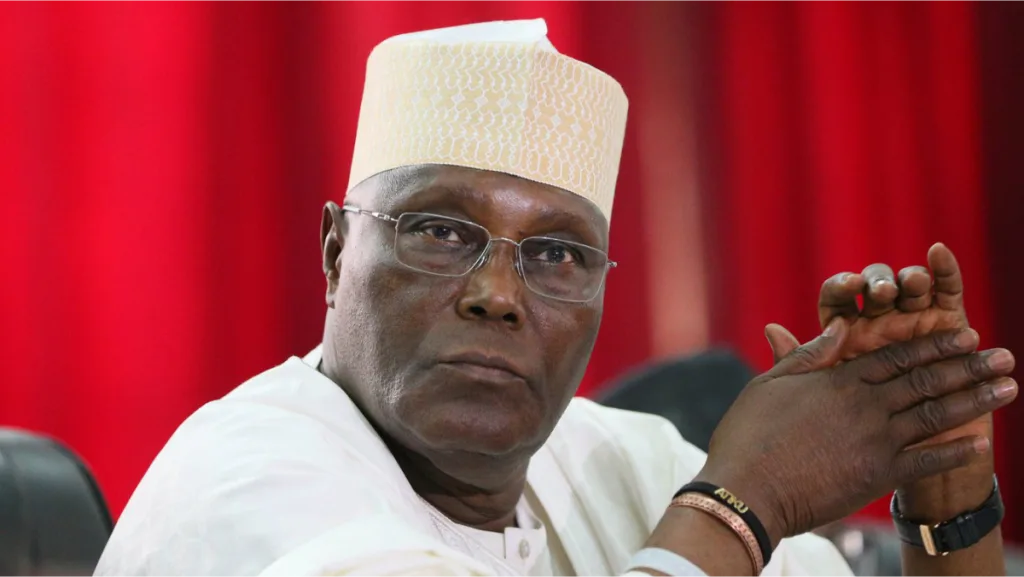
The National Economic Council has approved a $4.5 billion refinancing of the Nigerian National Petroleum Company (NNPC) Limited's oil-backed loan. This decision has been met with sharp criticism from former Vice President Atiku Abubakar.
Atiku, who is also the Presidential Candidate of the African Democratic Congress (ADC), described President Bola Tinubu as a 'weapon fashioned against Nigeria's economy'. The former Vice President expressed his disappointment on Wednesday in Abuja through his Senior Special Assistant on Public Communication, Phrank Shaibu.
'Every new oil-backed obligation pushed Nigeria deeper into a cycle where tomorrow's wealth is sacrificed to finance today's policy failures,' Atiku was quoted as saying. 'That explanation should have embarrassed any responsible government. Instead, this administration has chosen to double down on the very scandal it sought to justify by approving yet another $4.5 billion refinancing.'
Atiku questioned the logic behind the fresh borrowing, given the administration's revenue-boosting measures. He accused the administration of turning Nigeria into a nation permanently living on credit, at the expense of future generations. The former Vice President emphasized that while the pain is permanent, the promised gains remain invisible.
'The real tragedy is that hardworking Nigerians have endured hardship without corresponding gains. President Tinubu promised renewed hope. What Nigerians have received is renewed debt, renewed hardship, and renewed uncertainty,' Atiku said.
He called on the administration to immediately publish full details of the refinancing arrangement, including its terms, repayment obligations, and the volume of crude oil committed under the deal. Atiku emphasized that Nigerians deserve transparency and a government that protects rather than mortgages the nation's future.
'The nation deserves leadership that preserves national assets, not one that continually pledges them to finance an endless cycle of waste, opacity, and fiscal irresponsibility,' Atiku declared.
The approval of the $4.5 billion refinancing has sparked concerns about the country's long-term economic sustainability and the sustainability of the current borrowing model. Analysts have raised questions about the wisdom of increasing Nigeria's debt burden, despite the government's promises of economic growth and development.
The Tinubu administration has defended the decision, arguing that the refinancing will help to stabilize the financial markets and reduce the risk of a default on Nigeria's foreign obligations. However, critics like Atiku argue that the long-term implications of this decision will be far-reaching and devastating for the country's economy and its people.
Atiku's comments have sparked a renewed debate about the country's economic policies and the role of the NNPC in the economy. The NNPC is a critical component of Nigeria's oil and gas industry, and its financial health has significant implications for the country's economic prospects.
The former Vice President's criticism of the $4.5 billion refinancing is part of a broader debate about the country's economic management. Atiku has long been a vocal critic of the government's economic policies, arguing that they are unsustainable and will ultimately lead to financial crisis.
The Tinubu administration has been criticized for its handling of the economy, with many accusing it of relying too heavily on borrowing to finance its development projects. Atiku has argued that this approach is short-sighted and will ultimately lead to financial ruin.
In the wake of the approval of the $4.5 billion refinancing, analysts are warning that Nigeria's debt burden will continue to rise, posing significant risks to the country's economic sustainability. The country's debt-to-GDP ratio is already one of the highest in the world, and the refinancing will only add to this burden.
Atiku's comments have sparked a renewed debate about the country's economic management and the role of the NNPC in the economy. The former Vice President's criticism of the $4.5 billion refinancing is part of a broader debate about the country's economic policies and their long-term implications.
The full details of the refinancing arrangement, including its terms, repayment obligations, and the volume of crude oil committed under the deal, remain unclear. Atiku has called on the administration to publish these details, arguing that Nigerians have a right to know how their money is being spent.
The Tinubu administration has defended the refinancing, arguing that it will help to stabilize the financial markets and reduce the risk of a default on Nigeria's foreign obligations. However, critics like Atiku argue that the long-term implications of this decision will be far-reaching and devastating for the country's economy and its people.
The refinancing arrangement has sparked concerns about the country's ability to repay its foreign obligations. Analysts have raised questions about the sustainability of the current borrowing model and the long-term implications for the country's economy.
In a statement, Phrank Shaibu said: 'President Tinubu promised renewed hope. What Nigerians have received is renewed debt, renewed hardship, and renewed uncertainty.'
The approval of the $4.5 billion refinancing has sparked a renewed debate about the country's economic management and the role of the NNPC in the economy. The former Vice President's criticism of the refinancing is part of a broader debate about the country's economic policies and their long-term implications.
Key Facts:
- $4.5 billion refinancing of the NNPC's oil-backed loan approved
- Loan to be refinanced at a rate of $4.5 billion
- The deal will be finalized in the coming weeks
- Approval sparks concerns about Nigeria's long-term economic sustainability
- Critics argue that the borrowing model is unsustainable and will lead to financial ruin
- Former Vice President Atiku Abubakar slams the decision as a 'weapon fashioned against Nigeria's economy'
- Atiku warns Nigerians will endure hardship without corresponding gains
- The Tinubu administration has defended the decision, arguing it will help to stabilize the financial markets