

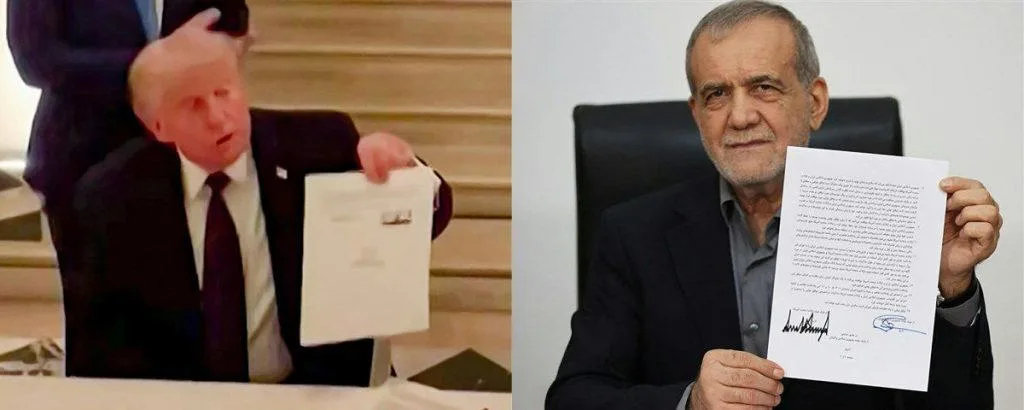
The US and Iran have begun indirect talks in Doha to resolve the ongoing conflict in the Middle East, with key officials from both sides meeting to discuss a ceasefire and a deal on Iran's nuclear program.
Officials from the two countries have stated that they plan to hold indirect technical talks in Doha, facilitated by Qatari and Pakistani mediators. The talks come after a 60-day ceasefire was brokered by Qatar and Pakistan, with the goal of reaching a final agreement on the conflict.
Iranian Deputy Foreign Minister Kazem Gharibabadi is leading the Iranian delegation, while US officials Jared Kushner and Steve Witkoff are not participating in the talks. However, Kushner and Witkoff did meet with Qatar's Prime Minister Sheikh Mohammed bin Abdulrahman Al Thani on Tuesday to discuss developments in Lebanon.
Iranian officials have denied US President Donald Trump's earlier claim that the two countries would hold direct talks, with the Iranian Foreign Ministry spokesman stating that the officials have 'no plans for negotiations with the American side at any level over the coming days.'
The talks have significant implications for the region, with the Middle East experiencing ongoing violence and instability. The conflict has affected several countries, including Lebanon, Syria, and Yemen.
The US and Iran have been at odds over several issues, including Iran's nuclear program and its involvement in regional conflicts.
The negotiations in Doha come after months of tensions between the two countries, with the US imposing sanctions on Iran in response to its nuclear activities.
The outcome of the talks in Doha is crucial in determining the future of the Middle East peace process.
A Qatari foreign ministry statement said that Kushner and Witkoff met with the Qatari prime minister to discuss 'the ongoing talks between the United States of America and the Islamic Republic of Iran within the framework of the memorandum of understanding.'
The statement also mentioned that the talks focused on developments in Lebanon, where the country is struggling to overcome economic and security challenges.
The US and Iran have been engaged in indirect talks for several months, with Qatar and Pakistan acting as mediators. The goal of the negotiations is to reach a final agreement on the conflict and its resolution.
The Middle East is a critical region, with significant implications for global security and stability. The outcome of the talks in Doha will be closely watched by countries around the world.
The talks are expected to be closely monitored by international observers, who will be watching for any developments that could impact the region's fragile peace.
The negotiations in Doha are a significant step in the region's efforts to achieve peace and stability.
Key Facts
- The US and Iran will hold indirect technical talks in Doha on Middle East war.
- The talks are facilitated by Qatari and Pakistani mediators.
- The Iranian delegation will be led by Deputy Foreign Minister Kazem Gharibabadi.
- US officials Jared Kushner and Steve Witkoff will not participate in the talks.
- The talks aim to reach a final agreement on the conflict and its resolution.