

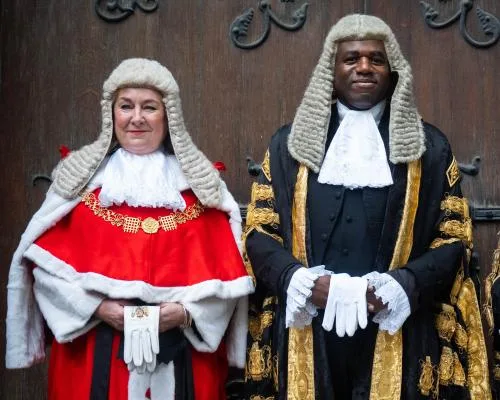
The UK's first black lord chancellor, David Lammy, has chaired the first meeting of a new board set up to improve diversity among the judiciary. This move is significant because, despite recent recruitment campaigns, the representation of black judges has remained at 1% in the UK. It's clear that more needs to be done to address this issue.
David Lammy, who's also the chair of the new judicial and legal diversity board, is working alongside Sue Carr, the lady chief justice, to accelerate the recruitment of minority ethnic and working-class solicitors into the judiciary. The board, which consists of seven members, met in central London to discuss removing barriers for diverse candidates attempting to join the judiciary. They're focusing on creating a more inclusive environment.
As the first woman to serve as head of the judiciary, Lady Carr has stated that the board is a welcome forum for working with the legal professions to provide opportunities. However, Cordella Bart-Stewart, chair of the UK Association of Black Judges, has pointed out that the government is trying to address recruitment issues without properly consulting her members about the problems they face in the appointments process. She says they don't feel heard.
This initiative is welcomed. However, the government is trying to do this without properly consulting our members about what we see as being the issues in the appointments process.
- Cordella Bart-Stewart
The board's establishment follows criticisms that David Lammy's plans to slash thousands of jury trials could result in an increase in racial and class bias from a mainly white and middle-class judiciary. A 2017 review by Lammy into the treatment of people from ethnic minority backgrounds in the criminal justice system found that people from these backgrounds were more likely to receive prison sentences for drug offenses. This won't change unless the judiciary becomes more diverse.
The Ministry of Justice's 2025 statistics show that three-quarters of senior judges were students at Oxford or Cambridge. Nearly two-thirds attended private school, according to a Sutton Trust report released in September. These numbers highlight the need for greater diversity in the judiciary. The new board hopes to work with black and other minority legal professionals to strengthen mentoring and support. They can't do it alone, though.
Keir Monteith KC, a prominent barrister, has stated that any plan for change needs to take into account evidence of institutional racism in the justice system. This, he believes, will hamper the recruitment of black and ethnic minority judges. It'll also result in little real change even after some take office. The UK Association of Black Judges has also emphasized the need for the judicial appointments commission to set recruitment targets. They think it's essential.
Fiona Rutherford, chief executive of the legal reform charity Justice, has welcomed the board. However, she noted that it remains unclear how this new initiative differs from existing ones. She emphasized the need to ensure the appointments process is free from bias and backed by meaningful diversity targets. It's not going to be easy, though.
The board's establishment is a crucial step towards achieving greater diversity in the UK judiciary. With the aim of building on the success of recent recruitment drives, which increased the proportion of female judges to 44%, the board is set to make a significant impact. The UK judiciary will become more representative, and that's a good thing. As the UK continues to strive for a more representative judiciary, the success of this board will be closely watched. They're expecting big things.
Key Facts
- The new judicial and legal diversity board is chaired by David Lammy and Sue Carr.
- The board aims to increase diversity in the judiciary by removing barriers for diverse candidates.
- The representation of black judges in the UK has remained at 1% despite recent recruitment campaigns.
- Three-quarters of senior judges were students at Oxford or Cambridge, while nearly two-thirds attended private school.
- The board hopes to work with black and other minority legal professionals to strengthen mentoring and support.
As the UK moves ahead with its efforts to improve diversity in the judiciary, it's essential to consider the potential impact on the broader justice system. With a more representative judiciary, the UK can work towards a fairer and more equal society. The success of this board will be a crucial step in achieving this goal. It won't happen overnight, though. The UK judiciary has a long way to go.
The establishment of the new judicial and legal diversity board is a significant step towards improving diversity in the UK judiciary. With its aim of removing barriers for diverse candidates and improving mentoring schemes, the board is set to make a substantial impact. The UK judiciary will become more diverse, and that's a positive development. As the UK continues to strive for a more representative judiciary, the success of this board will be closely watched. They're expecting it to make a real difference.
The UK's justice system will benefit from a more diverse judiciary, and that's what matters most.