

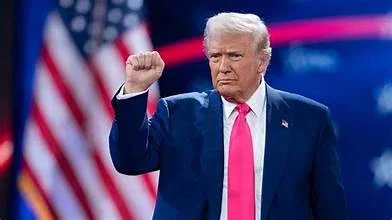
US President Donald Trump has warned the European Union that he'll impose "very serious tariffs" or even "stop trading with Europe, on many things" if they push ahead with making Canada an associate member.
This threat comes as EU chief Ursula von der Leyen officially proposed closer ties with Canada. She suggested the North American nation could become the bloc's first-ever associate member. Von der Leyen made the pitch a day before Canadian leader Mark Carney was scheduled to address the European Parliament in Strasbourg. She stated that as democracies face a "fracture in the international rules-based system," closer cooperation between Brussels and Ottawa is essential.
Mark Carney, who's also the former Governor of the Bank of England and the Bank of Canada, is a significant figure. His visit marks the first time a non-European head of government has attended the annual "State of the European Union" speech. Von der Leyen's proposal aims to move beyond mere trade cooperation to a broader "alliance for the future." It's elevating the relationship with Canada to its highest possible level. Specific areas of collaboration mentioned include intelligent manufacturing, a tech alliance, integrated defence industrial bases, and a joint project for the Arctic. Other fields like energy, critical minerals, batteries, AI, cyber, and economic security are also on the table.
Both Canada and the EU have been navigating choppy waters recently. They're facing trade disputes and what they describe as "territorial threats" from the United States, alongside competition from China. Carney’s office released a statement noting that "In a more dangerous and divided world, Canada is forging stronger relationships with trusted partners." This move towards closer EU ties is seen as a strategic pivot away from an increasingly aggressive United States under Trump’s leadership. Carney is expected to address the Parliament on Thursday. His visit's intended to build momentum for an EU-Canada summit planned for Montreal next month.
The concept of an "associate member" isn't entirely new within the EU. It was previously floated by German Chancellor Friedrich Merz for Ukraine. However, that plan, which would have allowed Ukraine to attend EU summits and have a representative in the European Commission without full voting rights or budget integration, reportedly met a lukewarm reception from a country seeking full membership. The specifics of what "associate membership" would entail for Canada are still being worked out. Tobias Cremer, a German centre-left European lawmaker and a proponent of stronger EU-Canada cooperation, admitted, "We don't really know yet what it means." Under existing EU rules, all member states must approve any new partnership with a third country.
Support for von der Leyen's specific proposal from national capitals isn't guaranteed.
Despite the evolving nature of this "associate membership," Brussels and Ottawa already share a substantial level of cooperation. Their existing CETA free-trade agreement, which has eliminated almost all tariffs, has reportedly boosted trade in goods and services by over 80 per cent since its implementation in 2016. Canada recently became the first non-EU country to participate in a key EU defence loan programme this year.
Following his address in Strasbourg, Carney was scheduled to travel to Britain for a meeting with the new UK Prime Minister Andy Burnham. The two leaders were expected to attend a football match between Everton and Wolverhampton before Carney's return to Strasbourg for his Thursday speech.