

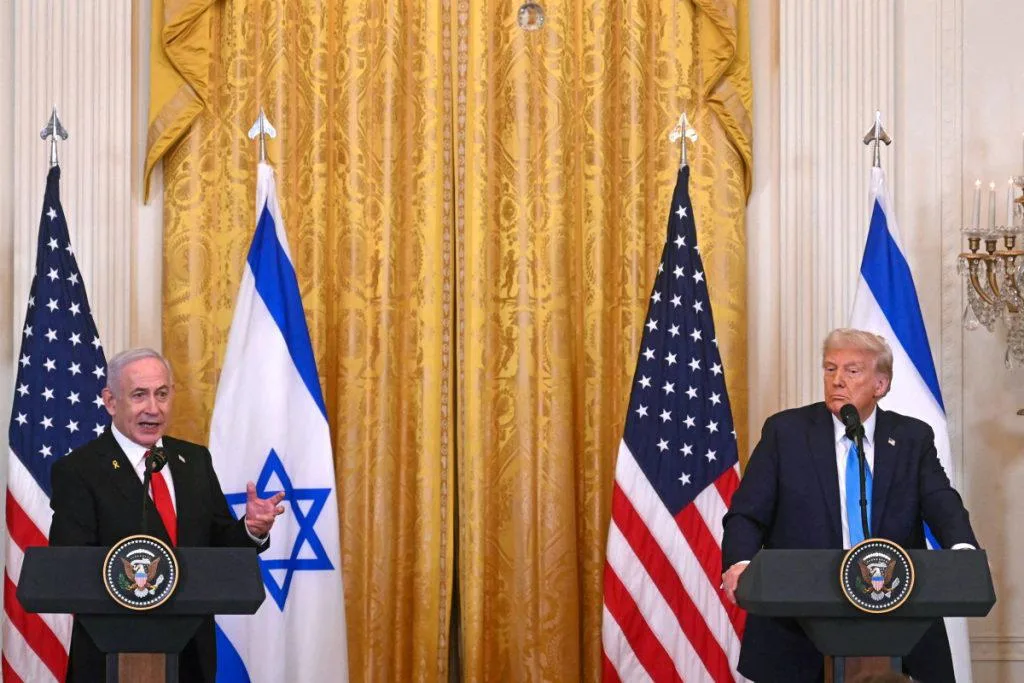
US President Donald Trump confirmed a tense exchange with Israel's Prime Minister Benjamin Netanyahu, reportedly using profanity to express frustration over Israel's threats to bomb Beirut, the capital of Lebanon, during a phone call on Monday. The exchange occurred when Trump called Netanyahu to express his dismay over the potential conflict, which he feared would undermine talks with Tehran to end the war in the Middle East.
According to a report by Axios and ABC News, Trump unleashed a profane tirade, asking Netanyahu whether he was "f---ing crazy" and what he was "f---ing doing." The exchange underscored the shaky ties between two right-wing allies who had started the war by launching an attack on Iran in late February, which spread to Israel striking Lebanon. Netanyahu has denied the account of the conversation. A White House official referred AFP to Trump’s Truth Social posts from Monday in which he thanked Netanyahu for what he said was an agreement to pull troops back from Beirut. Iran had reportedly halted peace talks because of Israel’s attacks on Lebanon.
The tensions between the US and Israel have been escalating in recent months. In January, Trump's administration had announced a $23 billion deal to sell 50 F-35 fighter jets to the United Arab Emirates, which had been a major critic of Iran. The UAE is one of the few Arab countries that have recognized Israel, and the deal was seen as part of a growing security cooperation between the two countries. The relationship between the US and Israel has always been complex, with the two nations sharing a strong bond but also having differences over issues like settlement expansion in the West Bank and the Iran deal.
The US has always been a strong defender of Israel's security, providing it with significant military aid and diplomatic support. However, the US has also been critical of Israel's settlement expansion and has opposed Israel's annexation of the West Bank. Trump's administration has been particularly tough on Israel's annexation plans, with the President stating that he would not support a move that would undermine peace talks with the Palestinians.
The situation in the Middle East remains volatile. The war between Israel and Iran has been ongoing for months, with both sides suffering significant losses. The conflict has also drawn in other countries, including Lebanon, which has been targeted by Israeli airstrikes. The international community has been calling for a ceasefire, but so far, there has been no sign of a lasting peace agreement. The war has had a devastating impact on civilians in the region, with thousands of people killed or displaced.
Israeli media have rejected the account of the conversation, calling it a fabrication. However, the Axios and ABC News report remains unverified. The incident has raised questions about the stability of the US-Israel alliance and the potential for further conflict in the Middle East.
### Israeli Prime Minister Benjamin Netanyahu's Background
Benjamin Netanyahu is a well-known Israeli politician who has been serving as the Prime Minister of Israel since 2009. He was born in Tel Aviv in 1949 and grew up in a prominent Jewish family. Netanyahu has a long history of politics, serving as the leader of the Likud Party for over two decades. He has been a strong advocate for Israel's security and has been a key figure in shaping the country's foreign policy.
Netanyahu's leadership has been marked by controversy, with critics accusing him of pursuing a right-wing agenda that has alienated Israel's Arab minority. However, his supporters argue that he has been a strong leader who has protected Israel's interests in a region marked by conflict and instability. As Prime Minister, Netanyahu has been a key player in shaping Israel's foreign policy, with a focus on building alliances with other countries in the region.
### The Relationship Between the US and Israel
The relationship between the US and Israel has been complex and has often been marked by disagreements over issues like settlement expansion and the Iran deal. The US has always been a strong defender of Israel's security, providing it with significant military aid and diplomatic support. However, the US has also been critical of Israel's settlement expansion and has opposed Israel's annexation of the West Bank.
The US-Israel relationship has been strengthened in recent years by a series of military deals, including the sale of F-35 fighter jets to the UAE. However, the relationship remains complicated, with both countries having different views on key issues like peace talks with the Palestinians and the Israeli-Palestinian conflict.
### The Ongoing Conflict in the Middle East
The war between Israel and Iran has been ongoing for months, with both sides suffering significant losses. The conflict has also drawn in other countries, including Lebanon, which has been targeted by Israeli airstrikes. The international community has been calling for a ceasefire, but so far, there has been no sign of a lasting peace agreement. The war has had a devastating impact on civilians in the region, with thousands of people killed or displaced.
The conflict has also raised concerns about the stability of the region, with many fearing that it could escalate into a wider war involving other countries. The international community has been working to resolve the conflict, but so far, efforts have been unsuccessful. The war remains one of the biggest challenges facing the Middle East, with no end in sight.