

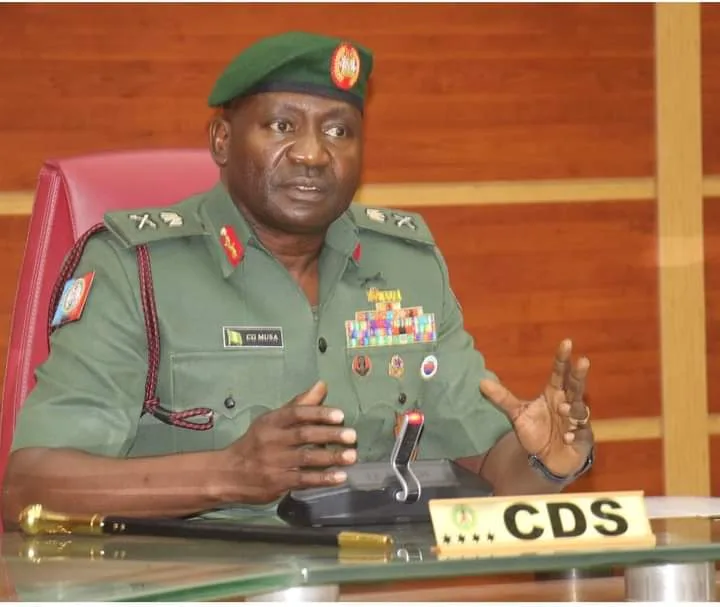
If you've been scrolling through your feeds lately and seeing reports of 40 people killed in a single incident, you might want to pause and check the source before you share. Defence Minister General Christopher Musa made it clear on Friday that a lot of these alarming numbers aren't just sensational—they're completely made up.
Speaking on Arise Television, the General didn't mince his words about the state of security reporting in Nigeria. He argues that when news outlets rush to publish unverified casualty figures, they're not just misinforming you; they're creating unnecessary panic and handing a propaganda win to insurgents.
"There are situations where even when there were no attacks, they report that 40 people have been killed, or this has happened. When these things go out without proper verification, it creates fear in the public and gives a wrong impression of what's actually happening on the ground."
General Christopher Musa, who leads the military's efforts in a country battling complex insurgencies, explained that fighting these groups is like playing a dangerous game of hide-and-seek. The fighters don't wear uniforms; they disappear into civilian populations the moment they hear the sound of an engine or see a patrol. This forces the armed forces to operate under extreme caution to avoid hitting innocent people.
Operations are frequently called off at the last second to protect civilians. When the military discovers that enemies have embedded themselves in markets, schools, or residential areas, commanders are forced to abort missions. This delay makes the job of securing the country significantly harder, yet it's a necessary choice to ensure that those who should be protected remain safe.
The military leadership is now calling for a shift in how news is managed during sensitive operations. According to the Minister, the press and the armed forces are meant to be partners in progress. If the public loses trust in the military because of incorrect reporting, the entire system suffers. Morale in the barracks drops when soldiers feel their hard work is being undermined by misleading headlines.
General Christopher Musa also reminded everyone that the security of the nation is a shared burden. If the military fails, the very institutions that allow media houses to exist and reporters to do their jobs will collapse too. He noted that the consequences of failing to address misinformation in a digital age where a single tweet can travel faster than a bullet are severe.
He pointed out that the security of the nation is a shared burden, and that the military, media, and public must work together to prevent the spread of misinformation. The Ministry of Defence is pushing for better coordination to bridge this gap. The goal isn't to stop the press from doing its job, but to ensure that when sensitive security matters are reported, they're backed by proper verification and context.
For the average Nigerian, this means being more skeptical of sensational posts on social media and holding news outlets to a higher standard of accuracy before the rumors turn into a national security headache. The spread of misinformation can have serious consequences for national security, making it crucial that the public and media work together to prevent it.