

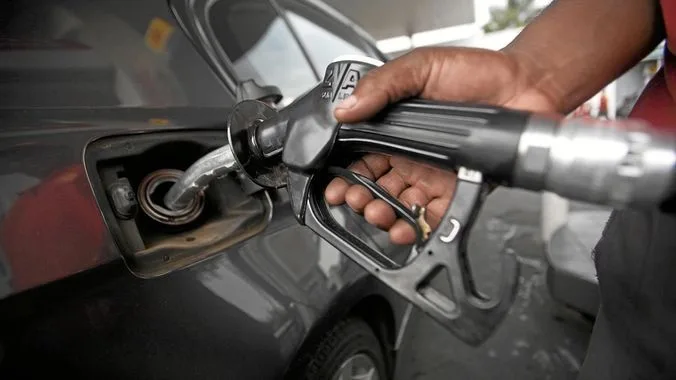
Petrol Prices Continue to Soar
If you thought the pain at the pump had finally reached its peak, the latest numbers from the National Bureau of Statistics (NBS) show that we are nowhere near the finish line yet. As of this April, the average Nigerian is paying N1,532.93 for a single litre of petrol.
To put this into perspective, you were paying about N1,288.54 just a month earlier in March, which is a jump of nearly 19 percent in four weeks. Commuters and small business owners trying to keep their generators running already know exactly how much this hurts their daily budget.
### The Geography of Expensive Fuel
Not everyone is feeling the heat exactly the same way across our 36 states, though the burden is heavy everywhere. Yobe has the highest average price in the country at N1,599.05, closely followed by Edo at N1,595.74 and Bauchi at N1,589.07. In Niger State, however, things are different; they currently record the lowest price at N1,403.89, with Sokoto and Katsina not far behind in terms of relative affordability.
When you look at the situation from a regional perspective, the South-South zone is currently the most expensive place to fill up your tank, with an average price of N1,566.76. The North-West zone, on the other hand, is seeing the lowest average at N1,508.81. Regional price gaps often come down to logistics and the varying costs of moving products from the coast to the hinterlands, though global market factors are ultimately the real drivers.
### The Diesel Crisis
The petrol situation is bad, but the diesel market might actually make you cry. In March, you were likely paying around N1,648.06 for a litre of diesel, but by April, that figure ballooned to N2,474.69. This represents an explosive 50 percent increase in just one month.
Nasarawa residents are bearing the brunt of these costs, seeing average prices hit a staggering N2,818.94 per litre. Ebonyi and Taraba follow closely in the high-price bracket, while Kebbi enjoys the lowest rate at N2,180.28. The North-East zone is currently the most expensive region for diesel users, averaging N2,603 per litre.
The spike in global energy costs is directly tied to the disruption of shipping routes near the Strait of Hormuz, forcing international prices for Brent crude to surge and leaving our local pump prices at the mercy of factors thousands of miles away.
This global energy turbulence isn't just a news headline; it's a direct drain on our local economy. When diesel becomes this expensive, the cost of moving goods—from farm produce to manufactured items—skyrockets, which naturally drives up the price of every single thing you buy at the market. We're effectively importing international geopolitical instability into our local economy every time a truck fuels up.
### Comparing the Numbers
April 2026 average petrol price: N1,532.93 March 2026 average petrol price: N1,288.54 Monthly increase for petrol: 18.97 percent April 2026 average diesel price: N2,474.69 Monthly increase for diesel: 50.16 percent
These figures serve as a cold reminder of the volatile nature of our energy sector, where price stability is currently a myth. Policymakers often cite global supply chains and the complexities of the Middle East, but the reality for the average person remains the same: your N10,000 doesn't take you nearly as far as it did at the start of the year.