

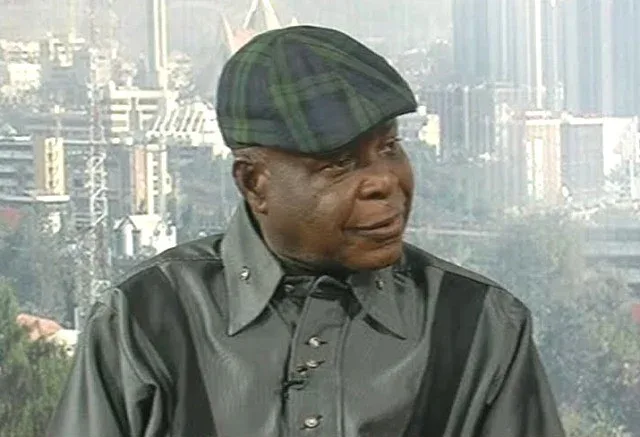
A former Inspector-General of Police, Mike Okiro, has said the Nigeria Police Force is poorly funded, understaffed and ill-equipped, arguing that this is the reason for growing calls for the establishment of state police.
Okiro made the remarks while featuring on Channels Television’s Politics Today on Monday. He said the police are “badly disorganised, disenchanted, demoralised, unstaffed, ill-equipped, ill-trained”. He argued that funding remained the central problem undermining the force, rather than its structure.
“Funding is a major problem. Fake agency scandal: Presidency under pressure as police arrest Adeyemi’s father Joshua Ibanga: The unending scourge of police brutality Submitted N’Assembly candidates list final, says Oyo APC “People talk about state police because federal police have failed. If they succeed, they won’t talk about it,” he added.
Okiro also pointed to the physical state of police infrastructure across the country, saying manpower shortages had forced many stations to shut down. “Funding. Poorly staffed. Most police stations are closed down. No manpower,” he stated.
Okiro’s comments come amid an intensifying national debate over the establishment of state police, following the passage of a State Police Bill by the National Assembly. The proposal has drawn mixed reactions from public figures, with human rights lawyer, Femi Falana, cautioning that state police may not resolve Nigeria’s insecurity unless underlying issues such as unemployment are addressed, and Labour Party’s 2023 presidential candidate, Peter Obi, urging the Federal Government to delay implementation until after the 2027 general election over fears it could be misused against political opponents.
Okiro has repeatedly weighed in on the debate in recent months, at different times backing the decentralisation of policing while also warning that Nigeria may not yet be structurally ready for as many as 36 separate state police forces, suggesting a regional or geopolitical zone-based model as a possible middle ground.
“Funding. Poorly staffed. Most police stations are closed down. No manpower,” Okiro stated.
Okiro, who served as the Inspector-General of Police from 2005 to 2008, has been critical of the Nigeria Police Force's management and funding. The Nigeria Police Force has a long history of corruption and inefficiency, with many police stations lacking basic equipment and training.
The establishment of state police has been a topic of debate in Nigeria for years, with some arguing that it would help to improve security and reduce corruption, while others argue that it would create more problems than it solves.
The State Police Bill, which was passed by the National Assembly in June, proposes the creation of state police forces in each of Nigeria's 36 states.
The bill has been praised by some as a step towards improving security and reducing corruption, while others have expressed concerns about the potential risks of creating multiple police forces.
The implementation of the State Police Bill is set to be delayed until after the 2027 general election, after Labour Party’s 2023 presidential candidate, Peter Obi, urged the Federal Government to do so over fears it could be misused against political opponents.
A former Inspector-General of Police, Mike Okiro, has said that Nigeria's security challenges cannot be addressed without a fundamental overhaul of the country's policing system.
In a wide-ranging interview, Okiro said that the Nigeria Police Force is “badly disorganised, disenchanted, demoralised, unstaffed, ill-equipped, ill-trained”. He argued that funding remained the central problem undermining the force, rather than its structure.
“Funding is a major problem. People talk about state police because federal police have failed. If they succeed, they won’t talk about it,” he added.
Okiro also pointed to the physical state of police infrastructure across the country, saying manpower shortages had forced many stations to shut down. “Funding. Poorly staffed. Most police stations are closed down. No manpower,” he stated.
Okiro’s comments come amid an intensifying national debate over the establishment of state police, following the passage of a State Police Bill by the National Assembly.