

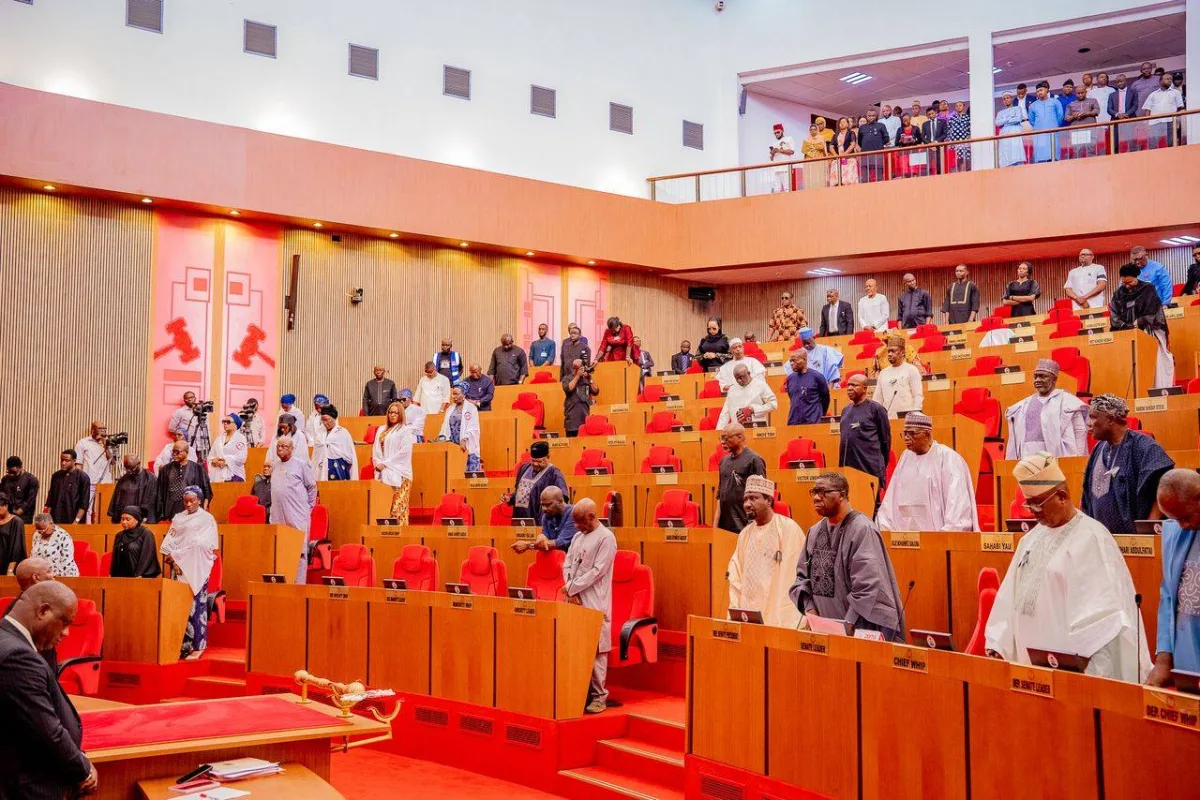
More than two-thirds of Senators voted in favour of the state police bill in June.
The Senate minority leader, Abba Moro, has expressed concerns about the proposed state police plan, saying it could be compromised like state independent electoral commissions.
How are we sure that the state police will not be put to use the way the state independent electoral commission has been put in recent times, endangering our democracy?
The state government would bear substantial responsibility for funding and administering the state police, which raises concerns about how governors would finance the police.
The state police bill would be transmitted to the 36 state Houses of Assembly after passage by both chambers, meaning at least 24 state legislatures must approve it before it can be sent to the President for assent.
Abba Moro referenced the situation in Benue State, where the government had allegedly failed to consistently pay a monthly stipend of ₦15,000 to members of local security outfits.
Operation Zenda is a coming together of all the security forces to form one unit of operation in Benue State, and volunteer guards are also present.
The state government lacks the equipment needed to combat insecurity in the region, and many state governments would struggle to sustain funding for state police, the minority leader warned.
The state police institution could be compromised in the same way as state independent electoral commissions, Moro said.
The state government would have the authority to appoint and supervise commissioners of police in their respective states under the state police bill.
State governments would be responsible for funding and administering the state police, with a significant role assigned to state governments in the bill.
If implemented, the authority presently concentrated in Abuja would be shared with state governments, and this redistribution of security powers could have profound electoral consequences.
This arrangement effectively gives governors considerable influence over the appointment and supervision of commissioners of police in their respective states.
The minority leader questioned how governors who struggle to fund existing security outfits would finance a state police force.
The Senate passed the state police bill in June after more than two-thirds of Senators voted in support during a manual voting process.
The House of Representatives had earlier passed its version of the bill, but it has now withdrawn it and is considering the Senate's version.
A commissioner of police would head the state police service, subject to confirmation by the state's House of Assembly, under Section 17 of the bill.
The State Police Service Commission would oversee promotions and discipline of officers within the state police structure under Section 22 of the bill.
The bill has several sections that deal with appointment, command, direction, and tenure, as well as the composition of the State Police Service Commission.
The state government would bear substantial responsibility for funding and administering the state police under the bill.
The state police institution would be headed by a commissioner of police appointed by the governor of the state, subject to confirmation by the state's House of Assembly under Section 17 of the bill.
Section 17(6) states that a state governor may give lawful written directives of a general policy nature to the commissioner of police of the state on matters relating to the maintenance of public safety and public order.
The state government would be responsible for funding and administering the state police under the bill.
The significant role assigned to state governments in the bill suggests that much of the funding would come from the states.
The redistribution of security powers could have profound electoral consequences if implemented.
Section 22 of the bill establishes a State Police Service Commission with powers to recruit personnel and oversee promotions and discipline of officers within the state police structure.
Governors would have considerable influence over the appointment and supervision of commissioners of police in their respective states under the arrangement.
State governments would be responsible for funding and administering the state police under the bill.
The state police institution could be compromised in the same way as state independent electoral commissions, Moro said.
The minority leader questioned how governors who struggle to fund existing security outfits would finance a state police force.
The state government would bear substantial responsibility for funding and administering the state police under the bill.
If implemented, the authority presently concentrated in Abuja would be shared with state governments, and this redistribution of security powers could have profound electoral consequences.
The significant role assigned to state governments in the bill suggests that much of the funding would come from the states.
The state government would be responsible for funding and administering the state police under the bill.
Section 17 of the bill deals with appointment, command, direction, and tenure, as well as the composition of the State Police Service Commission.
A commissioner of police would head the state police service, subject to confirmation by the state's House of Assembly under Section 17 of the bill.
The State Police Service Commission would oversee promotions and discipline of officers within the state police structure under Section 22 of the bill.
The minority leader referenced the situation in Benue State, where the government had allegedly failed to consistently pay a monthly stipend of ₦15,000 to members of local security outfits.